Anthony Zurcher: Trump's Nvidia intervention ties his political fortunes to the AI boom
Source Entity
BBC News
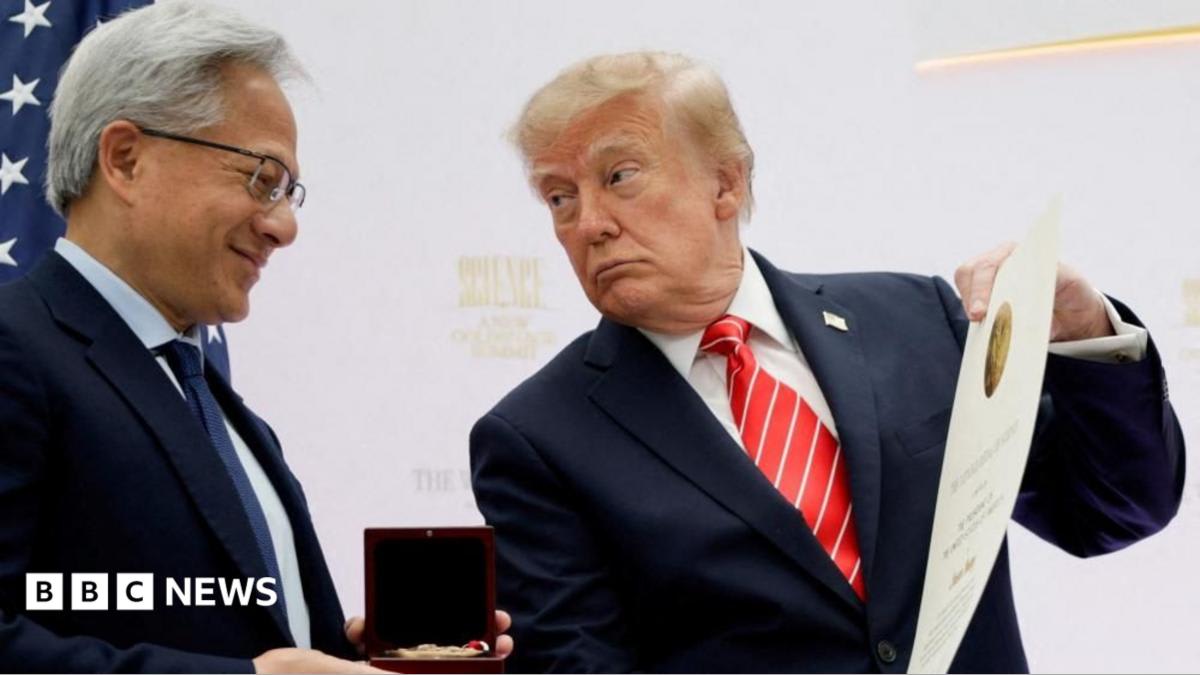
Jensen Huang has returned as Nvidia CEO following a controversial resignation and presidential intervention, sparking both market volatility and internal corporate reform. The event has raised significant questions regarding the intersection of U.S. national security, presidential influence, and corporate governance.
The Nvidia Crisis: Corporate Governance Meets Presidential Intervention
The abrupt resignation and subsequent reinstatement of Nvidia CEO Jensen Huang has sent shockwaves through global markets, highlighting a volatile intersection between private corporate governance and public national security. The sequence of events, which saw Huang depart and then return following direct intervention by President Trump, has become a focal point for debates regarding the stability of the artificial intelligence sector—a critical pillar of modern economic growth.
Market Volatility and Investor Sentiment
Following Huang’s extraordinary return, Nvidia shares initially surged by over 30%, adding more than $900 billion in market value. However, this euphoria was short-lived. By Tuesday, the market experienced a sharp retreat, with Nvidia shares sliding nearly 9% mid-session. This rapid reversal underscores investor anxiety; the market is clearly bracing for continued volatility as it digests the implications of a CEO whose leadership tenure has become inextricably linked to high-stakes political maneuvering.
Presidential Influence and National Security
President Trump’s decision to force Nvidia’s board to reinstate Huang has drawn intense scrutiny. While the administration frames the move as a strategic necessity, critics argue that such interventions set a dangerous precedent. By involving the executive branch in internal corporate personnel decisions, the administration may inadvertently signal to adversaries—such as Beijing, Tehran, and Moscow—that U.S. economic policy is subject to an "economic veto" by the state. The President’s own comments, suggesting that Huang possesses unique, "hidden" capabilities, have only added to the perception that national security and corporate leadership are being conflated in unprecedented ways.
Internal Reforms and Accountability
Beyond the geopolitical stage, the internal fallout at Nvidia is significant. During his first all-hands meeting since returning, Huang issued a public apology to staff, acknowledging "very serious personal mistakes" that affected his family and violated the company’s code of conduct. His commitment to daily therapy and the implementation of regular performance reviews suggest a pivot toward institutionalized accountability. Huang’s attempt to reassure women employees and his insistence that the code of conduct applies to leadership as much as staff reflect a company attempting to stabilize its internal culture after a period of extreme turbulence.
The Broader Economic Implications
Nvidia’s role as a leader in the AI sector makes its internal stability a global concern. As AI drives economic growth worldwide, the uncertainty surrounding the company’s leadership and its relationship with the U.S. government creates a ripple effect. If investors perceive that the company’s direction is being dictated by political whims rather than market fundamentals, the resulting instability could impact capital flows throughout the tech industry.
Future Trends and Conclusion
Looking forward, the Nvidia saga serves as a cautionary tale for the tech industry. The necessity for transparency and rigorous adherence to corporate governance standards has never been higher. As Huang attempts to restore trust through performance reviews and behavioral changes, the market will remain hyper-vigilant. The long-term impact of this episode will likely be measured by whether Nvidia can maintain its technological dominance while navigating a landscape where its corporate decisions are increasingly viewed through the lens of national security and presidential oversight.
Multiple Citing Sources