'Going to be a better CEO': Jensen Huang returns to Nvidia HQ amid applause; watch
Source Entity
TRISHA MAHAJAN
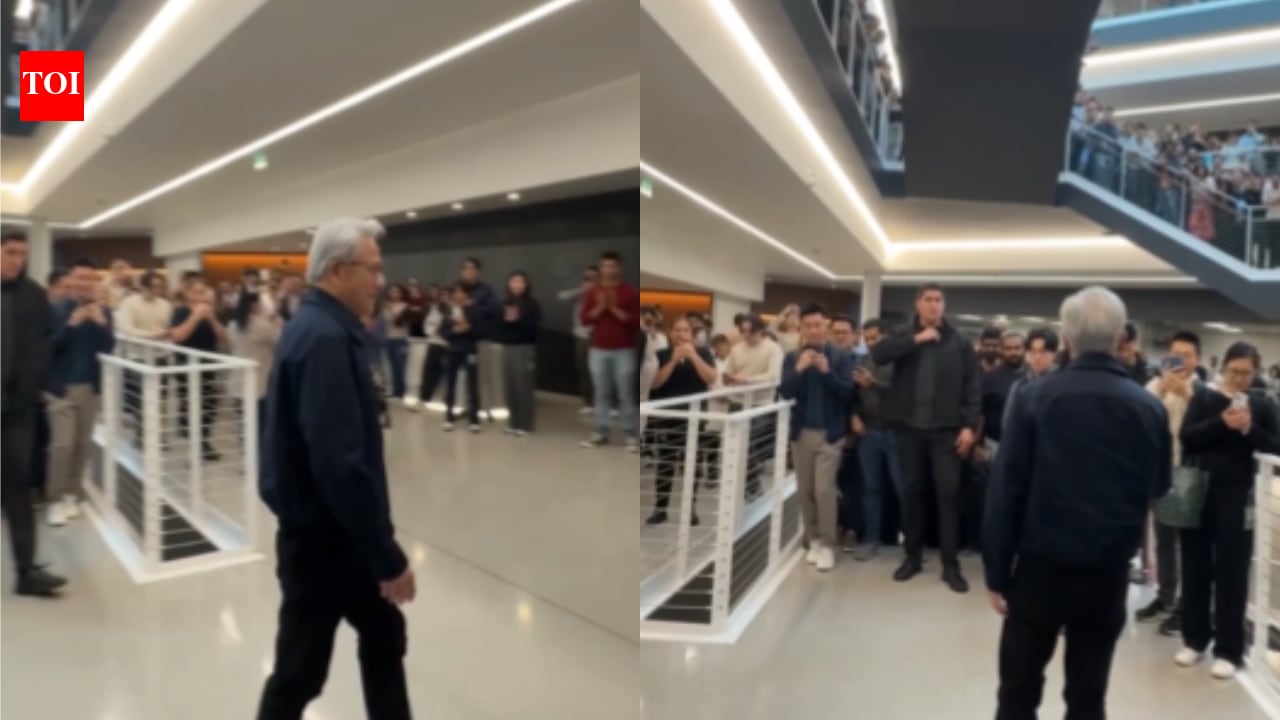
Nvidia CEO Jensen Huang has returned to his post following a brief resignation, sparking both market volatility and intense political debate. President Trump’s intervention in the leadership change has raised concerns regarding the intersection of corporate governance and national security.
The Nvidia Leadership Crisis: A Convergence of Markets and Policy
The recent, tumultuous events surrounding Nvidia’s leadership—marked by the abrupt resignation and subsequent reinstatement of CEO Jensen Huang—have sent shockwaves through both the global financial markets and the corridors of political power. The sheer speed of these developments, which saw Nvidia’s market value swing by nearly a trillion dollars in a matter of days, underscores the central role the company plays in the current artificial intelligence-driven economic landscape. Investors, initially euphoric at Huang’s return, quickly pivoted to a state of caution as the underlying instability of the situation became apparent.
The Political Dimension: National Security and Executive Intervention
President Trump’s direct involvement in orchestrating Huang’s return has sparked a fierce debate regarding the boundaries of executive power in the corporate sector. By intervening in the board's decision-making, the administration has framed the move as a matter of national security, yet critics argue this sets a dangerous precedent. The concern is that by signaling a willingness to force corporate leadership outcomes, the U.S. government may inadvertently provide adversaries—such as Beijing, Tehran, and Moscow—with a blueprint on how to exploit or influence American economic policy for their own strategic gain.
Market Volatility and the AI Sector
Beyond the political maneuvering, the financial ramifications have been profound. The initial 30% surge in Nvidia’s stock value following Huang’s return reflected a market desperate for stability in a sector that has become the primary engine of global economic growth. However, the subsequent 9% mid-session loss serves as a stark reminder of the fragile sentiment currently governing the AI sector. Investors are now bracing for sustained volatility, questioning whether the company’s governance issues have fundamentally altered its long-term risk profile.
Internal Accountability and Cultural Reform
Internally, Jensen Huang has moved to address the fallout from the personal conduct that led to his temporary resignation. In an all-hands meeting, Huang acknowledged making "very serious personal mistakes" and emphasized his commitment to the company's code of conduct. His pledge to undergo daily therapy and implement regular performance reviews for leadership suggests an attempt to institutionalize accountability within Nvidia. By addressing past failings directly, Huang aims to stabilize the corporate culture, though the efficacy of these measures remains to be tested by stakeholders and employees alike.
A Broader Strategic Outlook
This episode highlights a critical tension in the 21st-century economy: the intertwining of private sector technological dominance with state-level strategic interests. As AI technology becomes synonymous with national power, the governance of firms like Nvidia will likely remain under intense scrutiny. The challenge for the company moving forward is to reconcile its internal cultural reforms with the external pressures of maintaining market leadership while navigating a complex geopolitical environment where every executive decision is now viewed through the lens of national security.
Multiple Citing Sources