What is the Fifth Amendment, and why is Trump urging Jensen Huang not to invoke it
Source Entity
PRISHA PATNAIK
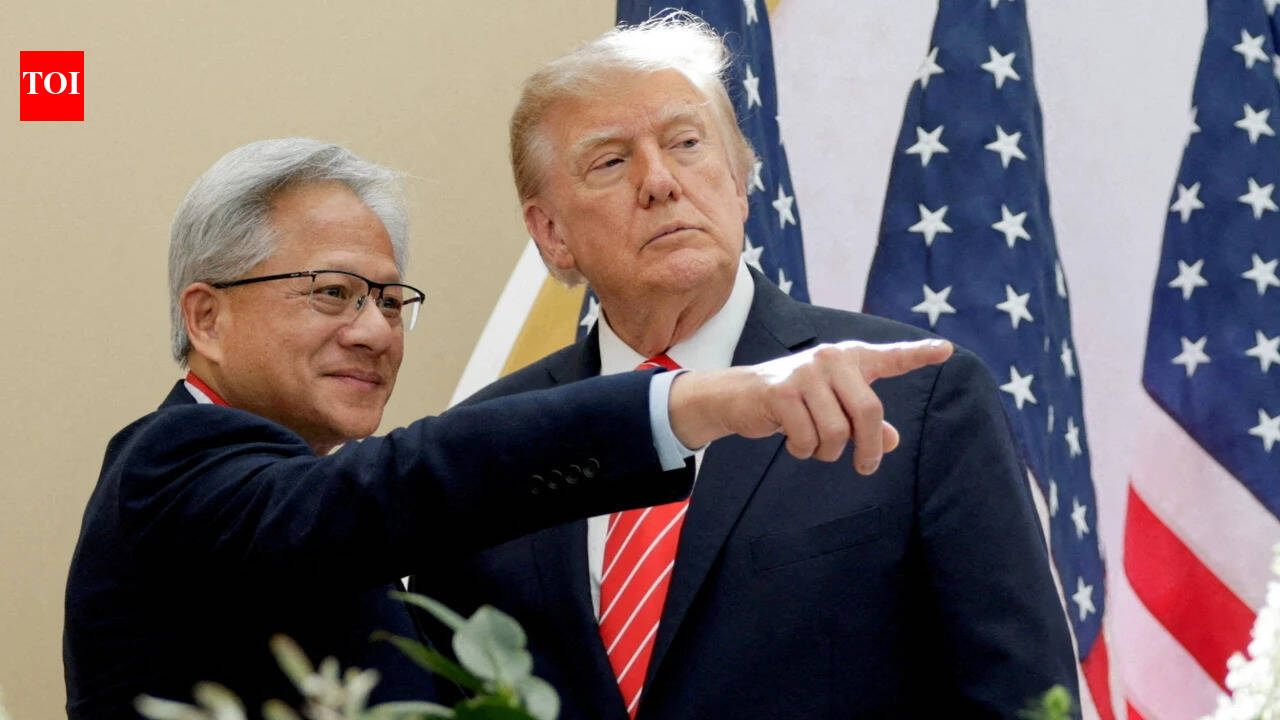
Nvidia CEO Jensen Huang has returned to his position following a brief resignation, sparking both market volatility and intense political scrutiny. While his reinstatement triggered a massive surge in stock value, the intervention by President Trump has raised concerns regarding the intersection of corporate governance and national security.
The Nvidia Crisis: Corporate Governance Meets Geopolitical Strategy
The recent turmoil surrounding Nvidia, marked by the abrupt resignation and subsequent reinstatement of CEO Jensen Huang, has transcended internal corporate affairs to become a focal point of national security and economic policy. Huang’s return, facilitated by an extraordinary intervention from President Trump, initially triggered a massive market rally, adding over $900 billion to the firm's valuation. However, the subsequent 9% mid-session stock decline underscores the fragility of investor confidence when corporate stability is perceived to be inextricably linked to political maneuvering.
The Political Dimension of Corporate Leadership
President Trump’s decision to force Nvidia’s board to reinstate Huang has drawn significant criticism from policy analysts who argue it establishes a dangerous precedent. By involving the executive branch in the hiring practices of a private entity, the administration has effectively signaled that national security interests—or perceptions thereof—can override corporate governance. Critics argue that this creates an 'economic veto' that adversaries like Beijing, Tehran, and Moscow may exploit, interpreting the move as a sign that U.S. corporate policy is now subject to the whims of political leadership rather than board-led oversight.
Market Volatility and the AI Sector
Nvidia serves as a bellwether for the global artificial intelligence sector, a critical driver of modern economic growth. The 'euphoria' that followed Huang's return proved fleeting, as market participants quickly pivoted toward caution. This volatility reflects a broader anxiety among investors regarding the stability of the tech sector. When a company of Nvidia's stature experiences such erratic leadership transitions, it creates systemic risk, particularly when the company’s technological output is essential to the national security infrastructure mentioned by the President.
Internal Accountability and Cultural Shifts
Huang’s return has been accompanied by a public admission of 'very serious personal mistakes' that necessitated his initial departure. In a candid all-hands meeting, Huang acknowledged personal conduct issues that affected his family and violated the company’s code of conduct. His commitment to daily therapy, regular performance reviews, and transparency represents a significant attempt to rehabilitate his image and stabilize the company's internal culture. By asserting that the code of conduct applies to leadership as much as any other employee, he is attempting to quell concerns regarding preferential treatment.
Broader Implications and Future Trends
The intersection of these events suggests a future where the line between private tech enterprise and government oversight continues to blur. If the U.S. government continues to view specific tech firms as extensions of national security, we can expect further volatility as markets struggle to price in political risk alongside traditional financial metrics. Huang’s efforts to promote an inclusive environment for women and his promise of accountability are critical, but they occur against a backdrop of deep skepticism. The long-term impact on Nvidia’s stock and its standing in the global market will depend on whether Huang can successfully navigate the dual pressure of satisfying internal governance demands while operating under the intense, and perhaps restrictive, gaze of the federal government.
Multiple Citing Sources