Jensen Huang Just Signed 7 Japanese Industrial Giants Into Nvidia's Physical AI Coalition. Here's Why $1 Trillion in Confirmed Demand Should Matter to Investors.
Source Entity
Yahoo Finance
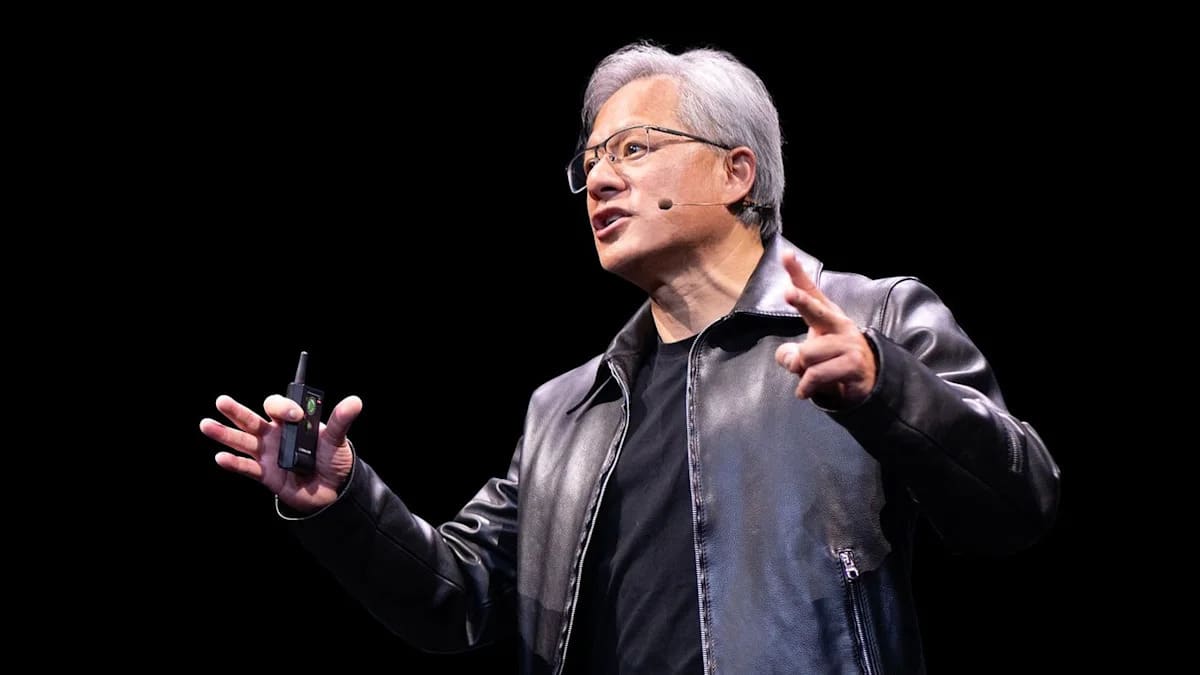
Nvidia CEO Jensen Huang has formed a strategic coalition with seven Japanese industrial giants to accelerate the integration of Physical AI. This partnership secures long-term demand for Nvidia's hardware and software in robotics and industrial automation.
Nvidia's Strategic Expansion into Japanese Industrial AI
Nvidia CEO Jensen Huang recently solidified a major strategic shift by forming a coalition with seven leading Japanese industrial giants. This move marks a significant pivot from purely digital artificial intelligence—such as generative chatbots—toward "Physical AI," which encompasses the control of robots, automated factory lines, and complex machinery in real-world environments. By embedding Nvidia's technological infrastructure into the core of Japan's massive industrial sector, Huang is effectively securing a long-term, high-volume demand stream for the company's proprietary chips and software ecosystems.
Defining the Physical AI Paradigm
Unlike the software-centric AI that has dominated headlines recently, Physical AI represents the intersection of advanced computing and mechanical engineering. This technology allows machines to perceive, learn, and interact with the physical world in real-time. For Japan, a nation long recognized for its sophisticated manufacturing capabilities and robotics, this partnership with Nvidia serves as a catalyst to modernize aging industrial processes. Nvidia's role is to provide the "brains"—the high-performance computing power necessary to process vast amounts of sensor data—enabling these industrial machines to operate with unprecedented autonomy.
Economic Implications and Market Demand
From an investment perspective, this coalition represents more than just a technological collaboration; it signifies a massive, confirmed demand pipeline. By locking in seven major industrial players, Nvidia is insulating itself against the volatility of the consumer tech market. The shift toward Physical AI suggests that the next phase of the AI revolution will be driven by capital-intensive industrial upgrades. Investors are taking note of this shift, as it transforms Nvidia from a supplier of data center chips into an essential utility provider for the global industrial economy.
Historical Parallels and Future Trends
Analysts are drawing parallels between Nvidia's current trajectory and its earlier developmental stages. Much like the pivotal periods in the late 2000s, when Nvidia began establishing its footprint in parallel computing, the current "Total Conviction" signals suggest a new era of growth. The transition from virtual AI to Physical AI indicates that future growth will likely be concentrated in sectors that have historically been slower to adopt digital transformation, such as heavy manufacturing, logistics, and supply chain management.
The Strategic Significance of the Japanese Market
Japan's commitment to this coalition is not happenstance. Given the country's demographic challenges—specifically a shrinking workforce—the integration of Physical AI into factory lines is a matter of economic necessity. By leveraging Nvidia’s platform, Japanese firms are positioning themselves to maintain global competitiveness through automation. This synergy between Nvidia’s software-defined hardware and Japan’s industrial prowess is poised to set a global standard for how AI is integrated into the physical infrastructure of the 21st century.
Conclusion
In summary, Jensen Huang’s recent trip to Tokyo is a landmark event that bridges the gap between high-level AI research and practical industrial application. By securing these seven major partnerships, Nvidia has not only diversified its revenue base but has also established itself as the foundational layer for the next generation of industrial robotics. As Physical AI continues to mature, the implications for global manufacturing efficiency and Nvidia's market dominance are expected to be profound.