Nvidia’s AI advantage is moving beyond the GPU
Source Entity
Russell Brandom
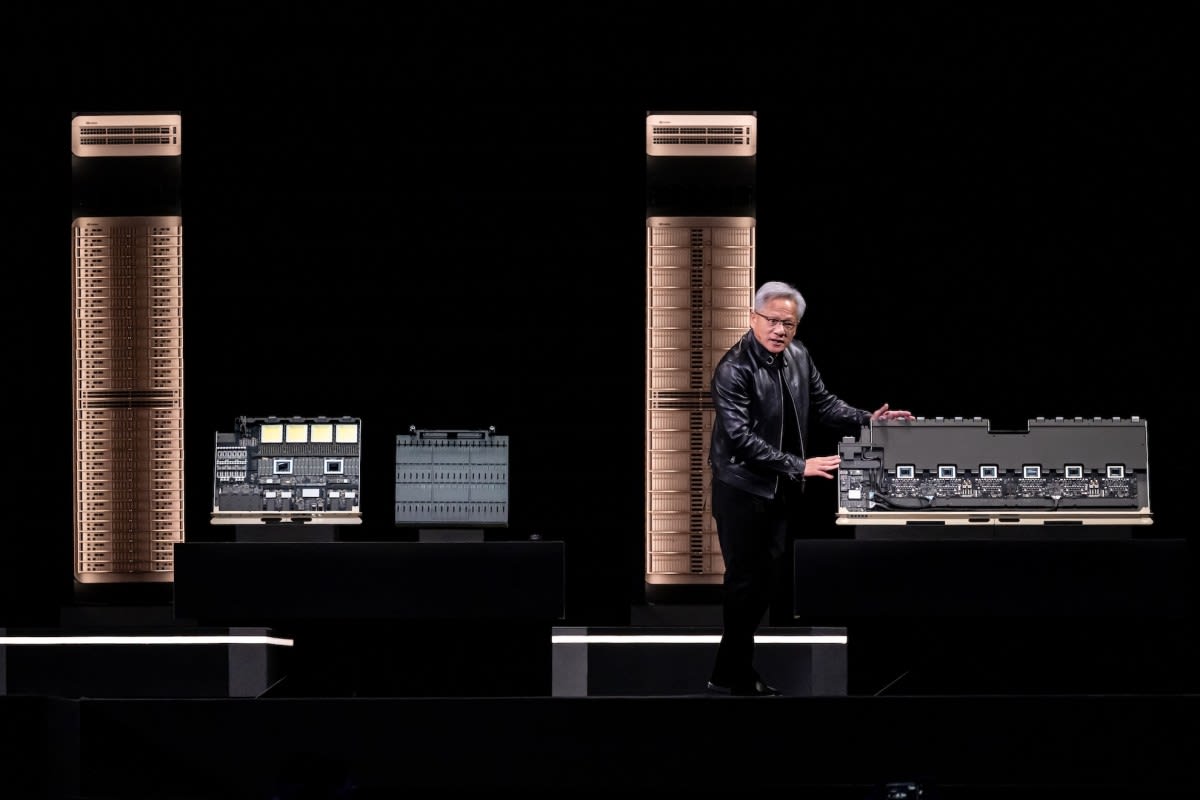
Nvidia reported record-breaking fiscal Q2 revenue of $96.2 billion, signaling sustained demand for its data center infrastructure. Despite strong earnings, shares dipped slightly due to margin pressure from rising memory costs and shifting investor focus toward systemic efficiency over raw processing power.
The Evolution of Nvidia’s Market Dominance
Nvidia has officially entered a new phase of its growth trajectory. Following a period where the company’s valuation grew tenfold between early 2023 and mid-2025, investors are now recalibrating their expectations. The narrative is shifting from a simple reliance on GPU scarcity to a more complex evaluation of Nvidia’s role as a comprehensive infrastructure provider. While the initial AI boom was defined by the sheer necessity of acquiring state-of-the-art GPUs, the current market climate reflects a maturing industry where hyperscalers like Amazon and Google are increasingly developing their own silicon, prompting a strategic pivot from the chipmaker.
Scaling Infrastructure and Hyperscaler Partnerships
The sheer scale of the data center market remains the primary tailwind for Nvidia. With capital expenditures from the five largest hyperscalers projected to reach $800 billion in 2026 and potentially $1.3 trillion by 2027, the demand for high-end compute hardware is unprecedented. A critical component of Nvidia’s future strategy is its deepening integration with Amazon Web Services (AWS). The planned deployment of 2 million Nvidia GPUs alongside Vera CPUs, with the inclusion of the Rubin architecture, demonstrates that Nvidia is embedding itself into the foundational layer of cloud infrastructure far beyond the scope of a standard hardware supplier.
Beyond the GPU: Efficiency as the New Competitive Edge
A significant shift in Nvidia's technological offering is the move toward smarter traffic control and system-level efficiency. Rather than focusing solely on increasing processor cycles, the latest generation of data center systems aims to optimize how information moves through the network. This evolution is essential for hyperscalers who are managing increasingly complex AI workloads. By prioritizing system intelligence, Nvidia is positioning its technology as an indispensable utility for managing massive, distributed AI networks rather than just an isolated compute module.
Financial Performance and Market Sentiment
On August 27, 2026, Nvidia solidified its financial strength by reporting fiscal second-quarter revenue of $96.2 billion, significantly outpacing the $92.2 billion expected by Wall Street. With data center revenue surging 117% year-over-year to $89 billion, CEO Jensen Huang’s assertion that AI has reached an "inflection point" appears validated by the raw data. Despite these figures, Nvidia’s stock experienced a slight decline of 1.8% in after-hours trading. This reaction highlights the market's sensitivity to margin compression, as Nvidia projected gross margins to settle between 71% and 72% by fiscal Q4, driven primarily by rising memory costs.
The Future of Physical AI and Software Services
Nvidia’s strategy is increasingly software-centric, as evidenced by its plans to offer Nemotron models through AWS cloud services and the implementation of physical AI for warehouse robotics. By providing both the hardware and the software stack, Nvidia is creating a "moat" that makes it difficult for hyperscalers to transition away from its ecosystem, even as they build their own custom chips. This holistic approach ensures that Nvidia remains the primary architect of the modern data center.
Conclusion: Assessing the Long-term Trajectory
While the days of exponential, speculative stock growth may be stabilizing, Nvidia’s fundamental business remains robust. The challenge for the company moving forward will be balancing the costs of next-generation hardware components, such as memory, against the need to maintain industry-leading margins. As hyperscalers continue their massive capital expenditure programs, Nvidia’s ability to pivot toward system-wide intelligence and deeper cloud partnerships will likely define its success in the coming fiscal years.