Nvidia details its next-generation Vera CPU for AI, setting up challenge to AMD and Intel
Source Entity
US Top News and Analysis
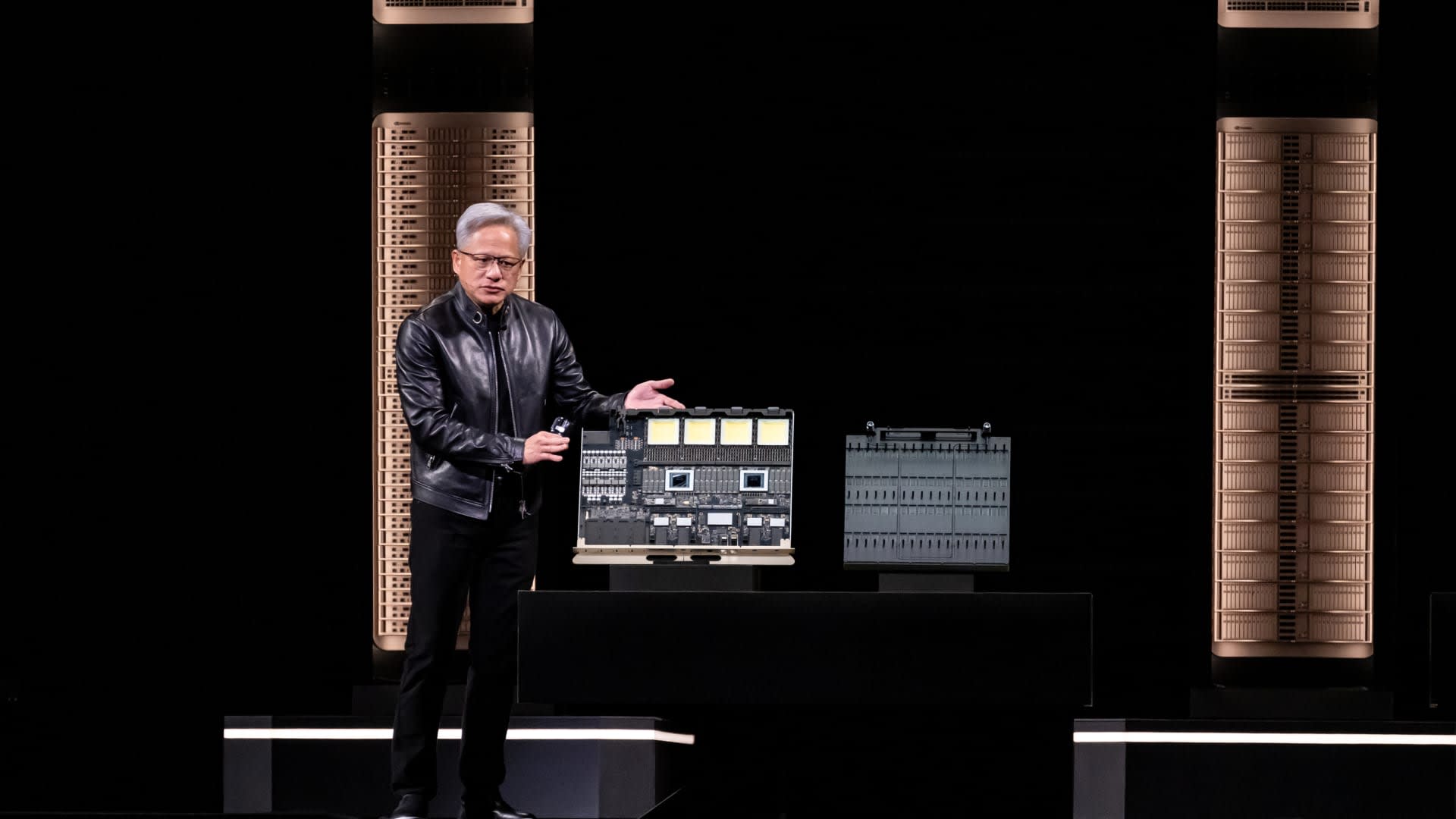
Nvidia is expanding its data center dominance by introducing the Vera CPU, directly challenging Intel and AMD in the server market. This move allows Nvidia to offer a more integrated hardware ecosystem for AI-driven workloads.
Nvidia's Strategic Pivot: The Vera CPU Era
Nvidia has officially unveiled technical specifications and benchmarking data for its upcoming data center CPU, the 'Vera.' This announcement marks a significant expansion of the company's hardware portfolio, moving beyond its traditional dominance in Graphics Processing Units (GPUs) to stake a claim in the central processing unit market. By providing prospective customers with the granular data required to evaluate performance, Nvidia is signaling its readiness to compete directly with established incumbents Intel and Advanced Micro Devices (AMD).
Challenging the Duopoly
For decades, the data center landscape has been defined by a duopoly between Intel and AMD, whose CPUs serve as the 'brains' of almost every server environment. Nvidia, having become the world’s most valuable company on the back of its GPU technology—which is essential for the training and deployment of artificial intelligence—is now attempting to vertically integrate the entire AI server stack. By shipping its own CPUs, Nvidia aims to provide a unified computing environment that could lead cloud providers to reconsider their dependence on traditional x86 architecture.
The Vera Rubin Ecosystem
The unveiling of the Vera CPU, showcased alongside the Vera Rubin Ultra Kyber compute tray and NVLink midplane at the GTC conference, highlights a sophisticated hardware roadmap. This integration is not merely about selling a standalone processor; it is about creating an optimized ecosystem where the CPU and GPU work in tandem to minimize bottlenecks. For cloud providers, the ability to deploy an 'all-Nvidia' server architecture promises improved performance efficiency, which is critical as AI models grow in complexity and resource consumption.
Shifting Battlegrounds in AI Servers
This move represents a fundamental shift in the competitive dynamics of the semiconductor industry. As AI demand remains insatiable, the performance of the CPU—which manages data flow and system coordination—has become as vital as the GPU's processing power. Nvidia’s entry into this space forces customers to evaluate whether a proprietary, highly optimized Nvidia CPU-GPU pairing offers superior value over the general-purpose CPUs traditionally supplied by AMD and Intel.
Future Implications and Market Trends
Looking ahead, the success of the Vera CPU will likely hinge on the adoption rates among hyperscale cloud providers. If Nvidia can demonstrate that Vera provides a distinct performance advantage or better cost-to-performance ratios for AI workloads, it could erode the market share of legacy chipmakers. This creates a new battleground where hardware-software synergy becomes the primary differentiator, potentially forcing Intel and AMD to accelerate their own specialized AI-centric CPU development to remain relevant.
Conclusion
Nvidia's disclosure of the Vera CPU details is a calculated step toward total infrastructure dominance. By moving into the CPU market, the company is not just diversifying its product line; it is challenging the historical foundation of data center computing. As the industry moves further into the age of artificial intelligence, Nvidia’s ability to control the entire compute tray—from the CPU to the NVLink interconnect—places them in a formidable position to redefine the standards of modern server architecture.