Why allies couldn’t keep their Delhi date with Omar Abdullah
Source Entity
Naveed Iqbal
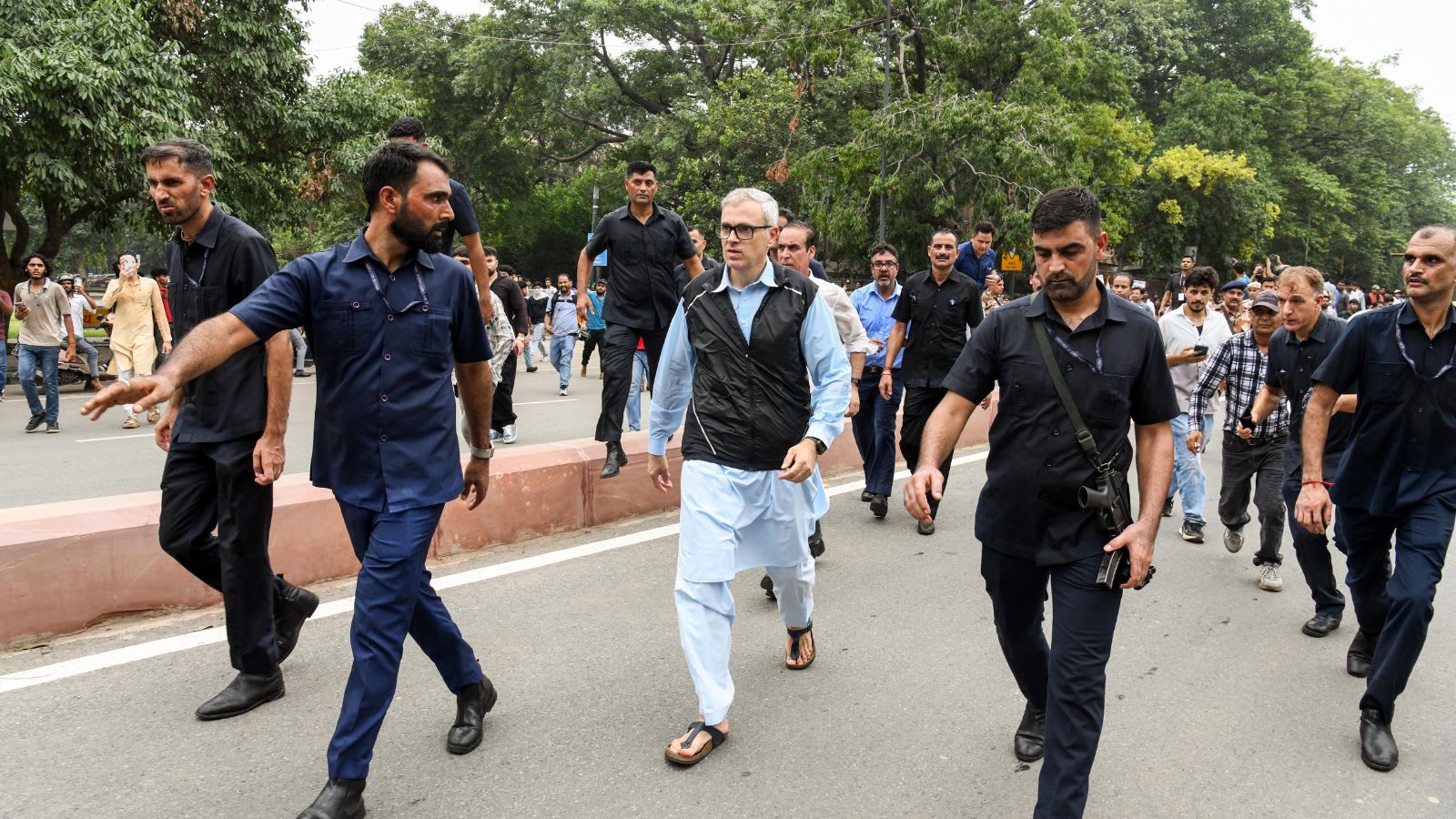
Jammu and Kashmir Chief Minister Omar Abdullah is intensifying his campaign for the restoration of statehood, arguing it is a prerequisite for any constitutional guarantees. Despite a lackluster turnout at a recent Delhi protest and limited support from INDIA bloc allies, Abdullah maintains that this is only the beginning of his administration's efforts.
The Struggle for Statehood: Omar Abdullah’s Political Tightrope
The Delhi Protest and Its Aftermath
On July 20, Jammu and Kashmir Chief Minister Omar Abdullah led a protest at Jantar Mantar in New Delhi, demanding the restoration of statehood to the Union Territory. However, the event faced significant logistical and political hurdles, being overshadowed by simultaneous student demonstrations and failing to garner the robust support of the broader INDIA bloc. This lack of visible momentum highlights the challenging landscape the National Conference (NC) currently navigates as it seeks to pressure the Central government into fulfilling its previous promises regarding J&K's administrative status.
Defining the Strategic Pivot
The NC’s current focus on statehood—rather than the immediate restoration of Article 370—has drawn criticism from some quarters. Critics suggest the party is scaling down its demands, yet Abdullah has defended this strategy as a pragmatic necessity. He argues that the restoration of statehood is the foundational requirement for any meaningful exercise of power. Without the structure of a state, he contends, constitutional guarantees like Article 370 or 371 remain hollow, as Union Territories lack the legislative autonomy inherent in the state and concurrent lists.
Navigating the Union Territory Reality
Abdullah’s argument is rooted in the functional limitations of a Union Territory, where the Centre retains significant control over administration. By positioning statehood as a precursor to broader constitutional restoration, the NC is attempting to reclaim the legislative space required to govern effectively. This framing serves as both a critique of the current administrative arrangement and a roadmap for how the NC intends to challenge the Centre’s centralization of power in the region.
Political Isolation and Future Challenges
The lukewarm reception from opposition allies during the Delhi protest underscores a broader challenge for the NC: maintaining national relevance while managing domestic expectations. The party is under mounting pressure within the Kashmir Valley to deliver on its election manifesto promises. Balancing these internal demands with the need to build a national consensus around the J&K issue remains a difficult task for the Omar Abdullah-led government.
The Road Ahead
Despite the setbacks in Delhi, Chief Minister Abdullah has signaled that the protest was merely the beginning of a sustained campaign. By framing statehood as the primary imperative, the NC aims to keep the promise of the Centre at the forefront of national discourse. The party’s future success will depend on its ability to leverage this demand into a broader political movement that can secure both internal support in the valley and external pressure from national political partners, ultimately forcing a shift in the status quo.
Multiple Citing Sources