Upset by Centre’s response on business rules, reservation report, Omar Abdullah warns of Gen Z-style agitation in J&K
Source Entity
India Latest News: Top National Headlines Today & Breaking News | The Hindu
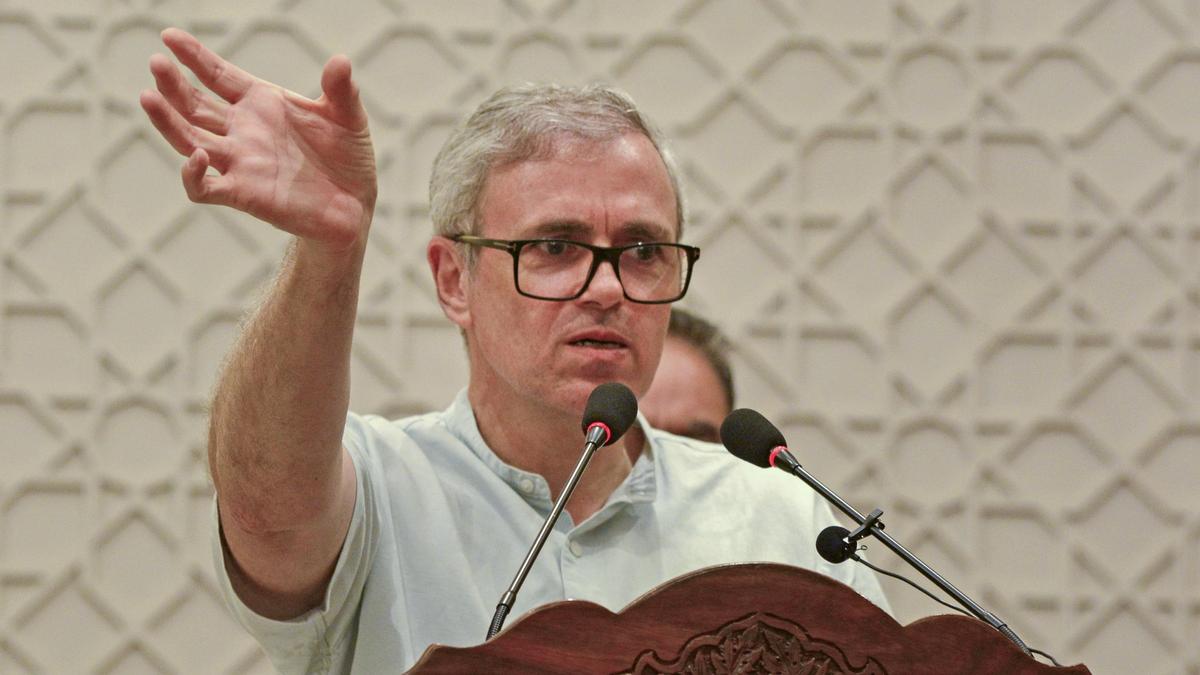
J&K Chief Minister Omar Abdullah has warned of Gen Z-style agitation over delayed business rules and reservation policies. Meanwhile, PDP leader Mehbooba Mufti has questioned the Centre's commitment to constitutional ideals, as the region navigates the push for restored statehood.
Political Tensions Rise in Jammu and Kashmir Over Governance and Autonomy
The Governance Standoff
Jammu and Kashmir Chief Minister Omar Abdullah has expressed significant frustration regarding the current administrative friction between the elected government and the Centre. Central to his grievance is the delay in finalizing the 'Transaction of Business Rules,' a mandatory framework under the J&K Reorganisation Act. These rules are essential for demarcating the specific roles and jurisdictional domains of the Chief Minister, the Council of Ministers, and the Lok Bhavan. Mr. Abdullah argues that the current 'dilly-dallying' by the Centre and the Lieutenant-Governor’s office creates an environment of uncertainty that hampers the functioning of the elected administration.
The Threat of Civil Unrest
Perhaps the most striking element of the Chief Minister's recent statements is his warning regarding potential 'Gen Z-style' agitation. By invoking the protest patterns typical of the digital-native generation, Mr. Abdullah is signaling that the youth of J&K are becoming increasingly disillusioned with the bureaucratic hurdles placed before their elected representatives. He specifically highlighted that if the J&K Cabinet’s reservation report—revised during the period of Lieutenant Governor’s rule—is not addressed or finalized, the government will not be held responsible for the ensuing public backlash.
Constitutional Debates and Legacy
Parallel to these administrative disputes, PDP president Mehbooba Mufti has raised broader questions about the state of Indian democracy. During Independence Day commemorations, she challenged the BJP-led Centre to reflect on whether the nation has truly realized the constitutional vision after 80 years. Her critique was framed against the backdrop of the Women’s Reservation Bill, noting that while the Prime Minister calls for political consensus, the legislative framework for such representation was already established by Parliament in 2023.
Statehood and Historical Context
Chief Minister Abdullah reiterated his administration's primary objective: the restoration of statehood and the constitutional guarantees revoked in August 2019. He emphasized that these guarantees are not merely political talking points but essential components of the region's development path. In his Independence Day address, he also drew a sharp contrast between the current state of J&K and the situation in Pakistan-occupied Kashmir (PoK), suggesting that the instability across the border vindicates the historical decision of the National Conference to align with India in 1947.
Resource Disputes and Future Implications
Adding another layer of complexity to the region's relationship with the Centre is the issue of the Indus Waters Treaty (IWT). Mr. Abdullah termed the treaty 'discriminatory,' asserting that it severely restricts J&K’s ability to utilize its own water resources effectively. This stance highlights a growing trend where the J&K government is increasingly assertive about its economic and resource rights, potentially setting the stage for further friction with New Delhi.
Conclusion
The current political atmosphere in Jammu and Kashmir is characterized by a precarious balance between the aspirations of an elected government and the overarching authority of the Centre. With the administration pushing for statehood and the finalization of crucial policy reports, the warning of potential youth-led agitation highlights the volatility of the situation. As the region moves forward, the dialogue between Srinagar and New Delhi regarding constitutional guarantees and administrative autonomy will remain the defining feature of the political landscape.
Multiple Citing Sources
Verification Required?