'Do you know he may die?': 3 Idiots’ ‘Silencer’ speaks up for Sonam Wangchuk as hunger strike enters day 17
Source Entity
Latest News: Today's Latest News Headlines from India & World | Hindustan Times | Hindustan Times
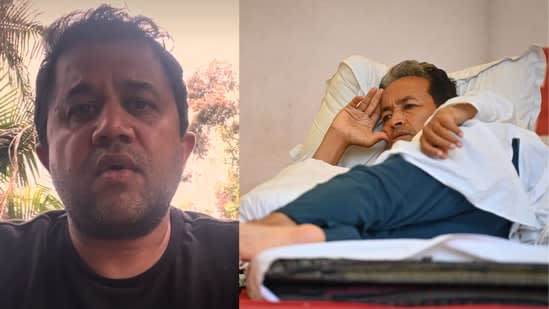
Omi Vaidya made an emotional appeal, saying, "I don't want Phunsukh Wangdu to die," referring to the beloved character from 3 Idiots.
The Intersection of Cinema and Activism: Omi Vaidya's Appeal for Sonam Wangchuk
In a poignant intersection of cinematic legacy and real-world political struggle, actor Omi Vaidya has stepped forward to advocate for the safety and health of innovator and activist Sonam Wangchuk. As Wangchuk's hunger strike enters its 17th day, Vaidya—known for his role as 'Chatur' (the 'Silencer') in the blockbuster film 3 Idiots—has voiced deep concern over the physical toll the fast is taking on the activist. By explicitly referencing the character Phunsukh Wangdu, the fictional inspiration based on Wangchuk, Vaidya has bridged the gap between a beloved cultural icon and a pressing humanitarian crisis in the high-altitude region of Ladakh.
The Emotional Weight of the 'Phunsukh Wangdu' Connection
Omi Vaidya's appeal, "I don't want Phunsukh Wangdu to die," is more than a simple reference to a movie; it is a strategic and emotional plea to the public consciousness. In 3 Idiots, the character of Phunsukh Wangdu represented the pinnacle of selfless innovation, challenging rigid educational systems to prioritize learning and social good. By framing Sonam Wangchuk through this lens, Vaidya reminds the general public that the man currently fasting is not just a political figure, but a symbol of intellectual curiosity and altruism. This connection humanizes the political struggle, transforming a complex administrative dispute into a narrative of protecting a national treasure.
Understanding the Core Struggle: Ladakh's Demands
To understand why Sonam Wangchuk has resorted to a hunger strike, one must look at the precarious political and environmental state of Ladakh. The activist is leading a movement demanding that Ladakh be granted statehood and included under the Sixth Schedule of the Indian Constitution. The Sixth Schedule is critical because it provides for the administration of tribal areas, allowing local communities to create autonomous district councils to protect their land, forests, and cultural identity from external commercial exploitation. For Wangchuk and his supporters, this is a fight for survival against the encroaching threats of industrialization in one of the world's most ecologically fragile zones.
The Role of Celebrity Influence in Political Discourse
The intervention of a public figure like Omi Vaidya serves as a catalyst for visibility. Many citizens in the urban heartlands of India may be disconnected from the geopolitical nuances of the Ladakh region. However, the universal popularity of 3 Idiots provides a common entry point. When an actor associated with such a culturally significant film speaks out, it forces a wider audience to question the reasons behind the hunger strike. This transition from 'entertainment' to 'activism' highlights how celebrity capital can be leveraged to bring attention to marginalized voices and remote territorial disputes that might otherwise be ignored by mainstream media cycles.
Historical Context and the Tradition of Fasting
Sonam Wangchuk's use of a hunger strike is a method deeply rooted in the Indian tradition of non-violent protest, most notably championed by Mahatma Gandhi. By choosing this path, Wangchuk is utilizing a powerful moral tool to signal the urgency of his demands. Entering the 17th day of such a fast is a critical threshold where the risk of permanent organ damage or death becomes a tangible reality. Vaidya's question, "Do you know he may die?", underscores the desperation of the situation and the perceived indifference of the governing authorities, framing the fast as a last resort for a community that feels unheard.
Future Trends and Potential Outcomes
Looking forward, the trajectory of this event likely depends on whether the central government chooses to engage in a formal dialogue with the Ladakhi representatives. If the government remains silent, the emotional appeals from figures like Omi Vaidya may galvanize a larger movement, potentially leading to widespread public protests across different states. Conversely, if the government acknowledges the demands—even partially—it could prevent a humanitarian tragedy. There is a high probability that the discourse will continue to evolve around the tension between national security interests in a border region and the democratic rights of the indigenous population to self-govern.
Conclusion: A Call for Urgent Intervention
Ultimately, the appeal by Omi Vaidya serves as a stark reminder of the human cost associated with political deadlock. The juxtaposition of the 'Silencer'—a character known for comedic rigidity—speaking out against the silence of the state creates a powerful irony. As Sonam Wangchuk continues his fast, the situation transcends a mere request for administrative changes; it becomes a test of the state's willingness to protect the lives of those who dedicate their existence to the betterment of society. The urgency of the plea reflects a hope that the real-life 'Phunsukh Wangdu' will be saved through diplomacy and justice rather than lost to a preventable tragedy.
Verification Required?