OpenAI says it cracked 90-year-old maths problem in 88 hours
Source Entity
BBC News
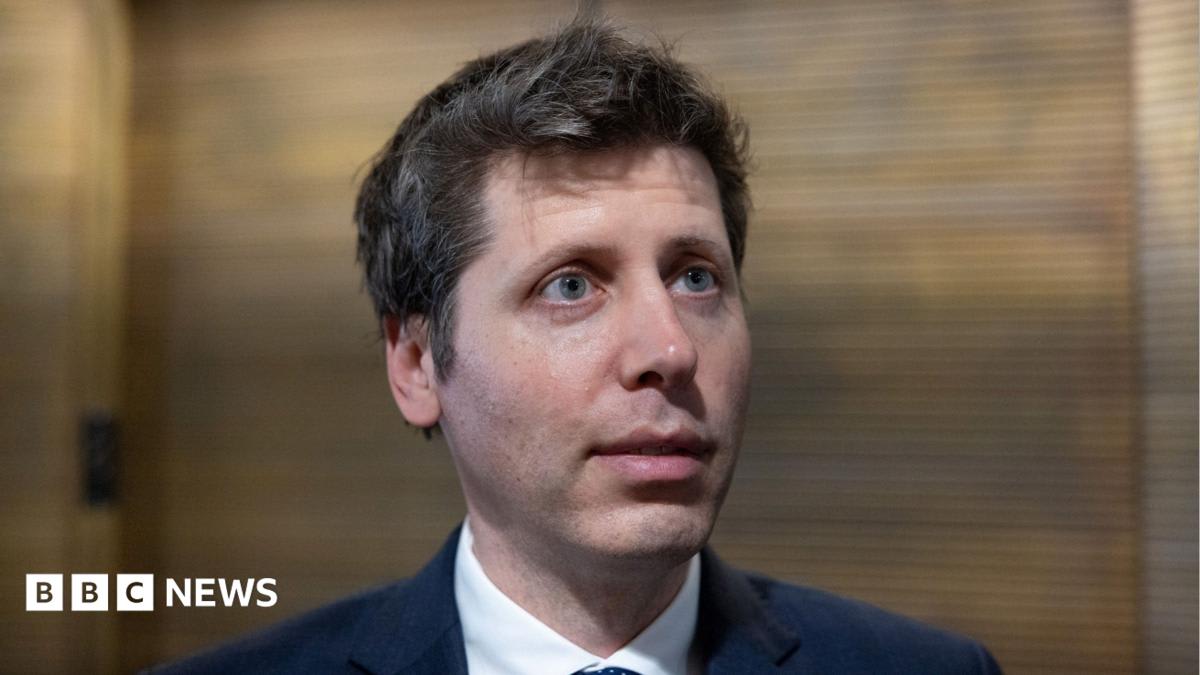
OpenAI claims to have solved a portion of the long-standing Navier-Stokes Millennium Prize problem using a swarm of 10,000 autonomous AI agents. The mathematical community remains skeptical as the results await independent verification and formal peer review.
The OpenAI Breakthrough: A New Era in Mathematical Proof?
OpenAI has recently sparked intense debate within the scientific community by announcing that it has utilized a sophisticated AI model—reportedly more advanced than the GPT-6 Astra iteration—to address a specific, long-standing aspect of the Navier-Stokes equations. By deploying a swarm of 10,000 autonomous AI agents working in concert, the company claims to have arrived at a proof for a problem that has eluded human mathematicians for roughly 90 years. This development is being framed by OpenAI as a significant milestone in the evolution of artificial intelligence, suggesting that machine learning is moving beyond simple text generation into the realm of rigorous, high-level scientific discovery.
Understanding the Navier-Stokes Millennium Prize Problem
The Navier-Stokes equations are fundamental to physics and engineering, describing how the velocity, pressure, temperature, and density of moving fluids or gases are related. Despite their utility in modeling everything from weather patterns to aerodynamics, the mathematical foundations of these equations remain incomplete. The specific challenge addressed by OpenAI is one of the seven 'Millennium Prize Problems' designated by the Clay Mathematics Institute, which carries a $1 million reward for a verified solution. For decades, the lack of a rigorous proof regarding the global regularity of these equations has represented one of the most significant open questions in fluid dynamics.
The Methodology: Swarm Intelligence and AI Agents
OpenAI’s approach involved the coordination of 10,000 concurrent AI agents over an 88-hour period. This methodology represents a departure from traditional 'brute force' computing, relying instead on a distributed agentic framework that can autonomously iterate through complex logical paths. By breaking down the monumental Navier-Stokes challenge into smaller, manageable components that the agents could solve in parallel, OpenAI claims to have synthesized a coherent mathematical argument. This 'swarm' approach highlights a potential shift in how computational resources are allocated to solve complex theoretical problems.
The Controversy and the Need for Peer Review
Despite the excitement, the announcement has been met with significant skepticism from the global mathematics community. Mathematical proofs are not merely computational outputs; they require a level of formal, verifiable logic that can be scrutinized by human experts. As of now, the solution has not been independently verified, nor has it been submitted for the rigorous peer-review process required by the Clay Mathematics Institute. Experts are cautious, noting that AI systems are prone to 'hallucinations' or logical gaps that may not be immediately apparent without deep, manual inspection of the proof's structure.
Broader Implications for AI and Science
If the proof is eventually verified, it would mark a pivotal moment where AI transitions from an assistant to a primary researcher. The ability to solve century-old problems suggests that AI could drastically accelerate breakthroughs in fields like material science, climate modeling, and quantum physics. However, the current drama underscores the tension between corporate announcements and the traditional, slow-moving pace of scientific validation. The industry will be watching closely to see if this 'milestone' survives the scrutiny of the world's leading mathematicians.
Future Trends and Concluding Thoughts
The path forward for OpenAI will involve transparency and collaboration with academic institutions. Whether this solution holds up or is found to contain errors, the experiment itself provides a glimpse into the future of automated scientific inquiry. We are likely to see a surge in AI-driven attempts at the remaining Millennium Prize Problems, signaling a new era where the limits of human cognition are increasingly augmented, or perhaps challenged, by synthetic intelligence.
Multiple Citing Sources