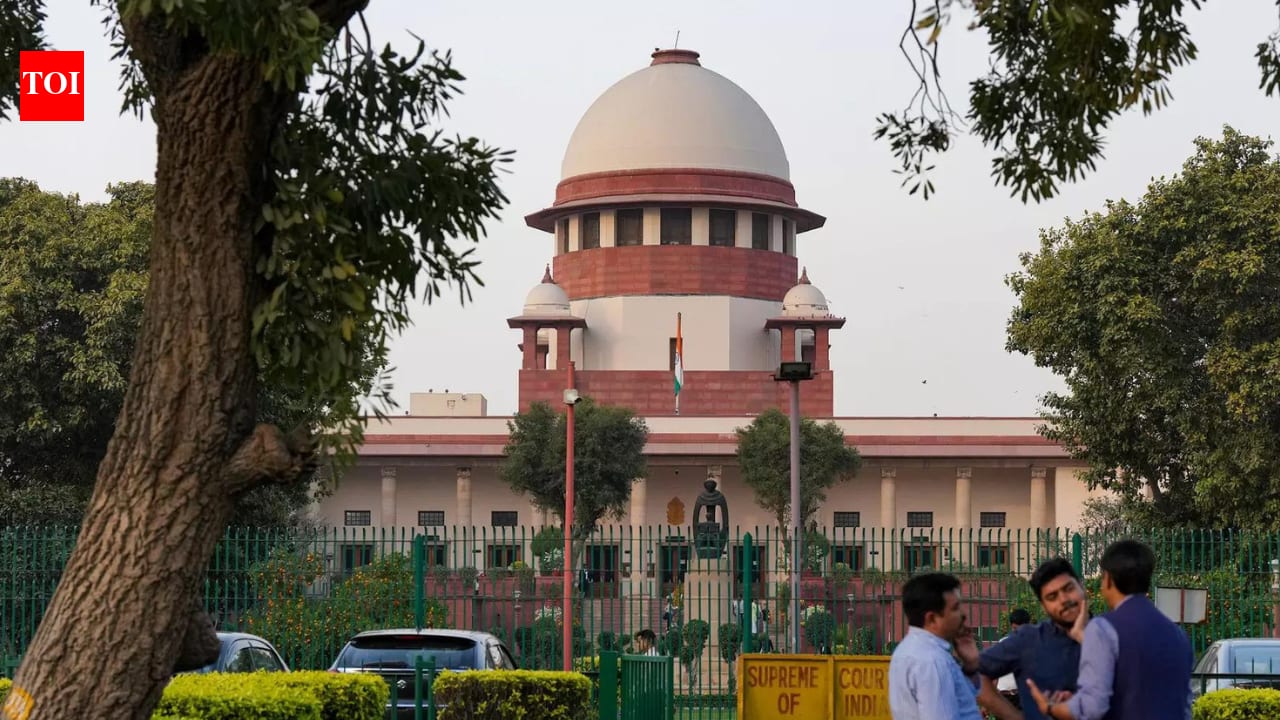
SC agrees to early listing of plea challenging ECI decision-making process
Source Entity
VIVEK DUBEY
The Congress and rival factions in Maharashtra, led by Uddhav and Raj Thackeray, are mobilizing against the Election Commission of India. This follows reports of internal rifts within the poll body regarding electoral roll revisions, prompting demands for inquiries and public protests.
Growing Opposition Pressure on the Election Commission of India
Recent developments have placed the Election Commission of India (ECI) under intense scrutiny. Following reports of internal divisions within the poll panel regarding the revision of voter rolls, political stakeholders are escalating their push for institutional accountability. The Congress Working Committee (CWC) is set to convene to formalize its strategy, with party insiders indicating a strong likelihood of demanding a formal inquiry into the panel’s decision-making processes.
The Roots of Institutional Discord
The current controversy stems from revelations of a rift within the ECI, where two Election Commissioners reportedly objected on record to poll panel steps on 14 separate occasions over a ten-month period. This internal friction, first brought to light by investigative reporting, has provided the Opposition with significant leverage to question the transparency and procedural integrity of the ECI. As the Congress prepares its resolution, the focus remains on whether the commission’s internal mechanisms are sufficiently robust to handle such high-level disagreements.
Judicial Intervention and ECI Defense
Parallel to political maneuvering, the legal front is also heating up. The Supreme Court of India has agreed to an early listing of a plea challenging the ECI’s decision-making process. The ECI, for its part, continues to maintain its stance that the ECINet system is decentralized and that statutory responsibilities are adequately handled by designated election officials. This legal battle underscores the tension between administrative autonomy and the constitutional necessity for oversight in democratic processes.
Maharashtra: A Rare Political Convergence
In a striking display of political alignment, Maharashtra Navnirman Sena (MNS) chief Raj Thackeray and Shiv Sena (UBT) president Uddhav Thackeray have announced a joint protest march in Mumbai on October 4. The march, targeting both the ECI and the ongoing Special Intensive Revision (SIR) of electoral rolls, signals a significant shift in state politics. By mandating that participants carry only the national Tricolour rather than party flags, the Thackeray cousins are attempting to frame the protest as a non-partisan defense of democratic integrity.
Implications for Future Elections
The convergence of legal challenges, CWC resolutions, and street-level protests suggests that the ECI is facing a critical period of public and political distrust. If the calls for an inquiry gain momentum, the ECI may be forced to adopt more transparent internal reporting structures to restore public confidence. Conversely, if the commission maintains its current defense, the narrative of a 'divided panel' may continue to dominate the discourse leading into upcoming electoral cycles.
Conclusion
The confluence of these events highlights a pivotal moment for India's electoral governance. Whether through the CWC’s legislative demands or the public outcry planned in Mumbai, the core issue remains the demand for greater accountability within the ECI. How the commission navigates these pressures—balancing its operational independence against the need for transparency—will likely define the landscape of Indian political discourse in the coming months.
Multiple Citing Sources