Orbital Matter 3D printed the first rigid beam in the vacuum of space
Source Entity
Tim Fernholz
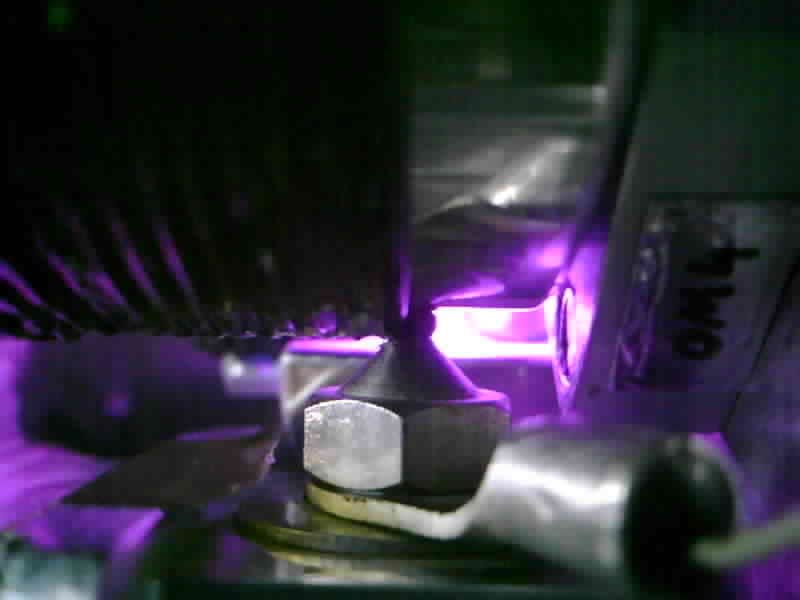
German startup Orbital Matter has successfully 3D printed a rigid beam in space using its Replicator 2 satellite. This breakthrough paves the way for in-orbit manufacturing of large-scale infrastructure like space data centers.
A New Era for In-Orbit Manufacturing
The German startup Orbital Matter has achieved a significant milestone in aerospace engineering by successfully 3D printing a half-meter-long rigid beam in the vacuum of space. This operation, conducted by the Replicator 2 satellite launched on a SpaceX rideshare mission, marks the first time a free-flying spacecraft has performed additive manufacturing of this nature. By extruding custom resin cured via ultraviolet light, the company has effectively demonstrated a method for autonomous construction that bypasses the limitations of traditional, Earth-launched assembly.
The Mechanics of Orbital Printing
The technology behind Replicator 2 involves four specialized 3D printers housed within the satellite. The process functions by extruding coils of resin that harden instantly when exposed to ultraviolet light, a chemical reaction that the company likens to the setting of cement and water. This capability is revolutionary because it allows for the creation of structures that are too large or fragile to be folded and deployed from a rocket fairing, effectively overcoming the physical volume constraints imposed by current launch vehicle aerodynamics.
Scaling Infrastructure for the Future
This demonstration is not merely a technical proof-of-concept; it is a critical step toward the realization of orbital data centers. As the demand for computing power in low Earth orbit increases, spacecraft will require significantly larger surface areas to generate electrical energy via solar arrays and to radiate excess thermal energy into the vacuum of space. Traditional manufacturing methods cannot scale to the size required for these massive structures without incurring prohibitive launch costs and complexity.
Overcoming Launch Constraints
Historically, space agencies have relied on complex deployment mechanisms—such as hinges and telescoping booms—to unfold pre-built structures in orbit. These mechanisms are prone to mechanical failure and add significant weight to the spacecraft. By shifting to in-space manufacturing, Orbital Matter is enabling a paradigm shift where structural components are created on-demand, reducing the need for heavy, complex deployment systems and allowing for more efficient, modular design cycles.
Future Implications and Industry Trends
The success of the Replicator 2 mission suggests that the future of space exploration will be defined by the ability to manufacture in situ. As industries look to build larger orbital habitats, power stations, and communication arrays, the ability to print rigid beams in the vacuum of space provides a scalable solution to infrastructure development. This innovation will likely accelerate the commercialization of orbit, making it feasible to host data centers and heavy industrial operations that were previously restricted by the physical boundaries of Earth-based manufacturing.