From the 'Promised Land' to October 7: Origin story of Israel-Palestine conflict
Source Entity
TRISHA MAHAJAN
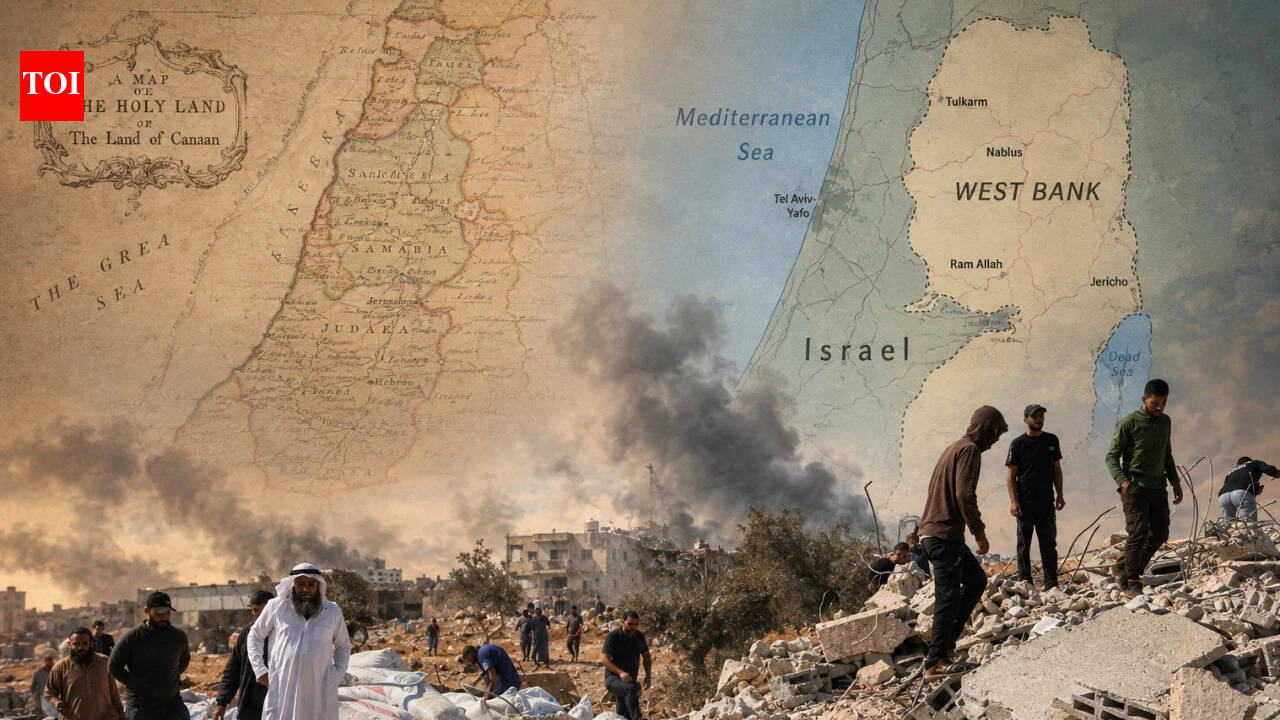
The Israel-Palestine conflict is rooted in ancient territorial claims that have evolved into a complex modern geopolitical struggle. Historical milestones, including the 1917 British promise and the 1947 UN partition plan, continue to shape the contemporary landscape.
The Deep Roots of the Israel-Palestine Conflict
The narrative of the Israel-Palestine conflict is often framed through the lens of modern geopolitics, yet its origins are inextricably linked to ancient history and religious narratives. At the heart of this enduring struggle is the concept of the 'Promised Land,' a belief rooted in biblical texts such as Genesis 13:15, which established a foundational claim for the Jewish people. This historical connection to the land of Canaan serves as the bedrock for modern Zionist identity, transforming an ancient spiritual heritage into a tangible political objective that has persisted for millennia.
Transition from Ancient Homeland to Modern Nation-State
The evolution from a biblical concept to a modern political reality gained significant momentum in the 20th century. A critical turning point occurred in 1917 when Britain issued the Balfour Declaration, signaling its support for the establishment of a 'Jewish national home' in Palestine. This commitment fundamentally altered the demographic and political trajectory of the region, setting the stage for decades of friction between the burgeoning Zionist movement and the indigenous Arab population, both of whom viewed the territory as their rightful home.
The Failure of Partition and the Complexity of Sovereignty
By 1947, the international community attempted to resolve these competing national aspirations through the United Nations' proposed two-state solution. This plan, intended to partition the land into independent Jewish and Arab states, ultimately failed to provide a lasting peace, leading to the first of many wars. The inability to reach a consensus on borders and sovereignty has created a legacy of displacement and political fragmentation, leaving the status of the land in a perpetual state of contestation.
The Turning Point of 1967
The 1967 conflict introduced a new layer of complexity that remains a central obstacle to peace today. The territorial shifts resulting from this conflict, particularly regarding the West Bank, fundamentally changed the geography of the region. By placing these areas under military administration, the conflict transitioned from a fight over the existence of states to a complex dispute over occupation, settlement, and the rights of the populations living within those borders.
The Persistent Significance of the Land
Today, the 'Promised Land' remains a potent symbol that fuels political mobilization and ideological fervor on both sides. The historical maps, such as the 1760 division of the Twelve Tribes, are not merely relics of the past; they are frequently invoked to justify contemporary claims to territory. As long as these ancient narratives remain central to the national identities of both Israelis and Palestinians, the struggle for land will continue to be the primary driver of regional instability.
Future Trends and Concluding Thoughts
Looking forward, the conflict remains locked in a cycle of historical interpretation and modern grievance. The events of October 7 represent the most recent manifestation of this deep-seated friction, highlighting how unresolved historical claims can erupt into contemporary violence. Without a framework that addresses both the ancient emotional attachments to the land and the modern requirements for security and self-determination, the region is likely to remain caught in this historical deadlock for the foreseeable future.