Just the rumour of a bug is enough to find an exploit these days
Source Entity
Hacker News
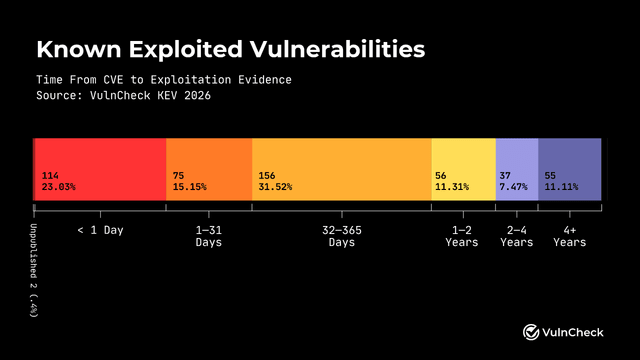
Modern open-source security embargoes are failing as attackers now exploit bugs by monitoring public code changes or rumors. This shift forces maintainers to rethink disclosure strategies to prevent pre-patch exploitation.
The Erosion of Security Embargoes in Open Source
The traditional model of open-source security—where maintainers privately patch vulnerabilities before disclosing them—is facing an existential crisis. As demonstrated by the recent path traversal issue in OCaml's cohttp 6.3.0, the time-honored practice of the 'security embargo' no longer provides the buffer it once did. When a maintainer opened a pull request to fix a vulnerability, they observed immediate probes in their web server logs, indicating that the mere existence of a fix is being weaponized in real-time.
The Visibility Problem
In the modern landscape of software development, public repositories act as a double-edged sword. While the transparency of platforms like GitHub fosters collaboration, it also provides a high-fidelity signal for malicious actors. Automated bots and sophisticated scanners monitor repository activity, including pull requests and commit logs, to identify security-related changes. In the case of the cohttp project, the gap between the internal recognition of a bug and external exploitation was reduced to mere minutes, effectively nullifying the protection that private disclosure procedures were designed to offer.
The Rumor Mill as a Weapon
Perhaps most alarming is the realization that technical details are no longer required to trigger an attack. The author noted that simply knowing the nature of an issue—essentially the 'rumor' of a bug—is enough for attackers to reverse-engineer an exploit. This suggests that threat actors are increasingly using pattern matching and heuristic analysis to identify vulnerabilities based on minimal metadata, turning the software supply chain into an active battlefield where information asymmetry favors the attacker.
Implications for Maintainers
This environment places an immense burden on open-source maintainers who are often working without the resources of large security operations centers. The expectation that they can manage a private embargo while simultaneously securing their infrastructure against active, automated scanning is becoming untenable. If a maintainer's own agent can identify an exploit just by knowing the broad strokes of a problem, then the concept of a 'quiet' fix is effectively dead.
Future Trends in Vulnerability Disclosure
As we look forward, the industry may need to shift away from public-first patching toward more obfuscated workflows. This might include using private forks for security remediation, implementing more rigorous access controls, or adopting 'silent' patching techniques that mask the nature of the changes until the binary is ready for distribution. Ultimately, the cohttp incident serves as a stark reminder that in an age of automated reconnaissance, the speed of disclosure must be balanced against the reality that our public code is being watched by adversaries as closely as it is by contributors.