Palette: teaching a small model to build decks in your design language
Source Entity
Hugging Face - Blog
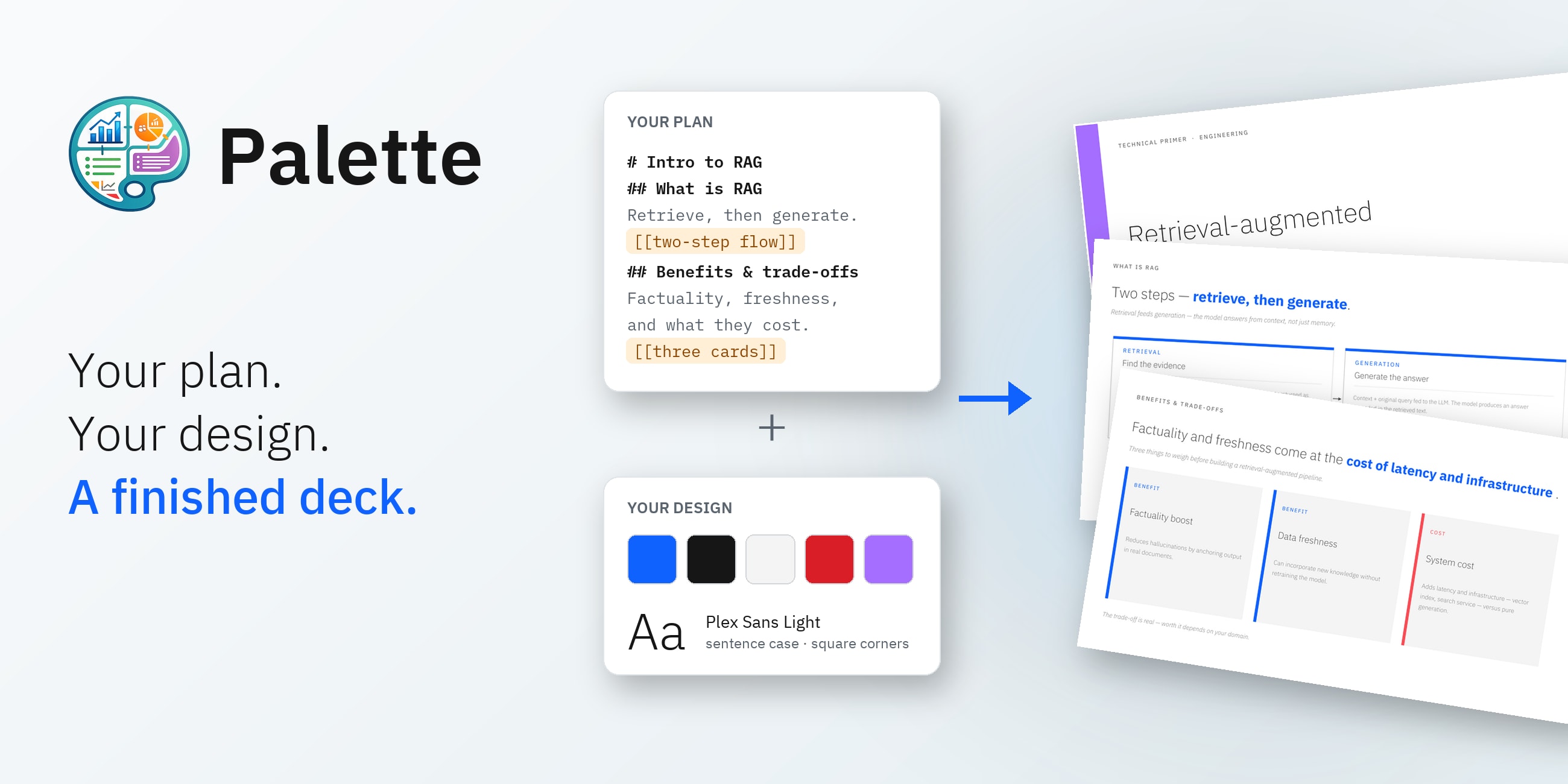
Palette addresses the limitations of frontier AI models in slide design by enabling the use of small, self-hosted models trained on custom design languages. This approach improves brand consistency while ensuring data privacy for sensitive presentations.
The Evolution of AI-Generated Presentations
For many professional users, frontier AI models have become the go-to tools for generating slide decks. While these models are capable of producing high-quality content, they suffer from a significant drawback: a homogenized 'house style.' Because these models are trained on vast, generalized datasets, their outputs often lack the specific aesthetic nuance required by unique brand guidelines. When a user requests multiple decks, the results frequently converge on the same 'AI-generated' aesthetic, making it difficult to maintain distinct visual identities across corporate communications.
The Problem with Frontier Models
The fundamental issue lies in the design biases inherent in large-scale frontier models. No matter how much a user attempts to refine their prompts, the model will eventually drift back to its default styling. Furthermore, the reliance on external cloud-based frontier models poses a significant security risk for organizations. Sensitive, confidential data cannot always be processed through third-party APIs, creating a bottleneck for companies that demand both high-quality design and strict data sovereignty.
The Rise of Localized, Small-Scale Models
The solution presented by Palette is the shift toward self-hosted, open-weight models. By owning the infrastructure, organizations can ensure that their data never leaves their secure environment. However, this transition has historically been hampered by the technical limitations of smaller models. When tasked with complex layout generation, smaller models often struggle with structural integrity, leading to issues like misaligned text, overlapping elements, or content bleeding off the slide boundaries.
Bridging the Gap with Specialized Training
Palette seeks to solve this by teaching small, efficient models to adhere strictly to a specific design language. Instead of relying on a one-size-fits-all approach, Palette focuses on fine-tuning these models on the user's existing templates and design assets. This ensures that the generated output is not only functional but also visually consistent with the brand's established identity.
Strategic Implications and Future Trends
This development signals a broader trend in the tech industry: the move away from monolithic, general-purpose AI toward specialized, task-oriented models. As organizations prioritize data privacy and brand integrity, we can expect to see more tools like Palette that allow for the deployment of custom, domain-specific AI locally. This shift will likely diminish the dominance of 'black box' frontier models in specialized professional workflows, empowering teams to maintain full control over their visual outputs.
Conclusion
In summary, Palette addresses the critical intersection of design, privacy, and technical capability. By enabling small, self-hosted models to master complex layout tasks while adhering to custom design languages, it offers a robust alternative to the generic outputs of frontier AI. As these tools continue to mature, they will play a pivotal role in how businesses automate creative processes without sacrificing quality or security.