‘Among most dehumanising chapters’: Vice-President on India-Pak partition at DU
Source Entity
The Indian Express
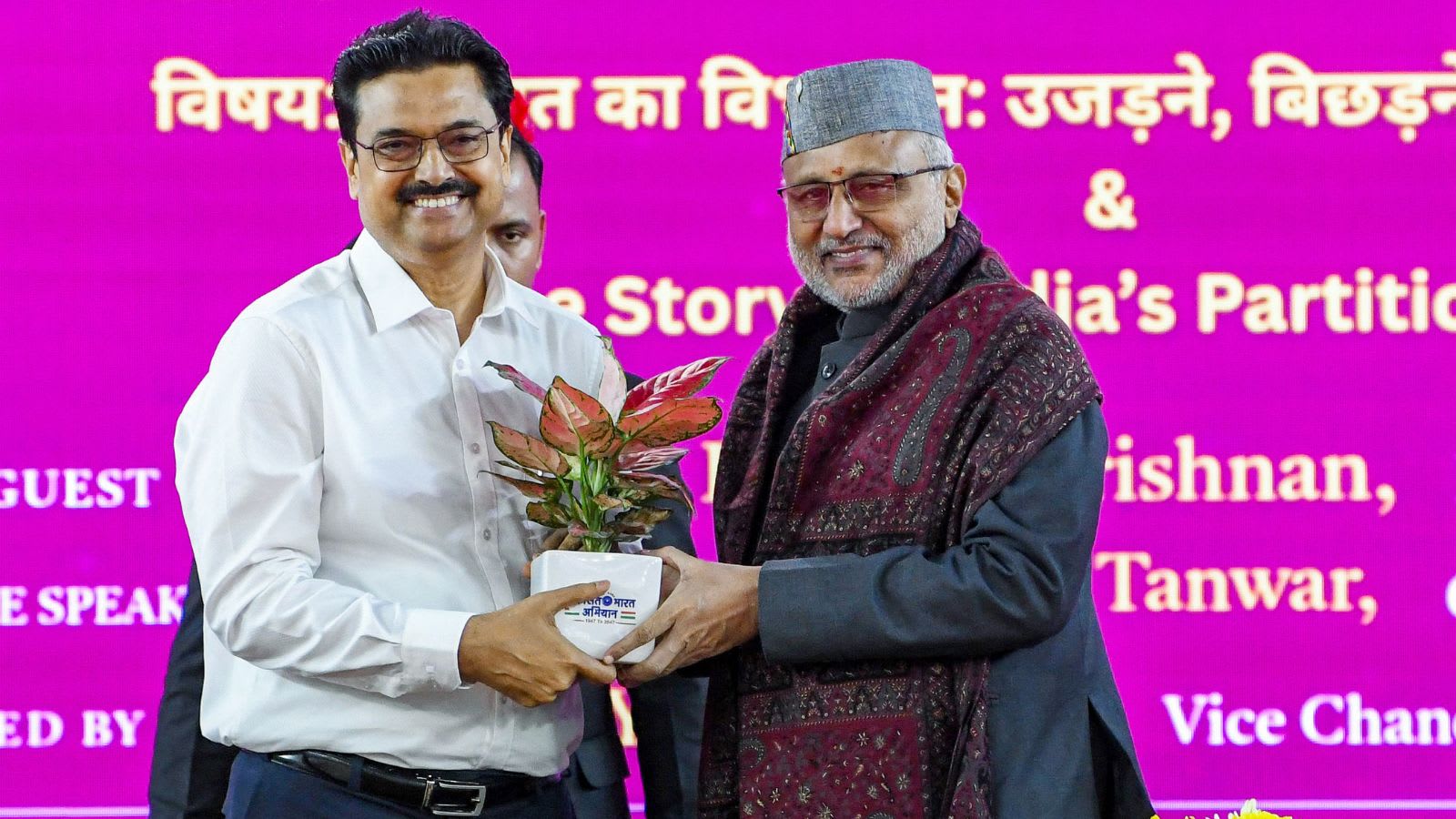
Vice-President C P Radhakrishnan and Prime Minister Narendra Modi marked Partition Horrors Remembrance Day, emphasizing the need to honor survivors' resilience. Simultaneously, BJP leaders utilized the occasion to criticize the Congress party and the Nehru-Gandhi family for their historical role in the 1947 division.
Remembering the 1947 Partition: National Commemoration and Political Discourse
On August 14, India observed 'Partition Horrors Remembrance Day,' a solemn occasion dedicated to reflecting on the human cost of the 1947 division of the subcontinent. Vice-President C P Radhakrishnan, speaking at a seminar at the University of Delhi, characterized the Partition as one of the most dehumanizing chapters in the nation's history. His address, alongside contributions from the Indian Council of Historical Research, emphasized that the intent of the day is not to foster bitterness, but to ensure that the magnitude of the suffering and the sacrifices made during Independence are accurately transmitted to younger generations.
Honoring Resilience and Sacrifice
Prime Minister Narendra Modi took to social media to pay tribute to the millions who were uprooted and lost loved ones during the transition. His message centered on the resilience of the survivors, noting that many rebuilt their lives from nothing and contributed significantly to India's post-independence growth. By highlighting these life journeys, the government aims to underscore the strength of the human spirit while reinforcing a national commitment to maintaining harmony and brotherhood in contemporary society.
The Historical and Political Narrative
While the day serves as a moment of national reflection, it has also become a focal point for intense political debate. BJP leadership, including party president Nitin Nabin, used the remembrance events as a platform to launch a critique against the Congress party and the Nehru-Gandhi family. Nabin argued that the Partition was a maneuver driven by a pursuit of political power, framing the current observance as an essential mechanism to educate the youth about what the party views as historical culpability.
Divergent Perspectives on History
This discourse reveals a clear divide in how the legacy of 1947 is interpreted and utilized in modern Indian politics. For the current administration, the day is both a commemoration of trauma and a critique of the political decisions made by previous leadership. By linking the historical tragedy to the contemporary political opposition, the BJP seeks to reshape the narrative surrounding the independence era, suggesting that the consequences of 1947 continue to influence the political landscape today.
Implications for National Memory
The emphasis on ensuring children learn the 'truth of Partition' suggests a move toward a more detailed national curriculum regarding the events of 1947. Vice-President Radhakrishnan’s assertion that such a catastrophe cannot be reduced to a few lines in a textbook indicates a push for deeper historical engagement. As the country moves forward, the challenge remains to balance the objective study of historical trauma with the goal of fostering national unity, even as these memories are increasingly invoked to settle modern political scores.
Multiple Citing Sources