Perils and promise of Hasina’s return home
Source Entity
Latest News: Today's Latest News Headlines from India & World | Hindustan Times | Hindustan Times
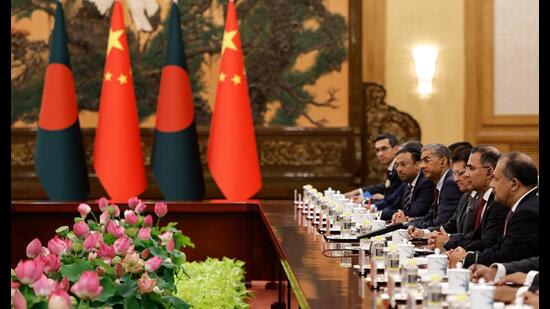
Hasina’s return can heighten political divisions in Bangladesh at a time when the government is focused on restoring economic and political stability
The Delicate Balance: Analyzing the Return of Sheikh Hasina
The prospect of Sheikh Hasina's return to Bangladesh emerges at a pivotal juncture in the nation's history. Following a period of intense civil unrest and her subsequent departure from power, the country currently finds itself under an interim administration tasked with the Herculean effort of rebuilding state institutions. The core tension lies in whether her return would serve as a mechanism for legal closure and reconciliation or act as a catalyst for renewed volatility. As the government prioritizes the restoration of order, the mere possibility of her homecoming introduces a volatile variable into an already fragile political equation.
The Peril of Heightened Political Polarization
The primary risk associated with Hasina's return is the potential for a severe escalation in political divisions. For a significant portion of the population, particularly the student-led movements that precipitated her exit, her presence on Bangladeshi soil could be viewed as a provocation or a threat to the newly won democratic openings. The deep-seated animosity between the supporters of the Awami League and the opposition forces creates a landscape where any move toward her return could be interpreted not as a legal process, but as a political maneuver. This polarization risks triggering street protests, potentially undermining the security apparatus and stalling the interim government's efforts to maintain peace.
Economic Stability and the Cost of Unrest
Beyond the immediate political friction, the economic implications of such a move are profound. Bangladesh's economy, heavily reliant on the ready-made garment (RMG) sector and foreign direct investment, requires a predictable and stable environment to thrive. Political instability traditionally leads to factory shutdowns, supply chain disruptions, and a decline in investor confidence. If Hasina's return sparks widespread unrest, the economic recovery currently being pursued by the government could be derailed. The intersection of political volatility and economic fragility means that any perceived instability in the leadership transition could lead to capital flight and a downgrade in the nation's creditworthiness.
The 'Promise' of Legal Closure and Legitimacy
Conversely, the 'promise' mentioned in the context refers to the necessity of legal resolution. For the interim government to establish a truly stable and rule-of-law-based system, the allegations of human rights abuses and corruption associated with the previous regime must be addressed through formal judicial channels. A return under the condition of facing trial could, in theory, provide a sense of justice and closure for the victims of political violence. By bringing the former leader to account through a transparent legal process, the current administration could paradoxically strengthen its own legitimacy and signal to the international community that Bangladesh is committed to the rule of law over political vendettas.
International Dynamics and Geopolitical Pressure
The situation is further complicated by the geopolitical interests of neighboring powers and global allies. Sheikh Hasina's relationship with India, in particular, has been a cornerstone of regional diplomacy for over a decade. Her return or continued exile is not merely an internal Bangladeshi matter but a regional security concern. The pressure from international stakeholders to ensure a peaceful transition of power may conflict with the domestic demand for accountability. Balancing these external diplomatic pressures with internal societal demands is one of the most significant challenges the current government faces in its quest for stability.
Conclusion: A Precarious Path Forward
In summary, the return of Sheikh Hasina is a high-stakes gamble that could either solidify the foundation of a new Bangladesh or shatter the fragile peace currently being brokered. While the legal necessity of her presence for accountability is clear, the social and political costs of her return could be catastrophic if not managed with extreme precision. The interim government must navigate this narrow corridor, ensuring that the pursuit of justice does not come at the expense of the national stability and economic viability that the citizens of Bangladesh so desperately require.
Verification Required?