US Iran war: Washington spent $37.5 billion so far in attacks on Iran, Pete Hegseth reveals
Source Entity
Latest News: Today's Latest News Headlines from India & World | Hindustan Times | Hindustan Times
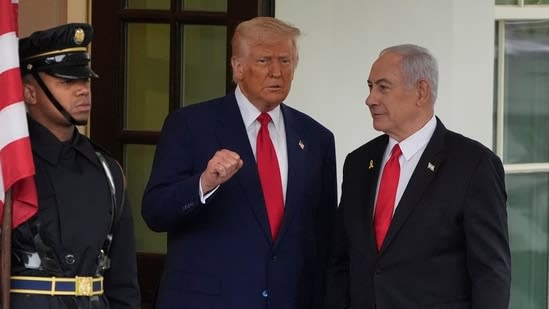
Defense Secretary Pete Hegseth has reported that the U.S. conflict with Iran has reached $37.5 billion in costs. Amidst escalating regional strikes, Hegseth is pressuring Congress to approve a massive $1.5 trillion defense budget to prevent critical operational shortfalls.
The Escalating Financial Burden of the U.S.-Iran Conflict
Defense Secretary Pete Hegseth recently disclosed that the ongoing military engagement between the United States and Iran has reached a staggering cost of $37.5 billion. This figure represents a significant increase from the $29 billion estimate provided in mid-May, highlighting the rapidly accelerating financial strain of the conflict. As the U.S. enters its 10th consecutive day of strikes, the reciprocal nature of the violence—with Iran launching retaliatory attacks against U.S. assets and allies—signals a deepening theater of war that shows little sign of immediate de-escalation.
Congressional Scrutiny and Budgetary Demands
The revelation of these costs occurred during a contentious Senate Appropriations Committee hearing, where Hegseth and Chairman of the Joint Chiefs of Staff Dan Caine defended a proposed $1.5 trillion defense budget. Within this massive fiscal request, approximately $70 billion is explicitly earmarked for the war effort against Iran. Senators expressed skepticism regarding the request, questioning the sustainability of such expenditures while the conflict continues to evolve in complexity and intensity.
The Need for 'Lethality' and Operational Readiness
Secretary Hegseth justified the funding by emphasizing the necessity of maintaining American military superiority. He argued that without the requested appropriations, the Department of Defense faces critical shortfalls that could impede its ability to pay service members, replenish depleted munitions, and sustain vital operations. By focusing on the 'lethality' of the U.S. military, Hegseth frames the $37.5 billion spent thus far not merely as a sunk cost, but as an essential investment required to prevent adversaries from outpacing American capabilities.
Domestic Tensions and Strategic Challenges
The hearing was marked by significant domestic unrest, as protesters repeatedly interrupted Hegseth’s testimony, reflecting the polarized public sentiment regarding the war. These interruptions underscore the broader political challenge facing the Trump administration: balancing the strategic desire for a robust, aggressive military posture in the Middle East with the economic realities of a massive defense budget and a wary domestic audience. The loss of American service members, recently noted by the Pentagon, further complicates the political narrative surrounding these expenditures.
Future Trends and Strategic Implications
Looking forward, the trajectory of this conflict suggests that the financial burden will likely continue to climb unless a diplomatic breakthrough occurs. The administration’s reliance on a $1.5 trillion budget framework indicates a long-term commitment to a high-intensity posture. If the current cycle of strikes and counter-strikes persists, the U.S. may be forced to choose between further ballooning the national defense deficit or reallocating resources from other strategic priorities, potentially impacting global military readiness in other theaters.
Multiple Citing Sources
Verification Required?