Decoding police powers, rights of protesters and law on use of force
Source Entity
Latest News: Todays Latest News Headlines from India & World | Hindustan Times | Hindustan Times
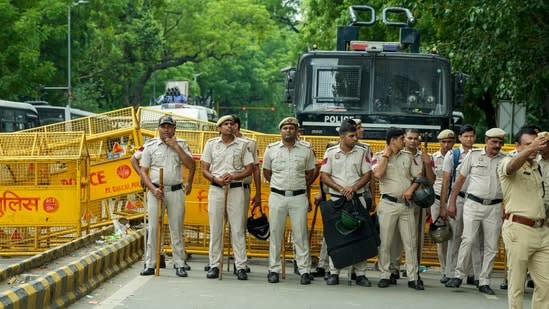
Recent protests have sparked debates over police use of force and surveillance tactics like AI facial recognition. Legal experts note a lack of comprehensive statutory frameworks, leaving public order maintenance to judicial precedent and evolving technology.
The Intersection of Policing, Protest, and Technology in India
Recent demonstrations, including those by the Cockroach Janta Party (CJP) in Delhi and student groups at Jantar Mantar, have thrust the methodologies of Indian law enforcement into the national spotlight. At the heart of the discourse is the tension between the state's mandate to maintain public order and the fundamental rights of citizens to protest. While police are empowered to disperse unlawful assemblies, the lack of a comprehensive statutory framework governing the use of force remains a significant point of contention.
The Legal Vacuum in Crowd Control
Although the Bharatiya Nagarik Suraksha Sanhita (BNSS) and the Bharatiya Nyaya Sanhita (BNS) provide the police with the authority to manage public assemblies, these legislative updates notably fail to mandate essential transparency measures. Currently, there is no provision requiring the use of body-worn cameras or compulsory videography during crowd-control operations. Consequently, the regulation of police force relies heavily on principles of legality, necessity, and proportionality established by constitutional courts, rather than a clear-cut legislative roadmap.
Surveillance and the Digital Panopticon
Beyond physical force, the deployment of surveillance vans equipped with live video feeds and AI-aided facial recognition has introduced a new dimension to policing. At sites like Jantar Mantar, these technologies are utilized by law enforcement to scan crowds, officially to identify known criminals and ensure public safety. However, this practice has faced significant backlash from activists and students who argue that such pervasive monitoring creates an environment of intimidation, effectively chilling the right to peaceful assembly.
Constitutional Implications of Facial Recognition
The dispute over the use of AI-aided surveillance has reached the Delhi High Court, highlighting a critical gap in privacy safeguards. The primary concern is not merely the efficiency of the technology, but the potential for profiling and the absence of specific legal frameworks governing the storage, usage, and retention of biometric data collected from protesters. As digital surveillance becomes an increasingly standard component of modern policing across India, the judiciary is under pressure to define the boundaries of state surveillance in a democratic society.
Future Trends and the Need for Reform
Looking forward, the reliance on digital surveillance is likely to grow as law enforcement agencies seek to modernize their capabilities. However, without a robust legislative framework that explicitly addresses the use of AI in public spaces, the conflict between police tactics and individual civil liberties is bound to escalate. The judiciary will continue to play a pivotal role in shaping this landscape, potentially forcing the legislature to fill the existing gaps in the BNSS and BNS regarding both the use of physical force and the deployment of advanced surveillance technologies.
Verification Required?