The need for political unity in Kashmir
Source Entity
India Latest News: Top National Headlines Today & Breaking News | The Hindu
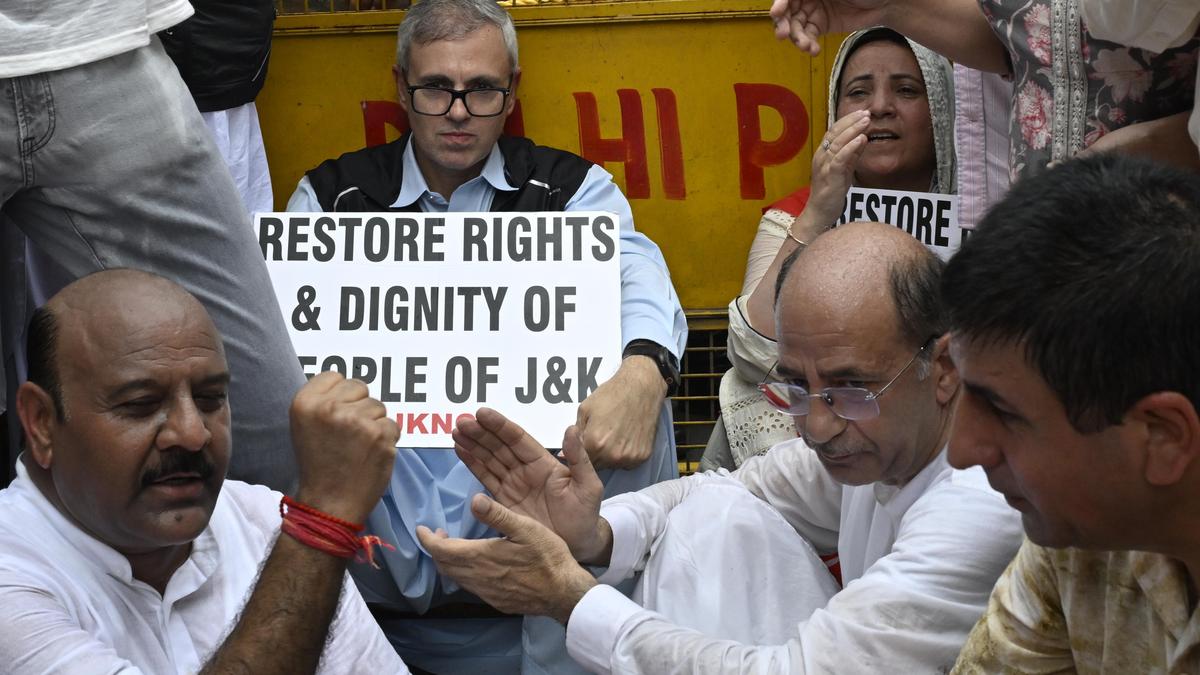
Kashmiri political leaders are struggling to present a united front in New Delhi, highlighting deep internal divisions despite shared goals. Chief Minister Omar Abdullah’s attempts to reclaim federal guarantees have been complicated by fragmented opposition tactics.
The Fragmentation of Kashmiri Political Dissent
Recent events in New Delhi have underscored a critical challenge for the leadership of Jammu and Kashmir: the inability to forge a unified front when engaging with the central government. While the pursuit of federal guarantees and the restoration of dignity remain the stated, non-negotiable objectives for major political figures, the tactical execution of these goals has been marked by discord. The spectacle of Chief Minister Omar Abdullah, Peoples Democratic Party chief Mehbooba Mufti, and Srinagar MP Ruhullah Mehdi launching separate, uncoordinated protests in the national capital serves as a poignant illustration of this internal fracturing.
The Failure of Collective Action
When Omar Abdullah traveled to Delhi in July with his Cabinet to demand the restoration of federal guarantees, he faced immediate administrative pushback, including a denial of permission to protest at Jantar Mantar. Ideally, such a moment of pressure from the center could have served as a catalyst for a unified Kashmiri response. Instead, the subsequent separate demonstrations by Mufti and Mehdi highlighted a lack of strategic coherence. Rather than reclaiming democratic space for dissent, the fragmented approach diluted the message and exposed the deep-seated rivalries that continue to plague local political discourse.
The Burden of a Disempowered Government
A recurring theme in this political theater is the tendency for opposition leaders to focus on critiquing the current local administration for being 'insufficiently combative.' This rhetoric often ignores the reality that the local government is navigating a highly constrained federal environment. By focusing on internal finger-pointing, the Kashmiri leadership risks alienating their own base and providing the central government with further justification to maintain the status quo regarding regional autonomy.
Navigating the Post-October 2024 Landscape
Following his ascent to power in October 2024, Chief Minister Omar Abdullah adopted a strategy of calibrated navigation, aiming to repair the strained relationship between Srinagar and New Delhi. This pragmatic approach was born out of the necessity to secure administrative gains and address the practical needs of the populace. However, this moderation has made him a target for political rivals who equate diplomatic restraint with political weakness, further complicating the prospects for a unified regional strategy.
Implications for Federalism
The broader implication of this disunity is the potential erosion of the Kashmiri voice in national politics. When the leadership cannot align on the fundamental tenets of their federal demands, the central government is effectively empowered to dictate the pace and scope of any political restoration. The historical context of Jammu and Kashmir’s special status necessitates a sophisticated and united political front, yet the current trajectory suggests a continued reliance on symbolic, isolated acts of protest that fail to leverage real political change.
Future Trends and Conclusion
Looking ahead, the political climate in Kashmir will likely remain volatile as long as the leadership prioritizes individual party optics over a collective federal agenda. For any meaningful progress to be made regarding the restoration of democratic guarantees, the leadership must move beyond the current cycle of competitive dissent. Unless the disparate factions can synchronize their efforts and present a singular, coherent vision to the central administration, the goal of achieving a respectable federal arrangement will remain elusive, leaving the region trapped in a cycle of political marginalization.
Verification Required?