40 years ago November 6, 1986: Democrats seize Senate
Source Entity
The Indian Express
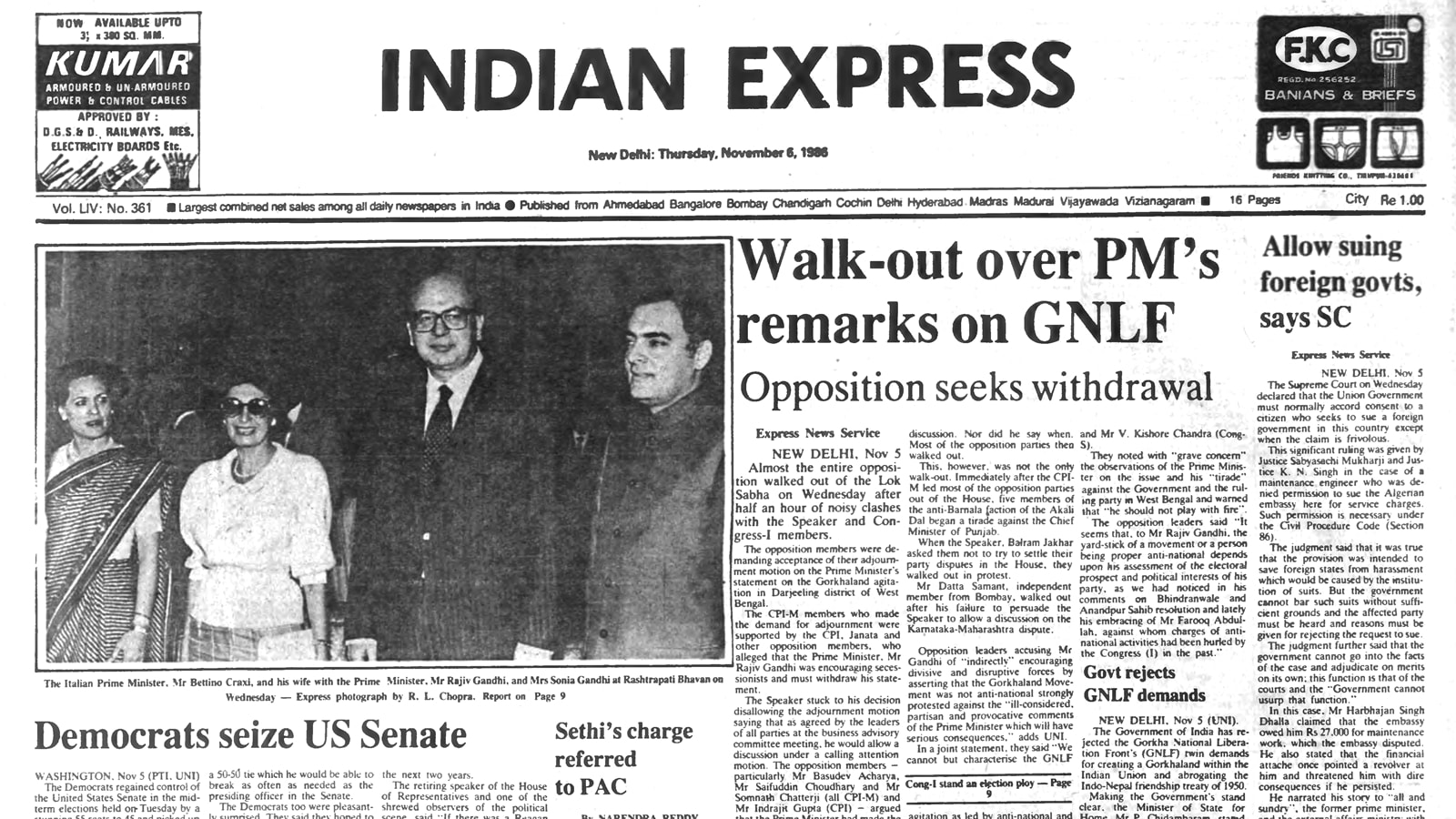
In November 1986, the US Democratic Party secured a Senate majority while opposition parties in India staged a walkout in the Lok Sabha. Additionally, the Indian Supreme Court issued a landmark ruling regarding the legal requirements for citizens suing foreign nations.
The Political Landscape of November 1986: A Global Perspective
The US Midterm Shift
On November 6, 1986, the United States political landscape underwent a significant transformation as the Democratic Party reclaimed control of the Senate. Securing a 55 to 45 seat majority, the Democrats effectively curtailed the legislative agenda of the Reagan administration. This shift was bolstered by additional gains in the House of Representatives, where the party already held a comfortable lead. While this represented a major victory for the Democrats, the Republican Party found a silver lining by capturing key gubernatorial races, most notably in Texas, signaling that localized political tides did not always mirror the federal upheaval.
Parliamentary Turmoil in India
Simultaneously, the Indian political sphere was marked by high tension within the Lok Sabha. The Opposition engaged in a dramatic walkout following escalating clashes with the Speaker and members of the Congress(I) party. The catalyst for this protest was a demand for an adjournment motion concerning the Prime Minister’s recent statements on the Gorkhaland agitation. This event underscored the volatile nature of the Gorkhaland movement during the mid-80s and the difficulty of maintaining legislative decorum during periods of intense regional civil unrest.
Legal Precedents and Sovereign Immunity
Beyond electoral and parliamentary conflict, the Indian legal system reached a pivotal conclusion regarding international relations. The Supreme Court of India declared that the Union government must normally grant permission to any citizen seeking to sue a foreign government within Indian jurisdiction. This ruling established a nuanced gatekeeping mechanism, balancing the rights of individual citizens with the diplomatic sensitivities inherent in international litigation involving sovereign states.
Historical Significance and Implications
These three events, occurring concurrently in late 1986, provide a snapshot of a world grappling with internal governance challenges. In the United States, the 1986 midterms served as a classic example of legislative checks and balances, forcing a divided government dynamic. In India, the combination of parliamentary disruption and judicial intervention regarding foreign states highlights the institutional pressures faced by the nation as it navigated both internal regional movements and its position on the global legal stage.
Conclusion
The convergence of these events illustrates the multi-faceted nature of political power in the late 20th century. Whether through the ballot box in Washington, the protest floor in New Delhi, or the high benches of the Supreme Court, the themes of 1986 remained centered on the struggle for accountability, representation, and the formalization of international legal standards.