Priyanka's 'gaumutra expert' remark stirs row, over 200 academicians slam Lok Sabha MP
Source Entity
PRIYANSHI RASTOGI
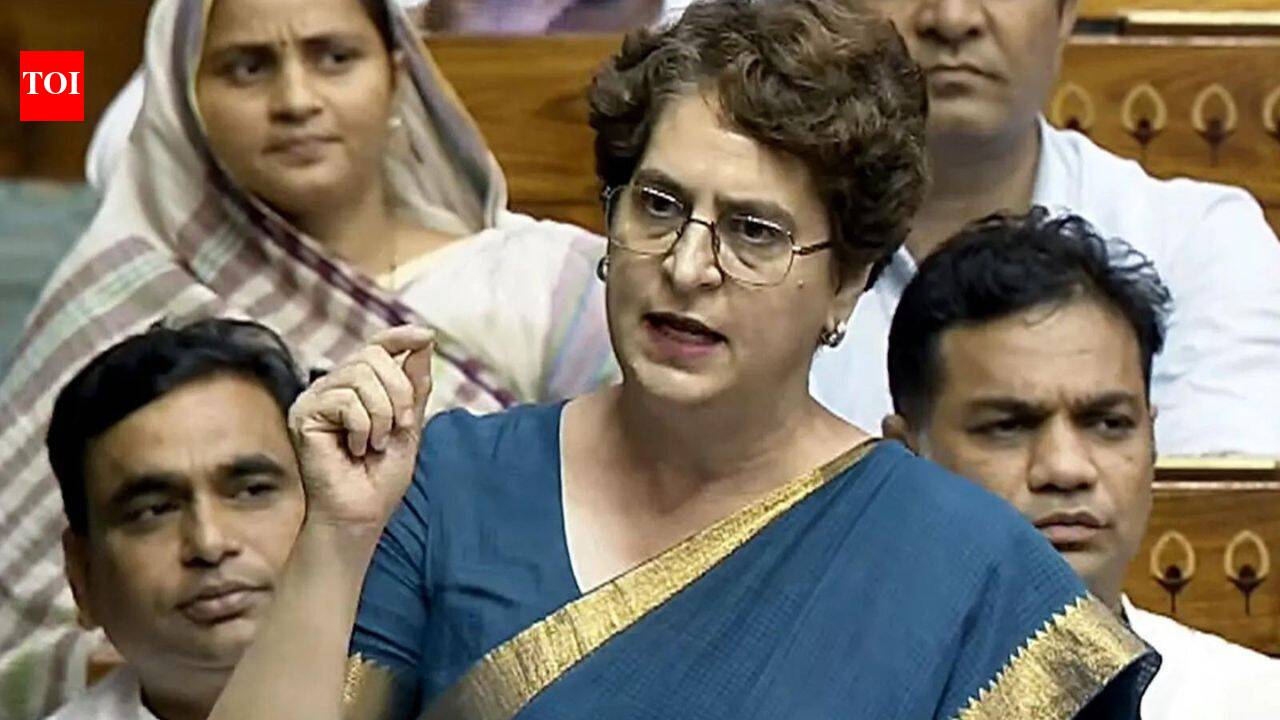
Over 200 academicians have issued a formal protest against Congress MP Priyanka Gandhi Vadra for her disparaging remarks toward IIT Madras director V. Kamakoti. The scholars argue that her 'gaumutra expert' jibe undermines scientific temper and replaces substantive policy debate with political caricature.
The Intersection of Political Discourse and Academic Integrity
A significant controversy has erupted following an open letter signed by 215 prominent academicians, including Vice Chancellors and directors of premier Indian Institutes of Technology (IITs) and Indian Institutes of Management (IIMs). The collective has formally condemned Congress Lok Sabha MP Priyanka Gandhi Vadra for her remarks directed at Prof. V. Kamakoti, the director of IIT Madras. During a parliamentary session on July 28, 2026, concerning The Public Examinations (Prevention of Unfair Means) Amendment Bill, Gandhi allegedly referred to the academician as a “gaumutra expert,” a comment that has sparked widespread backlash from the scientific and intellectual community.
The Erosion of Substantive Debate
The central grievance expressed by the signatories is that such remarks represent a disturbing shift in parliamentary culture. By reducing a distinguished academic administrator to a dismissive political caricature, critics argue that the discourse surrounding critical legislation is being trivialized. The letter emphasizes that when political representatives resort to name-calling rather than engaging with the technical or policy-based merits of a bill, the legislative process suffers. This move away from nuance threatens the quality of policy-making in India.
Scientific Temper and Constitutional Values
Beyond the personal affront to Prof. Kamakoti, the academicians argue that this rhetoric poses a broader threat to the “scientific temper” enshrined in the Indian Constitution. Article 51A(h) of the Constitution identifies the development of a scientific temper, humanism, and the spirit of inquiry as a fundamental duty of every citizen. The signatories posit that by mocking academic institutions and their leadership through loaded, politically charged metaphors, leaders risk delegitimizing the very institutions that are essential for the nation's progress and rational development.
Implications for Academic Independence
This incident highlights a growing friction between the political sphere and the academic establishment. IITs and IIMs are historically viewed as autonomous bastions of research and education, shielded from the immediate fray of partisan politics. When an MP targets the leadership of such an institution, it raises concerns about the potential for political encroachment into academic spaces. The signatories are clearly signaling that they will not remain silent when the professional dignity of academic leaders is compromised for short-term political gain.
Future Trends in Parliamentary Conduct
As India continues to navigate complex legislative landscapes, the call from these 200+ scholars may serve as a catalyst for a broader conversation regarding parliamentary decorum. If political leaders continue to utilize derogatory labels to characterize opponents or experts, it is likely that civil society and academic bodies will become increasingly vocal in their oversight. The precedent set by this letter suggests a future where the intellectual community takes a more active role in policing the standards of political rhetoric to ensure that policy debates remain grounded in facts and respect.
Conclusion
The collective response to Priyanka Gandhi Vadra’s comments serves as a reminder that the credibility of India’s premier educational institutions is a matter of national importance. By prioritizing substantive debate over political theater, the signatories hope to preserve the integrity of the legislative process and protect the dignity of those who lead the nation's centers of excellence. Whether this intervention will lead to a change in the tone of parliamentary discourse remains to be seen, but it has certainly drawn a firm line in the sand regarding the respect afforded to the academic community.