Pune Inc: When AI-surveillance vehicle helped city police manage Wari crowd
Source Entity
Dipanita Nath
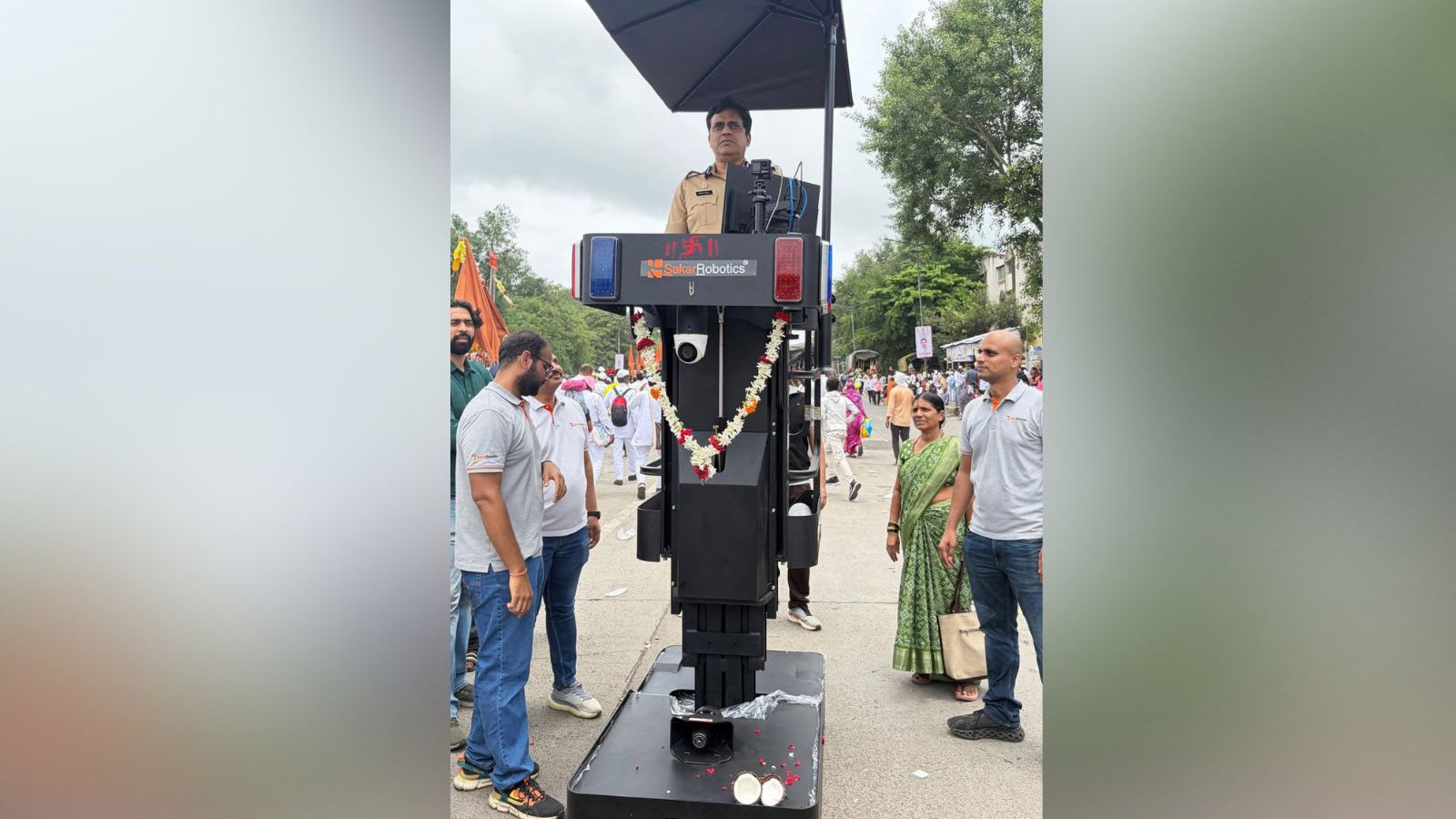
The four-wheel electric vehicle is essentially a four-metre mobile surveillance tower equipped with a lift that allows police personnel and event organisers to monitor crowds from an elevated point. (...
Enhancing Public Safety: The Integration of AI-Surveillance in Pune's Wari Pilgrimage
During the annual Wari pilgrimage, one of Maharashtra's most significant spiritual gatherings, the Pune Police implemented a cutting-edge technological solution to manage the immense influx of devotees. The deployment of a specialized AI-surveillance vehicle marks a pivotal shift in how urban law enforcement handles high-density crowd dynamics. By utilizing a mobile, four-wheel electric vehicle equipped with a four-meter surveillance tower and a lift system, the police were able to overcome the traditional limitations of ground-level monitoring, ensuring a safer environment for thousands of pilgrims.
Technical Capabilities and Operational Advantages
The vehicle's primary innovation lies in its mobility and elevation. Unlike fixed CCTV installations, which often have static blind spots, this mobile tower allows police personnel and event organizers to move to strategic vantage points in real-time. The integrated lift enables officers to ascend to a height of four meters, providing a panoramic view of the crowd. This elevated perspective is critical for identifying 'choke points'—areas where the crowd density becomes dangerously high—allowing authorities to redirect the flow of people before a stampede or chaotic situation occurs. Being electric, the vehicle also ensures a low noise profile and zero emissions, which is essential when operating within densely packed religious processions where peace and environmental health are prioritized.
The Role of AI in Crowd Analytics
While the physical elevation provides a visual advantage, the 'AI' component of the surveillance system suggests a move toward intelligent monitoring. AI-driven surveillance typically involves software capable of heat-mapping crowd density, detecting anomalous movements, and potentially recognizing faces or suspicious objects. In the context of the Wari pilgrimage, such technology allows the Pune Police to transition from reactive policing to proactive management. Instead of responding to an incident after it has occurred, the AI can alert command centers to emerging patterns of congestion, enabling a rapid and targeted deployment of ground forces to specific coordinates.
Historical Context and Urban Challenges
Pune, as a major hub in Maharashtra, frequently hosts large-scale events that strain city infrastructure. The Wari pilgrimage is particularly challenging due to its organic nature and the sheer volume of pedestrians moving through narrow city arteries. Historically, crowd management relied heavily on manual observation and static barriers. The introduction of mobile surveillance towers represents a modernization of the 'Smart City' initiative, where technology is not just used for traffic signals or waste management, but is integrated into the core of public safety and disaster prevention during cultural milestones.
Broader Implications for Indian Law Enforcement
The success of this deployment in Pune serves as a scalable model for other Indian cities facing similar challenges. With festivals like the Kumbh Mela or Ganesh Chaturthi drawing millions, the need for mobile, high-vantage surveillance is universal. This shift indicates a broader trend in Indian policing: the adoption of 'Tech-Ops' where hardware (electric vehicles) and software (AI analytics) converge. This approach reduces the physical strain on police personnel and minimizes the need for intrusive physical barriers, creating a more fluid and less stressful experience for the general public.
Future Trends in Event Surveillance
Looking forward, it is likely that such vehicles will evolve to include drone docking stations or integrated 5G communication hubs to provide seamless data transmission to central command centers. We can expect to see the integration of predictive analytics, where AI uses historical data from previous Wari pilgrimages to predict where crowds will gather before they even arrive. As electric vehicle technology becomes more robust, these surveillance towers may become autonomous, patrolling designated perimeters to provide constant, unmanned oversight.
Conclusion
The use of the AI-surveillance vehicle during the Wari pilgrimage is a testament to the effective synergy between technology and traditional governance. By prioritizing visibility and mobility, the Pune Police have not only enhanced the safety of the devotees but have also set a benchmark for urban crowd management in India. This initiative proves that when technology is strictly anchored to the specific needs of a local event, it can significantly mitigate risks and ensure the smooth conduct of large-scale public gatherings.