Punjab farm fire cases reach 2,787, with 586 incidents from Tarn Taran
Source Entity
India Latest News: Top National Headlines Today & Breaking News | The Hindu
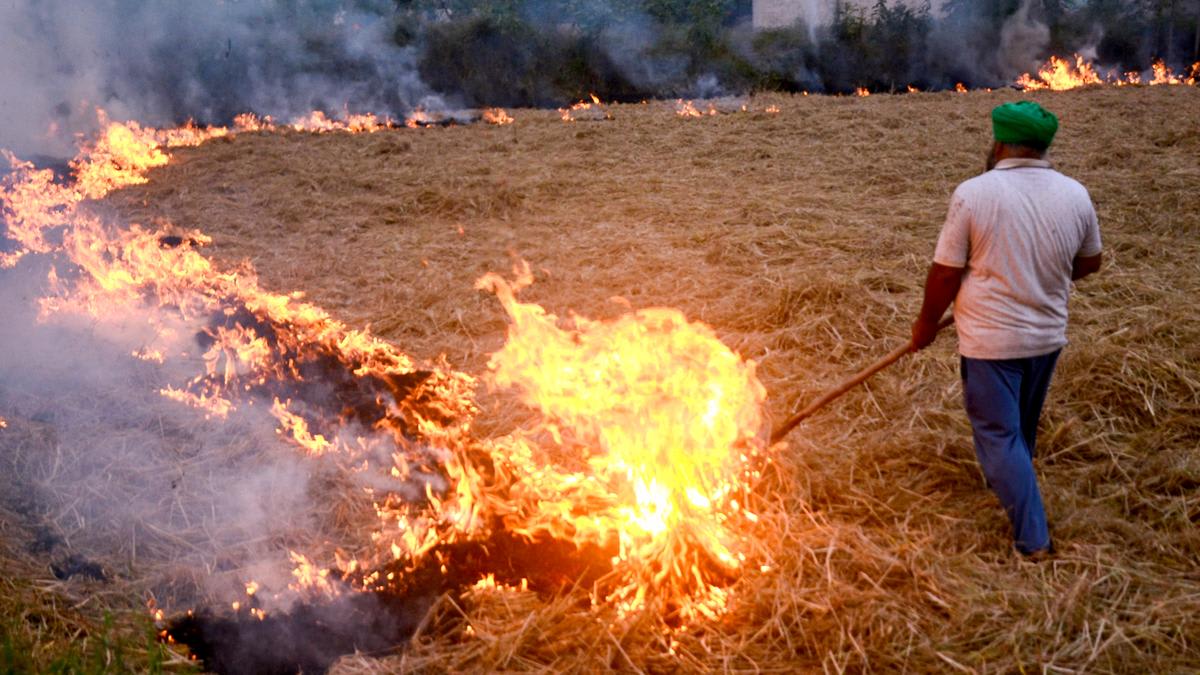
Punjab faces a spike in stubble burning, with 2,787 incidents recorded by early November 2026. The CAQM has intensified enforcement, issuing show-cause notices and imposing over ₹46 lakh in fines to address the resulting air quality crisis in Delhi.
The Escalating Crisis of Stubble Burning in Punjab
The air quality crisis in India’s capital has once again brought the issue of stubble burning to the forefront of national discourse. As of November 2026, official data indicates that Punjab has recorded 2,787 farm fire incidents between September 15 and November 5. This surge, concentrated heavily in districts like Tarn Taran and Ferozepur, has prompted immediate intervention from the Commission for Air Quality Management (CAQM).
Accountability and Regulatory Pressure
The CAQM has adopted a more aggressive stance, issuing show-cause notices to deputy commissioners and senior police officials across nine districts, while extending warnings of personal accountability to 12 others. This shift signifies a pivot from broad policy directives to individual administrative responsibility. By targeting the bureaucratic chain of command, the Commission aims to bridge the gap between anti-burning legislation and ground-level enforcement, which has historically been a point of failure in curbing agricultural residue fires.
Financial Deterrents and Legal Action
Financial penalties have become a cornerstone of the current enforcement strategy. With authorities imposing over ₹46 lakh in environmental compensation and successfully recovering more than ₹24 lakh, there is a clear effort to make the costs of illegal burning exceed the short-term economic benefits farmers derive from clearing fields quickly. Furthermore, the registration of 710 FIRs, including 294 in Tarn Taran under Section 223 of the Bharatiya Nyaya Sanhita, underscores the transition of stubble burning from a localized nuisance to a serious criminal matter involving the disobedience of public orders.
The Failure of Incremental Improvement
While data shows that farm-fire incidents have technically declined over the past three years, the current air quality metrics in Delhi prove that this reduction is insufficient. The persistence of high-pollution events despite these declines suggests that marginal improvements are failing to address the cumulative impact on public health. The environment ministry's recent critiques highlight that without a more fundamental transformation in crop management practices, current efforts may only be delaying, rather than solving, the annual smog emergency.
Broader Implications and Future Outlook
The intersection of agricultural logistics and environmental health remains a complex challenge. As the CAQM intensifies its crackdown, the focus must eventually shift toward sustainable alternatives to residue burning. The current data serves as a stark reminder that as long as farmers face economic pressure to clear land quickly, punitive measures alone may yield diminishing returns. Future trends will likely require a blend of stricter enforcement—as seen in the current crackdown—and enhanced technological support to make residue management a financially viable reality for the agrarian sector.
Verification Required?