QGIS bans AI assisted contributions
Source Entity
Hacker News
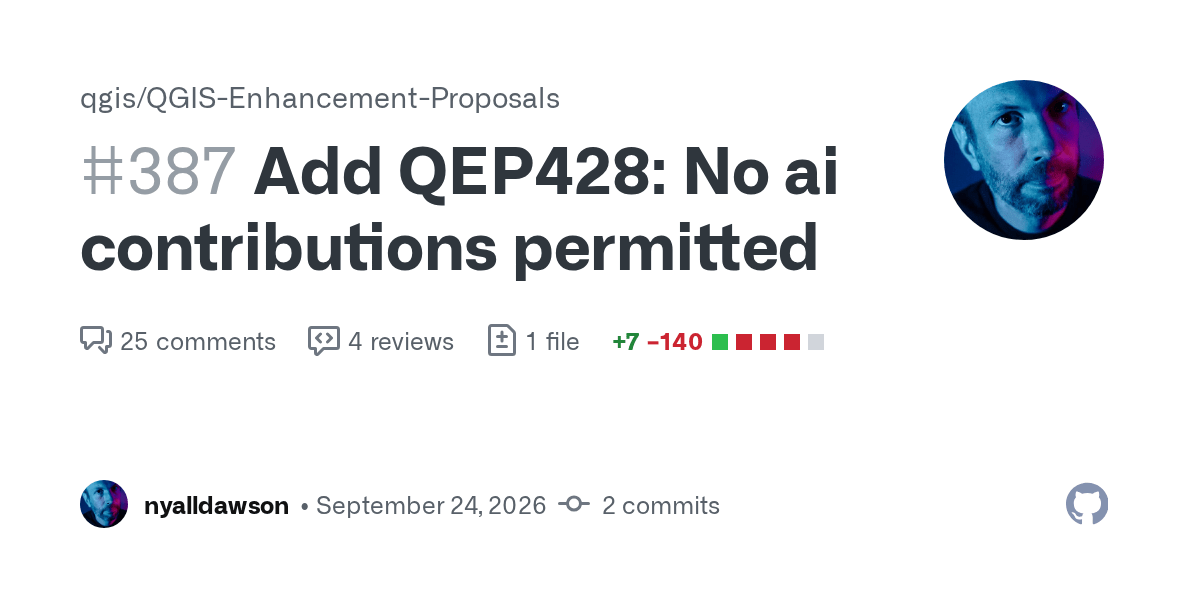
The QGIS project has formally implemented a ban on AI-assisted contributions. This decision reflects growing concerns within the open-source community regarding the integrity and provenance of code contributions.
QGIS Implements Ban on AI-Assisted Contributions
The Shift in Open Source Governance
The QGIS project, a leading open-source Geographic Information System, has officially moved to prohibit AI-assisted contributions. This policy shift represents a significant moment in the evolution of open-source software maintenance, where the focus is shifting from pure productivity to the rigorous verification of code provenance. As generative AI tools become ubiquitous in coding workflows, projects like QGIS are setting boundaries to protect the integrity of their codebase.
Addressing the Challenge of Code Provenance
The primary motivation behind this ban stems from the difficulty in verifying the origins and security implications of code generated by large language models (LLMs). In an environment where the QGIS platform relies on community-driven development, the introduction of non-human generated code can complicate the review process. By banning such contributions, maintainers aim to ensure that every line of code added to the repository is the product of human logic and intent, thereby reducing the risk of hidden vulnerabilities or license contamination.
Implications for Community Collaboration
This decision impacts how contributors interact with the QGIS repository. The technical constraints mentioned, such as the rejection of suggestions that do not modify existing code or the invalidation of suggestions on deleted lines, highlight a strict adherence to traditional contribution protocols. By enforcing these rules alongside the AI ban, the project is signaling that it prioritizes a transparent, traceable development history over the speed of implementation.
The Broader Context of AI in Software Development
While AI tools can significantly accelerate the development lifecycle, they also introduce a 'black box' element to software engineering. The QGIS decision mirrors a broader trend in the open-source community where maintainers are grappling with the balance between innovation and quality control. As these projects serve as critical infrastructure for mapping and geospatial analysis, the stakes for maintaining a stable and auditable codebase are exceptionally high.
Future Trends and Project Sustainability
Looking forward, the QGIS stance suggests that we may see a bifurcation in the open-source landscape. Some projects may embrace AI-assisted workflows with strict auditing requirements, while others, like QGIS, will likely maintain a 'human-only' standard to guarantee the long-term maintainability and security of their systems. This policy serves as a benchmark for other software projects currently debating their own guidelines regarding the integration of automated code generation tools.