Quantum computers outperform classical ones, with results you can trust
Source Entity
John Timmer
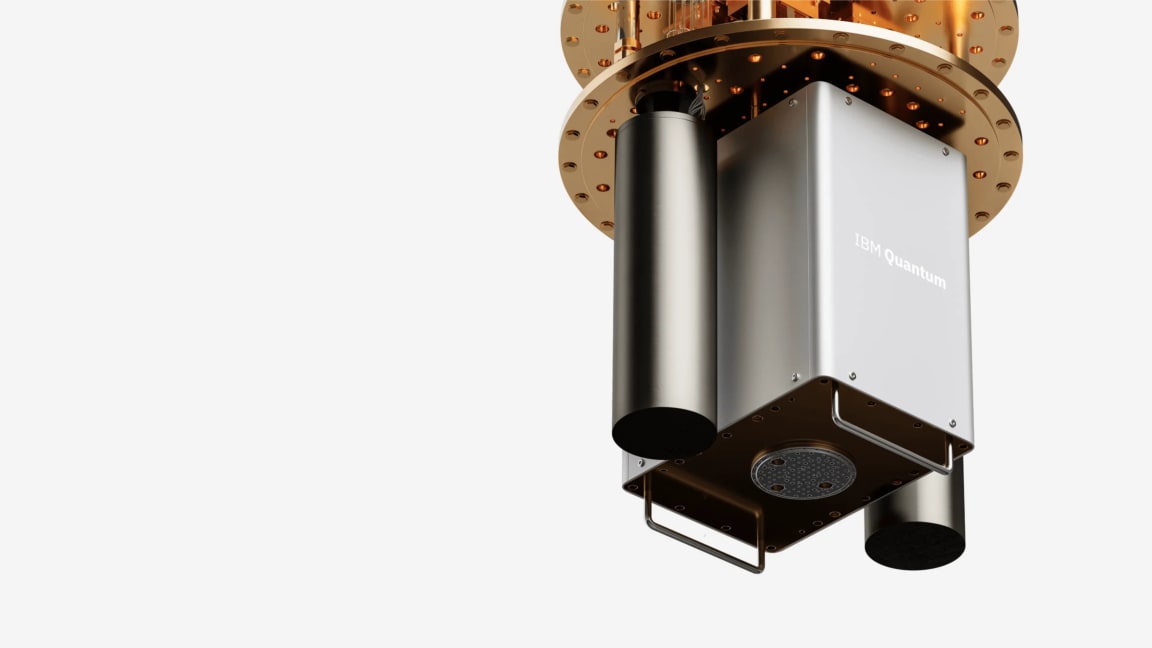
Researchers are developing new methods to verify quantum computer results that are currently too complex for classical machines to confirm. This breakthrough addresses the reliability issues of noisy, intermediate-scale quantum devices.
The Verification Challenge in Quantum Computing
Quantum computing stands at a critical juncture where the theoretical promise of exponential speedup meets the harsh reality of hardware limitations. While algorithms have been mathematically proven to outperform classical machines, we currently lack the robust infrastructure to run these complex processes. Today’s quantum systems, often referred to as Noisy Intermediate-Scale Quantum (NISQ) devices, are plagued by error rates that cast doubt on the reliability of their outputs.
The Dilemma of Unverifiable Results
The central tension in modern quantum research is the 'verification gap.' When a quantum computer successfully executes a task that is computationally prohibitive for a classical supercomputer, there is no classical benchmark available to confirm the accuracy of the result. If the quantum hardware is prone to noise and decoherence, the output could be entirely incorrect without the researcher having any way to perform a sanity check. This creates a paradox where we seek to prove quantum supremacy while simultaneously struggling to trust the data produced.
Three Approaches to Quantum Validation
To overcome this, scientists are exploring three distinct approaches to verify quantum results. By shifting away from trying to replicate the full quantum computation on a classical machine, researchers are focusing on mathematical proofs and statistical verification methods. These strategies aim to constrain the quantum output in ways that allow classical computers to check for consistency or correctness, even if the classical machine could not have generated the result itself.
The Impact of Noise and Error Rates
Today’s quantum hardware is inherently error-prone, which complicates the quest for reliable results. Unlike classical bits, which are highly stable, quantum qubits are sensitive to environmental interference. This sensitivity means that as we scale up the number of qubits to reach 'quantum advantage,' the probability of an error accumulating across the system increases. The new verification techniques are essential to determine whether a specific output is a genuine discovery or merely a byproduct of hardware noise.
Future Trends and Practical Applications
As these verification methods mature, they will bridge the gap between experimental physics and practical utility. The ability to trust quantum outputs is the prerequisite for moving toward fault-tolerant quantum computing. Once verification becomes standardized, it will accelerate the development of algorithms for complex fields such as material science, cryptography, and molecular modeling, where high-precision results are non-negotiable.
Conclusion
The quest to verify quantum results is not merely an academic exercise; it is the foundational step toward a new era of computation. By solving the verification problem, researchers are ensuring that the future of quantum technology will be built on a bedrock of reliable, demonstrable data, allowing us to finally move beyond the limitations of classical architectures.