'FIR only after Shah's OK': Rahul on case lodged over protester's pellet injury
Source Entity
ROHITASHWA RANJAN
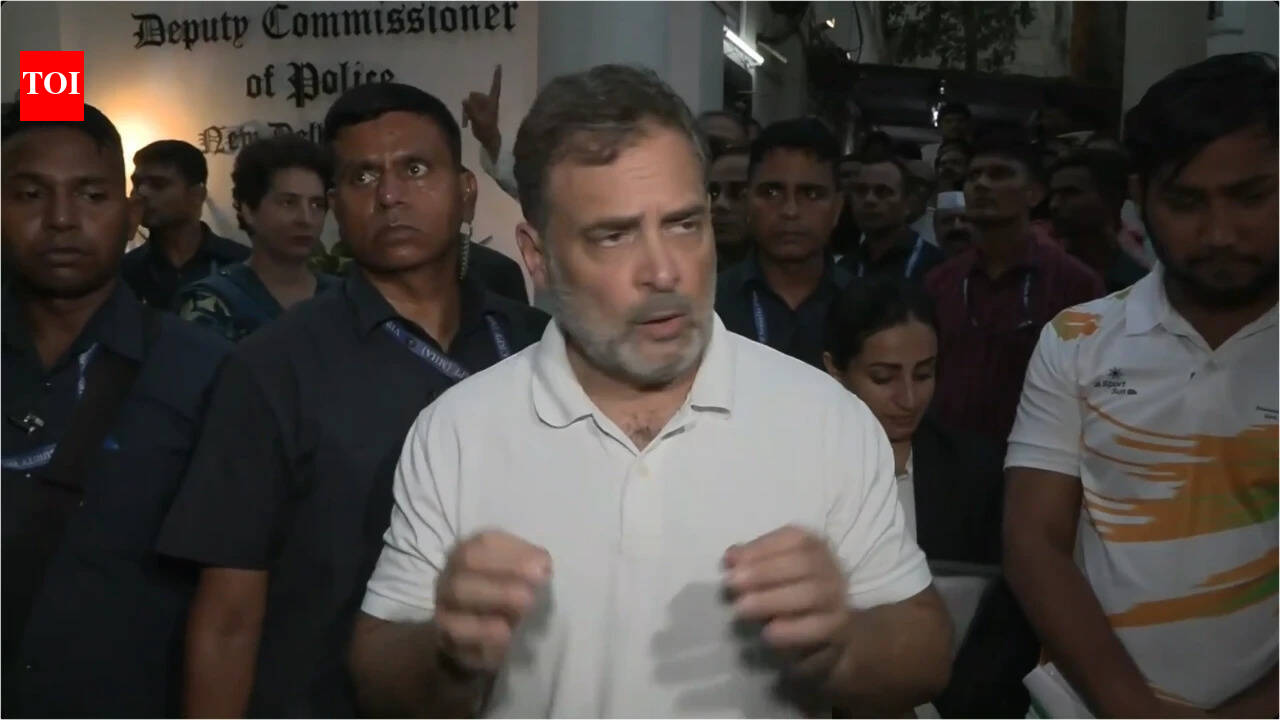
Rahul Gandhi staged a sit-in at the Parliament Street police station demanding an FIR for a youth injured by pellet guns during a July protest. The protest, led by the Cockroach Janata Party over the NEET paper leak, resulted in severe injuries to 19-year-old Sahil Lochab.
The Confrontation at Parliament Street: A Demand for Accountability
In a significant escalation of political tension in the national capital, Leader of Opposition (LoP) Rahul Gandhi staged a dharna (sit-in) outside the Parliament Street Police Station on August 21, 2026. The protest was prompted by the Delhi Police’s refusal to register an FIR regarding the injuries sustained by 19-year-old Sahil Lochab during a July 20 demonstration. The protest in question, organized by the Cockroach Janata Party, was centered on the contentious NEET paper leak issue, which has triggered widespread student unrest across India.
The Human Cost of Political Protest
At the center of this standoff is Sahil Lochab, a youth who suffered severe pellet injuries to his eyes and abdomen during the July 20 crackdown. The usage of pellet guns during civil protests remains a highly sensitive and controversial issue in Indian law enforcement. Following the incident, Lochab required surgical intervention at the AIIMS Trauma Centre. By physically accompanying the victim to the police station, Rahul Gandhi sought to bring the immediate, tangible human cost of the police action into the public and political spotlight.
Institutional Standoff and Escalation
As the sit-in progressed, the situation at the Parliament Street station grew tense. The Delhi Police responded by barricading the area and sealing the gates of the station to prevent Congress party workers and supporters from entering the premises. The presence of the Rapid Action Force (RAF) underscores the gravity with which authorities are treating the protest. The arrival of Congress MP Priyanka Gandhi Vadra alongside party supporters indicates a coordinated effort by the opposition to intensify pressure on the police and the administration.
Contextualizing the NEET Paper Leak Protests
This incident is an extension of the broader agitation surrounding the NEET paper leak, an event that has deeply impacted the academic and political landscape in 2026. The Cockroach Janata Party’s initial protest, which resulted in the police action, highlights the volatile intersection of student activism and the state's reactive measures. The demand for an FIR is not merely a legal request; it is a political statement aiming to challenge the legitimacy of the force used against protesters during a legitimate grievance-driven demonstration.
Broader Implications for Law Enforcement
This standoff raises critical questions regarding the standard operating procedures for crowd control in urban centers. The use of pellet guns against protesters has historically invited intense scrutiny from human rights advocates and political observers alike. By refusing to file an FIR, the police have effectively forced the opposition to adopt confrontational tactics, thereby shifting the discourse from the original NEET issue to the conduct of the police force itself.
Future Trends in Political Advocacy
As the political climate remains polarized, this incident suggests a trend where opposition leaders are increasingly utilizing direct, on-the-ground activism to bypass traditional legislative discourse. The effectiveness of such dharnas depends heavily on the public response and the government's willingness to engage in dialogue. Moving forward, the outcome of this FIR demand will likely set a precedent for how future complaints against police misconduct during protests are handled in New Delhi, potentially influencing the relationship between the executive, the police, and the parliamentary opposition.
Multiple Citing Sources