Watch: Rahul Gandhi rides pillion with gig worker during Hyderabad rally
Source Entity
AYUSH PANDEY
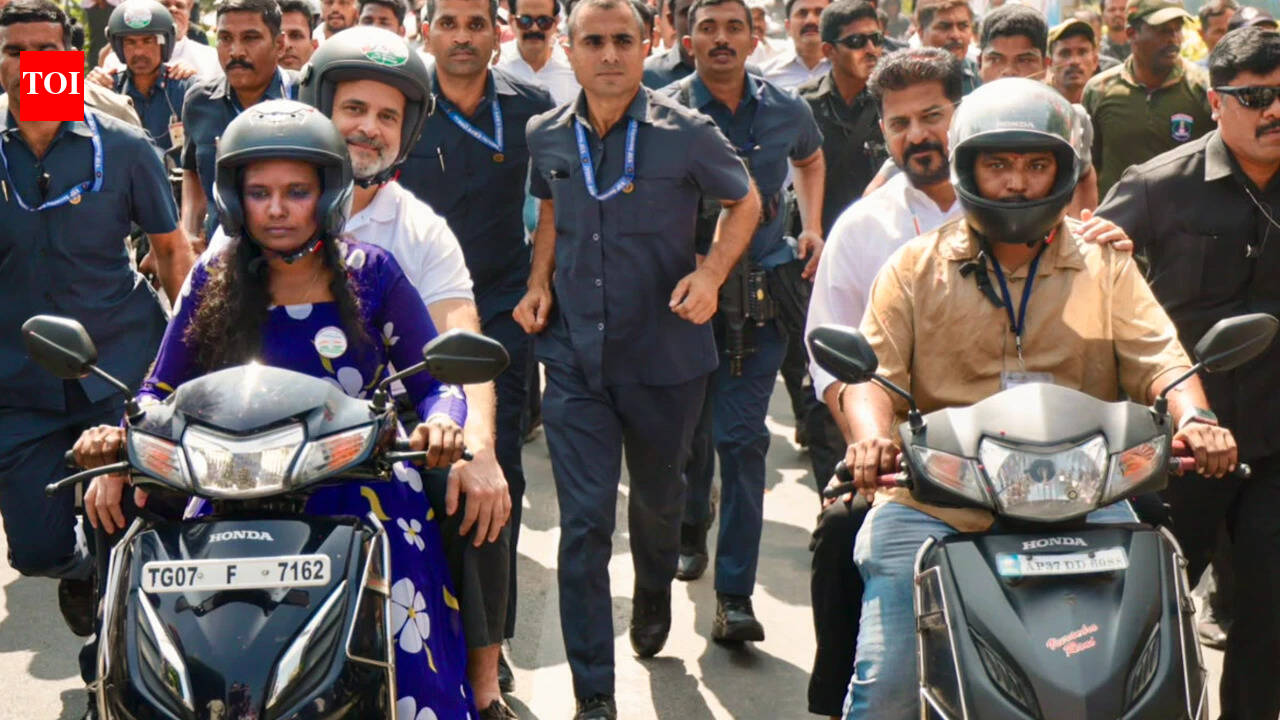
Rahul Gandhi and CM Revanth Reddy joined a gig workers' rally in Hyderabad to launch a new social security scheme. The initiative promises accident and health insurance alongside a 1% transaction-based social security contribution.
Rahul Gandhi Champions Gig Worker Welfare in Hyderabad
In a highly visible display of political engagement, Leader of the Opposition in the Lok Sabha, Rahul Gandhi, joined Telangana Chief Minister Revanth Reddy in Hyderabad to participate in a rally organized by gig workers. The event, held at the Jayabheri Ground, served as the launchpad for the Telangana Gig Workers Social Security and Welfare scheme, marking a significant intersection between national political discourse and the rapidly evolving platform-based economy in India.
Symbolic Solidarity and Policy Action
The act of riding pillion on a scooter driven by a gig worker served as a potent piece of political theater, designed to draw attention to the daily struggles of delivery partners and ride-hailing drivers. By physically placing himself alongside those who form the backbone of the urban gig economy, Gandhi signaled a shift toward prioritizing the welfare of informal laborers who often exist outside the traditional labor law protections afforded to formal employees.
The Anatomy of the New Welfare Scheme
Beyond the visuals, the announcement carried substantive policy promises. The Congress-led government in Telangana has proposed an ambitious social security framework. This includes ₹5 lakh in accident insurance and ₹10 lakh in health insurance, providing a vital safety net for workers prone to the physical risks of road-based labor. Furthermore, the introduction of Wi-Fi-enabled rest zones acknowledges the lack of basic infrastructure for these workers, who often spend long hours on the road without access to designated break areas.
Financial Innovation: The 1% Contribution Model
The most innovative aspect of the proposal is the funding mechanism: a 1% contribution from every transaction, whether it be a food delivery or a cab ride, earmarked for worker security. This model attempts to internalize the cost of social protection within the platform economy itself. By leveraging the transaction volume of app-based services, the state aims to create a sustainable fund that does not rely solely on taxpayer revenue, but rather on the economic activity generated by the platforms.
Data, Power, and the Platform Economy
Rahul Gandhi’s commentary during the event touched upon the broader implications of the 21st-century data economy. He highlighted a critical asymmetry: while major tech giants like Uber, Google, and Meta generate massive wealth through data, the workers themselves—the primary generators of this activity—are often kept in the dark regarding their own work metrics. By raising this issue, Gandhi is positioning the Congress party as a champion for algorithmic transparency and data rights for workers.
Future Implications and Political Trends
This event in Hyderabad is likely to set a precedent for how other Indian states approach the regulation of the gig economy. As the platform-based workforce continues to expand, the demand for legal recognition and social security will intensify. By linking local governance in Telangana to national-level rhetoric, the Congress party is carving out a niche as the primary political force advocating for the 'precariat'—a growing demographic of workers who remain essential to modern urban life yet lack formal job security.
Multiple Citing Sources