Rahul 'clarifies' after allies criticise remark on Hamas and Israel
Source Entity
TNN
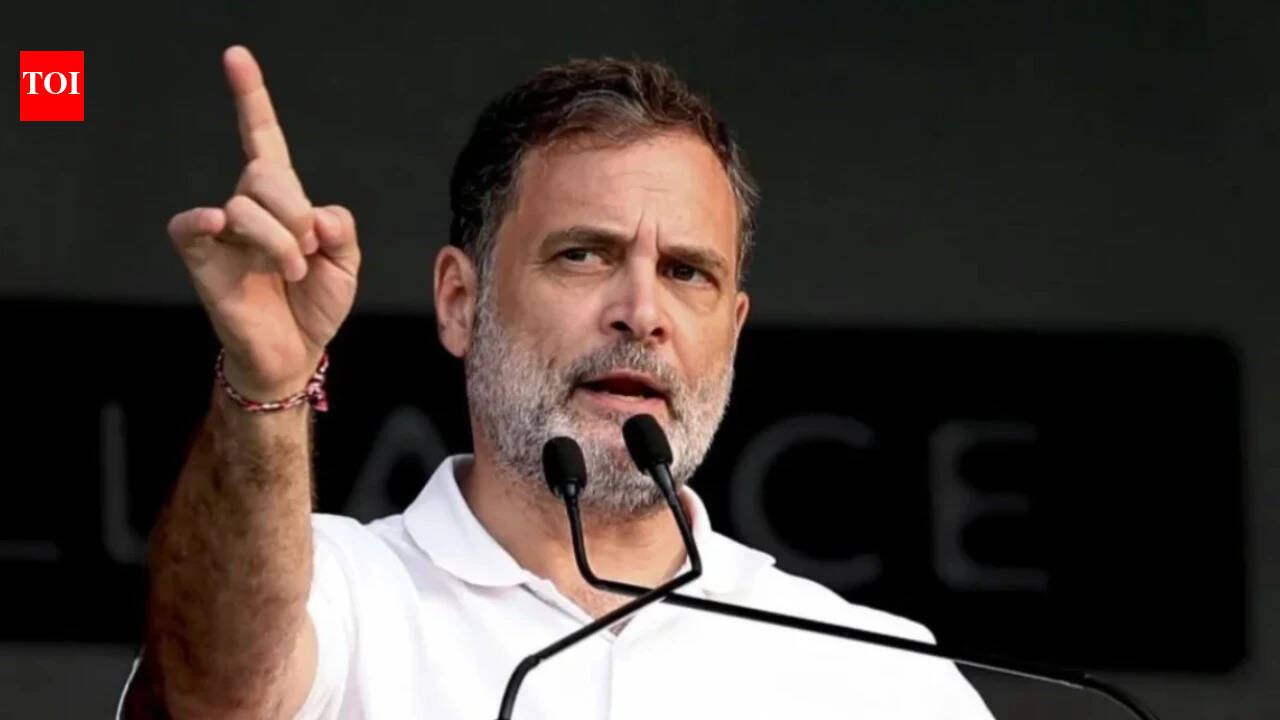
Rahul Gandhi has sparked internal debate within his coalition by advocating for strong strategic ties with Israel while simultaneously condemning the humanitarian crisis in Gaza. This nuanced stance highlights a growing tension between India's pragmatic national security interests and the traditional political expectations of his party allies.
The Strategic Balancing Act: Rahul Gandhi’s Stance on Israel
A Complex Foreign Policy Position
Leader of the Opposition Rahul Gandhi recently articulated a nuanced and challenging position regarding India’s foreign policy toward Israel. During a student interaction in Chicago, Gandhi emphasized the necessity of maintaining a robust relationship with Israel, citing vital "strategic reasons," most notably the procurement of advanced defense technology for the Indian Armed Forces. This pragmatic approach acknowledges the long-standing defense cooperation that has historically bolstered India's military capabilities, particularly in the aftermath of conflicts like the Kargil War.
Navigating the Human Rights Conundrum
While Gandhi underscored the importance of strategic defense ties, he simultaneously navigated the volatile geopolitical landscape of the Middle East. He explicitly condemned the Hamas attacks of October 7, 2023, while also criticizing Israel’s subsequent military actions against Palestinians in Gaza. By stating that strategic interests "cannot mean silence on Gaza," Gandhi attempted to carve out a middle-ground position that balances India's realpolitik security requirements with the moral imperative of addressing humanitarian concerns.
Internal Political Friction
This delicate balancing act has, however, placed Rahul Gandhi at the center of a political conundrum. His remarks elicited immediate and strong criticism from key members of his own Congress Party and political allies, who have historically adopted a more critical stance toward Israel. This divergence highlights a significant internal friction, suggesting that Gandhi’s attempt to modernize or refine his party's foreign policy viewpoint is not uniformly embraced by his coalition, potentially complicating his leadership narrative.
Broader Geopolitical Implications
Gandhi’s comments arrive at a time when Israel is facing intense global scrutiny, including from its most steadfast ally, the United States. By stepping into this discourse, Gandhi has signaled a willingness to move beyond traditional party rhetoric, focusing instead on the premise that "India’s foreign policy must be guided by what is good for India." This declaration indicates a shift toward prioritizing national interest as the primary driver of international relations, even when such positions invite domestic dissent.
Future Trends in Indian Diplomacy
Looking ahead, this episode underscores the growing complexity of India’s diplomatic outreach. As India seeks to maintain its role as a global bridge-builder, its leaders must increasingly manage the tension between long-standing defense partnerships and shifting global public opinion. Gandhi’s "clarification" following the backlash suggests that while he intends to pursue a pragmatic foreign policy, he must also contend with the ideological diversity of his political base, a challenge that will likely define future debates on India's global positioning.