Watch: Rahul mocks PM's foreign policy with a hug; Cong leader takes Meloni swipe
Source Entity
TOI NEWS DESK
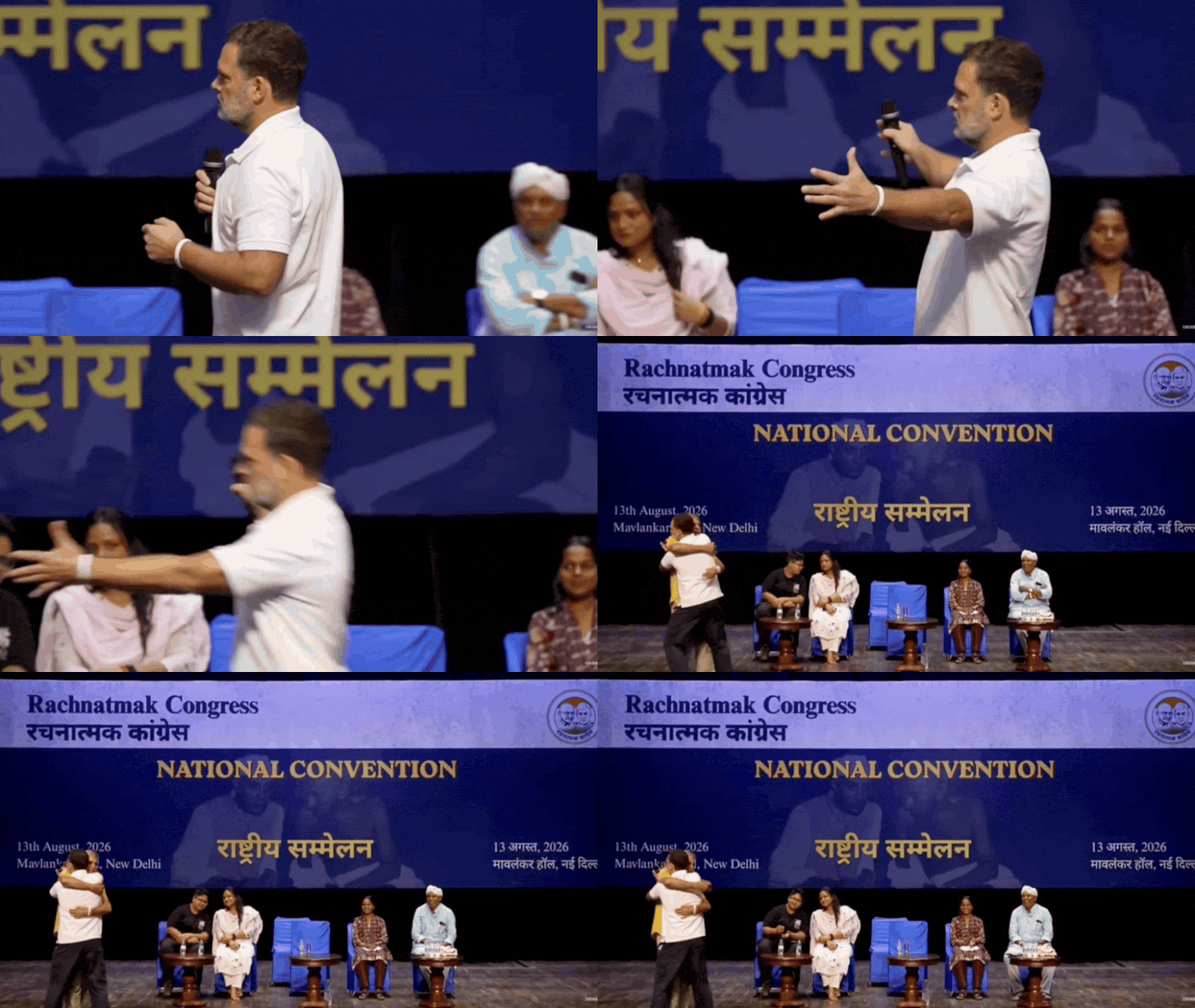
Congress leader Rahul Gandhi has criticized Prime Minister Modi's foreign policy approach, referencing diplomatic interactions with a mocking tone. The remarks, which included disparaging comments about Italian PM Giorgia Meloni from other party members, have stirred political debate regarding diplomatic decorum.
Diplomatic Discourse and Political Polemics
Recent political discourse in India has taken a sharp turn as Congress leader Rahul Gandhi publicly criticized Prime Minister Narendra Modi’s approach to foreign policy. During a recent address, Gandhi utilized a gesture—specifically referencing a hug—to mock the Prime Minister’s interpersonal diplomatic style. This critique signifies a broader strategy by the opposition to frame the current government’s international relations as performative rather than substantive, challenging the narrative of the Prime Minister’s global outreach.
The Role of Personal Diplomacy
Prime Minister Modi has long utilized personal rapport, often characterized by public embraces with world leaders, as a cornerstone of his diplomatic strategy. Supporters argue this fosters stronger bilateral ties and projects a confident India on the global stage. However, critics like Rahul Gandhi argue that such displays are shallow substitutes for strategic policy achievements. By mocking these interactions, the Congress party is attempting to shift the public perception of the Prime Minister’s international engagements from 'statesmanship' to 'theatrics.'
Escalation to Personal Commentary
The controversy intensified as other Congress leaders extended the criticism to include derogatory remarks directed at Italian Prime Minister Giorgia Meloni. This shift from criticizing policy to targeting foreign dignitaries with personal swipes marks a significant escalation in the political rhetoric. Such comments often risk creating diplomatic friction, as they move beyond domestic political sparring into the realm of international sensitivities, potentially complicating future diplomatic relations between India and Italy.
Historical Context of Political Criticism
Historically, Indian politics has seen intense debates over foreign policy, yet the focus has traditionally remained on economic agreements, security pacts, and territorial integrity. The current trend of centering criticism on personal gestures and international social media interactions reflects the changing nature of digital-age politics. In an era where viral clips and soundbites dominate the news cycle, the opposition is increasingly leveraging these moments to undermine the government's carefully curated image.
Strategic Implications and Future Trends
This incident highlights a growing polarization where foreign policy is no longer viewed as a domain of national consensus but as a front for partisan warfare. As India continues to assert itself as a global power, the pressure on the government to justify its international posture will likely increase. Future political trends suggest that the opposition will continue to scrutinize the Prime Minister’s personal diplomacy, while the government will likely counter by emphasizing the tangible economic and strategic gains achieved through these high-level relationships.
Conclusion: The Cost of Rhetoric
Ultimately, the exchange underscores the precarious balance between holding the executive branch accountable and maintaining the dignity of state-to-state relations. While political opposition is a vital component of a healthy democracy, the inclusion of personal swipes against foreign leaders raises questions about the long-term impact on India's diplomatic standing. The ongoing debate serves as a reminder that in the interconnected global arena, the domestic political narrative often spills over into the international consciousness, carrying risks that extend far beyond the ballot box.