Where are the Gandhi siblings? Why Wayanad has put Rahul, Priyanka in line of BJP fire
Source Entity
PRIYANKA MUKHERJEE
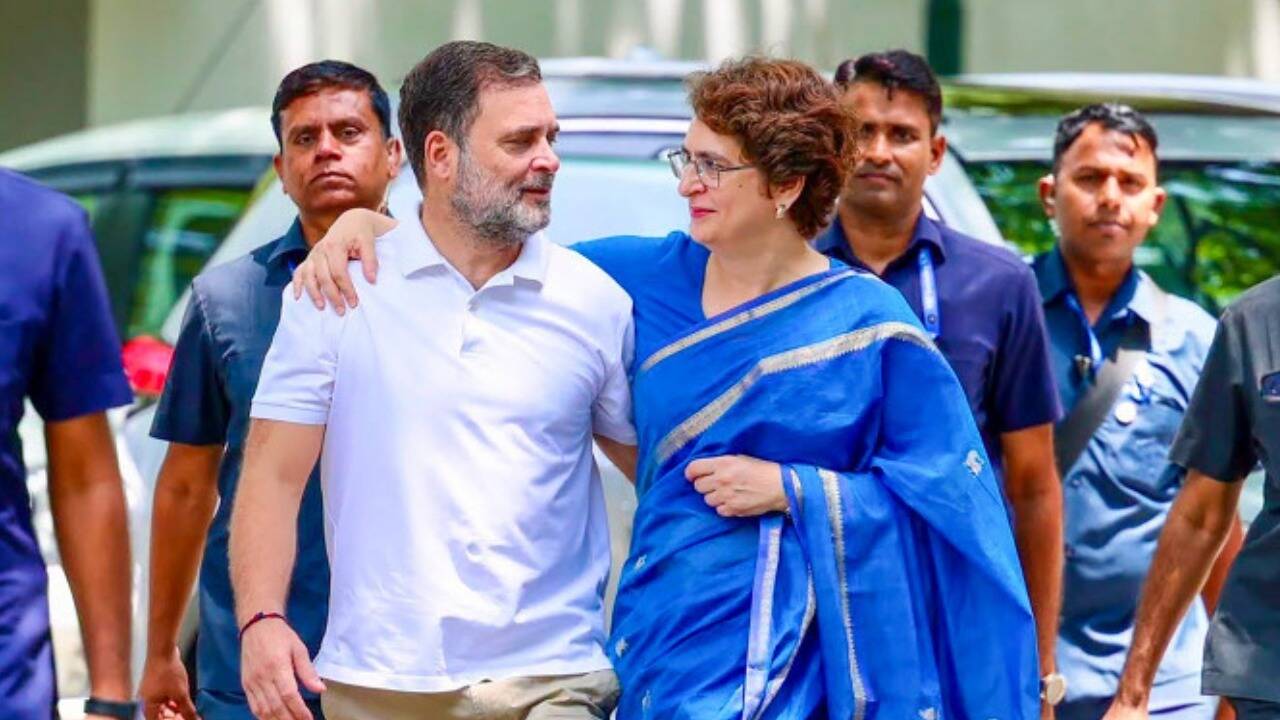
The BJP is raising eyebrows over Rahul and Priyanka Gandhi's absence from Wayanad following a landslide, labeling them as part-time politicians and political tourists. Wayanad is crucial for the Gandhis, as it has been a significant political stronghold for Rahul. Meanwhile, Rahul has not been seen publicly for almost three weeks. In response, Congress defends their leaders, stating their absence helps maintain the focus on relief operations.
Political Friction Amidst Tragedy: The Wayanad Landslide Controversy
The devastating landslides in Wayanad, Kerala, have not only triggered a humanitarian crisis but have also ignited a sharp political confrontation between India's two largest political parties. The core of the current dispute centers on the perceived absence of Rahul and Priyanka Gandhi from the disaster-hit region. While the local administration and rescue teams work to recover victims and restore infrastructure, the Bharatiya Janata Party (BJP) has seized the opportunity to question the commitment of the Gandhi siblings to their constituents and the affected population.
The 'Political Tourist' Narrative
The BJP has launched a pointed offensive, utilizing terms such as "part-time politicians" and "political tourists" to describe Rahul and Priyanka Gandhi. This rhetoric is a strategic attempt to frame the Gandhi family as disconnected elites who only engage with the grassroots during election cycles or for high-profile photo opportunities. By highlighting Rahul Gandhi's absence from the public eye for nearly three weeks, the BJP is attempting to build a narrative of indifference, suggesting that the leadership of the Congress party is absent when the people are in their most desperate hour of need.
The Strategic Defense of the Congress Party
In response, the Congress party has adopted a pragmatic defense, asserting that the absence of high-profile leaders is a deliberate choice intended to facilitate smoother relief operations. In disaster management, the arrival of VVIPs often necessitates massive security cordons, traffic diversions, and a surge in media presence, which can inadvertently obstruct the movement of emergency services and rescue personnel. By staying away, Congress argues that Rahul and Priyanka Gandhi are prioritizing the efficiency of the rescue mission over political optics, thereby ensuring that the focus remains entirely on the victims and the rescuers.
The Symbolic Importance of Wayanad
To understand the intensity of this clash, one must consider the political geography of Wayanad. The region has served as a crucial stronghold for Rahul Gandhi, providing him with a stable electoral base and a symbolic connection to the diverse demographics of Kerala. For Rahul, Wayanad is not merely a constituency but a focal point of his political identity in Southern India. Consequently, any perceived detachment from the region during a catastrophe is viewed by opponents as a vulnerability that could erode his grassroots support and damage the Congress party's standing in the state.
Broader Implications for Leadership Perception
This conflict reflects a broader trend in Indian politics where "physical presence" is equated with "political empathy." The BJP frequently emphasizes the visible, on-the-ground presence of its own leadership during crises to project an image of proactive governance. By contrasting this with the Gandhis' absence, the BJP aims to paint the Congress leadership as hesitant or detached. This battle of perceptions is critical, as it shapes the national narrative regarding who is more "accessible" to the common citizen during times of distress.
Future Trends and Political Fallout
Looking ahead, it is likely that the BJP will continue to weaponize this incident in future campaign cycles, particularly in Kerala and during national elections, to question the accountability of the Gandhi family. Conversely, the Congress party will likely attempt to pivot the conversation toward the adequacy of the government's disaster prevention measures and the speed of the official relief response. The outcome of this narrative war will depend on whether the people of Wayanad perceive the Gandhis' absence as a selfless act to avoid disruption or as a failure of leadership.
Conclusion
The tension surrounding the Gandhi siblings' presence in Wayanad illustrates the intersection of humanitarian crisis and political strategy. While the Congress party maintains that their distance is a tactical move to aid relief efforts, the BJP views it as a symptom of political detachment. As the recovery process in Wayanad continues, this episode serves as a reminder of how disaster zones often become theaters for political signaling, where the balance between genuine aid and political optics is precariously maintained.