Railways issue alert after cable cuts trigger signal failures, safety concerns
Source Entity
India Latest News: Top National Headlines Today & Breaking News | The Hindu
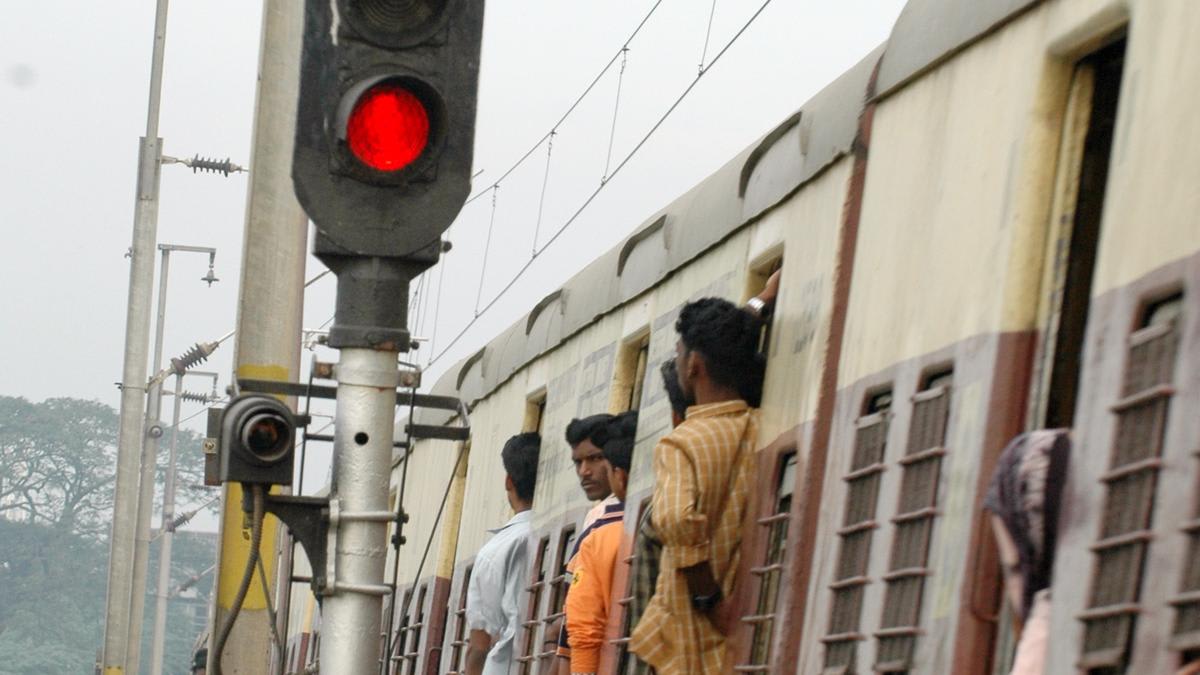
‘Repeated signal failures pose serious threat to the safety of train services, and can lead to catastrophic consequences if precautions are not taken’
Critical Infrastructure Vulnerability: Analyzing Railway Signal Failures
Introduction Railway authorities have issued a high-priority alert following a series of cable cuts that have triggered widespread signal failures across the network. The core of the issue lies in the disruption of the communication lines that govern train movements, leading to a precarious operational environment. The explicit warning that these failures could lead to "catastrophic consequences" underscores the severity of the situation, highlighting a critical vulnerability in the physical infrastructure that ensures the safe passage of thousands of passengers and tons of freight daily.
The Technical Role of Signaling Systems
To understand the gravity of this alert, one must recognize that railway signaling acts as the "nervous system" of the entire network. These systems are designed to maintain safe distances between trains and prevent conflicting movements at junctions. When cables are cut, the flow of data between the interlocking systems and the trackside signals is severed. While most modern systems are designed to be "fail-safe"—meaning a signal will default to red if power or communication is lost—repeated and unpredictable failures can lead to operational chaos, driver confusion, and an over-reliance on manual overrides, which significantly increases the margin for human error.
Analyzing the Risk of Catastrophic Failure
The warning regarding "catastrophic consequences" is not hyperbolic but rooted in the physics of rail transport. In the event of a total signal blackout or a misleading signal caused by intermittent cable faults, the risk of head-on collisions or rear-end impacts increases exponentially. When signals fail, trains often move under "caution," meaning drivers must proceed at very low speeds, prepared to stop short of any obstruction. However, if the failure is systemic and repeated, the psychological pressure to maintain schedules can lead to a degradation of safety protocols, potentially resulting in derailments or collisions in high-traffic corridors.
Root Causes: Theft, Vandalism, and Maintenance
While the provided context focuses on the result (cable cuts), an expert analysis suggests several likely drivers for such events. Historically, railway cable cuts are frequently the result of copper theft, where perpetrators cut lines to sell the metal for scrap. Alternatively, these cuts could be the result of construction mishaps or deliberate acts of sabotage. Regardless of the intent, the repetition of these incidents suggests a systemic security gap. The fact that these cuts are happening "repeatedly" indicates that the current deterrents—such as fencing, surveillance, or the use of fiber-optic cables (which have no scrap value)—are either insufficient or not yet fully implemented.
Broader Economic and Operational Implications
Beyond the immediate safety risks, these signal failures trigger a domino effect across the transport economy. Signal failures lead to massive delays, causing a backlog of trains that disrupts supply chains and commuter productivity. When a primary line is compromised, the pressure shifts to secondary lines, which may not be equipped to handle the additional volume, further straining the infrastructure. This creates a cycle of instability that erodes public confidence in the reliability of rail travel and necessitates costly emergency repairs and increased staffing for manual signal operation.
Future Trends and Mitigation Strategies
To prevent such vulnerabilities, the rail industry is gradually moving toward digitized, wireless signaling solutions, such as the European Train Control System (ETCS) or Communication-Based Train Control (CBTC). By shifting the intelligence from trackside cables to onboard computers and satellite/radio communication, railways can eliminate the single point of failure presented by physical cabling. In the short term, however, the focus must remain on hardening physical assets, increasing patrol frequency in high-risk areas, and implementing more robust redundancy in cable routing to ensure that a single cut does not paralyze an entire sector.
Conclusion The alert issued by the railways serves as a stark reminder that high-tech transport systems are still beholden to basic physical infrastructure. The transition from a functional system to a catastrophic failure can be as simple as a few severed cables. Addressing this issue requires a dual approach: immediate tactical precautions to ensure current train safety and a long-term strategic investment in wireless signaling and enhanced security to safeguard the network against future disruptions.
Verification Required?