'Not just a fighting force, but guardian of India's economy': Rajnath Singh hails Navy
Source Entity
TOI NEWS DESK
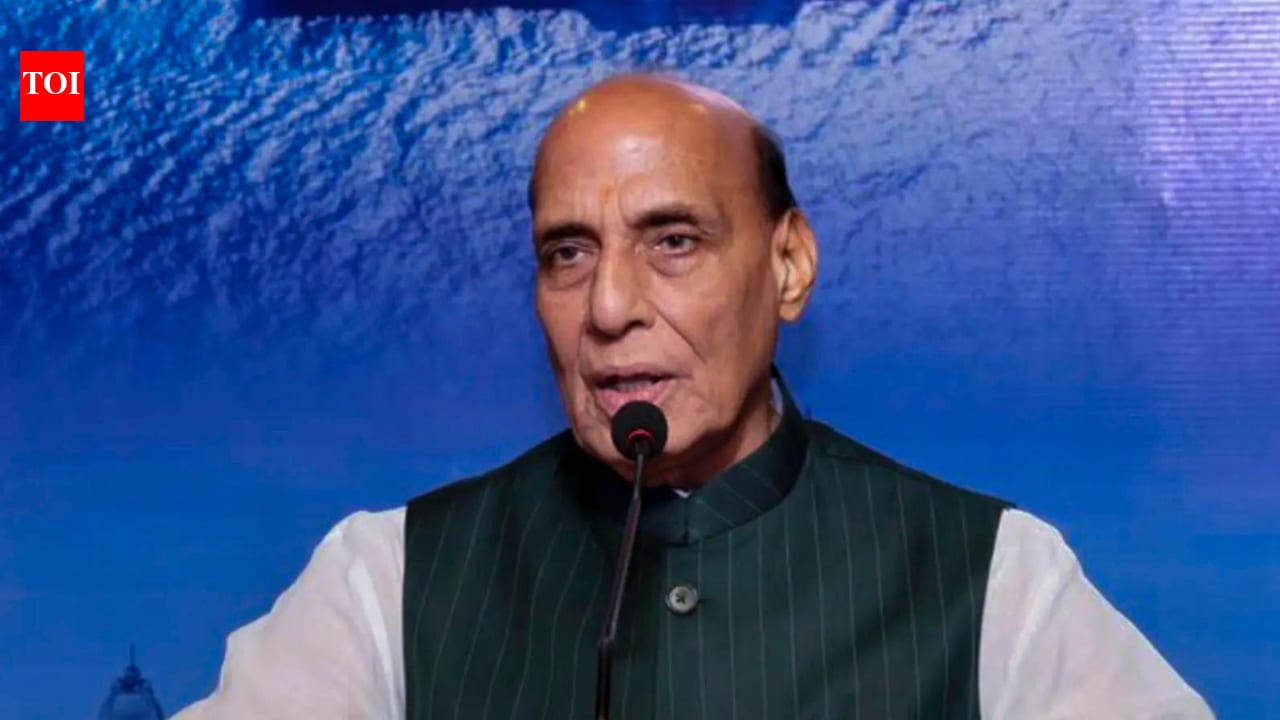
Defence Minister Rajnath Singh emphasized the Indian Navy's crucial role in safeguarding national interests. Recent operations in West Asia demonstrated the Navy's commitment to protecting vital economic interests. The Indo-Pacific region is now a global focus, with India playing a key role. India aims to be a net security provider and trusted partner across the Indo-Pacific. The nation is developing its shipbuilding capacity to become a global maritime defence hub.
The Strategic Evolution of the Indian Navy: From Defense to Economic Guardianship
In a significant articulation of India's maritime strategy, Defence Minister Rajnath Singh has redefined the role of the Indian Navy, describing it not merely as a fighting force but as the "guardian of India's economy." This shift in rhetoric underscores a deeper strategic realization: in a globalized economy, national security is inextricably linked to the security of the seas. By framing the Navy as an economic shield, the Indian government is highlighting the critical importance of Sea Lines of Communication (SLOCs) which carry the vast majority of India's trade, energy imports, and strategic exports.
Securing the Arteries of Trade in West Asia
The Minister's specific reference to recent operations in West Asia serves as a concrete example of this economic guardianship. The waters around the Gulf of Aden and the Red Sea are among the most volatile yet vital maritime corridors in the world. For India, any disruption in these regions—whether through piracy, state-sponsored aggression, or geopolitical instability—poses a direct threat to energy security and commercial shipping. The Navy's proactive presence in West Asia demonstrates India's capability to project power far from its shores to ensure that the flow of goods remains uninterrupted, thereby preventing inflationary shocks and supply chain disruptions at home.
The Indo-Pacific: A New Geopolitical Epicenter
Beyond immediate tactical operations, the narrative emphasizes India's pivotal role in the Indo-Pacific. This region has emerged as the primary theater of global geopolitical competition. By aspiring to be a "net security provider," India is signaling its intent to lead efforts in maintaining a free, open, and inclusive maritime order. This ambition is not just about military dominance but about fostering stability through partnerships. As a trusted partner, India aims to provide public goods—such as disaster relief, humanitarian assistance, and anti-piracy patrols—which helps build diplomatic capital and ensures that no single power dominates the critical trade routes of the East.
Transforming into a Global Maritime Defence Hub
A key pillar of this strategy is the development of domestic shipbuilding capacity. The goal to become a "global maritime defence hub" aligns with the broader national vision of Atmanirbhar Bharat (Self-Reliant India). By reducing dependence on foreign shipyards and developing high-tech indigenous vessels, India seeks to achieve two objectives: ensuring sovereign control over its defense hardware and creating a lucrative export market for naval technology. This transition from a buyer to a builder is essential for sustaining a long-term presence in the Indo-Pacific and West Asia, as it provides the logistical and industrial backbone required for a true blue-water navy.
Future Trajectory and Strategic Implications
Looking forward, the Indian Navy is likely to see increased integration of advanced technology, including unmanned systems and enhanced surveillance, to monitor vast maritime domains more effectively. The trajectory suggests a move toward deeper multilateral cooperation, where India leverages its strategic location to act as a bridge between the Indian Ocean and the Pacific. As the global economy becomes more fragmented, the ability of the Navy to safeguard trade will be the primary metric of its success. The transition from a reactive coastal defense force to a proactive economic guardian marks a new era in India's pursuit of global leadership.
Summary of Strategic Shift
In conclusion, Rajnath Singh's statements reflect a comprehensive maritime doctrine that blends economic necessity with military capability. By securing West Asian trade routes, asserting leadership in the Indo-Pacific, and investing in indigenous shipbuilding, India is positioning its Navy as the cornerstone of its national prosperity. The Navy is no longer just a tool for conflict; it is a fundamental instrument of economic diplomacy and stability.