Random rewards enrich classic game-theory contests
Source Entity
Chris Lee
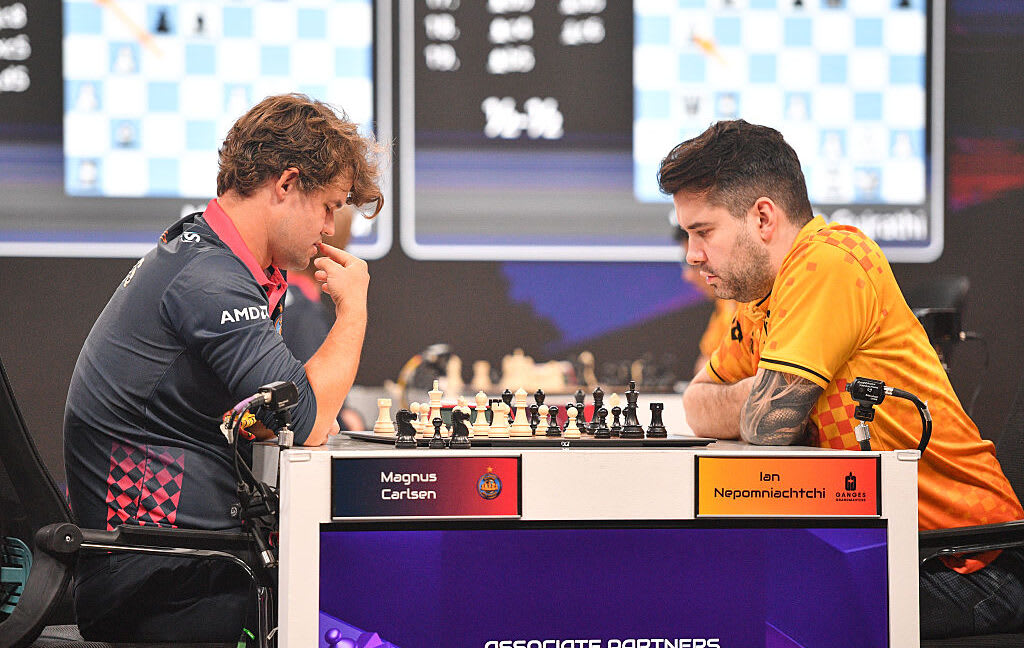
Researchers have updated traditional game-theory models to incorporate randomly varying rewards, better reflecting real-world complexities. This advancement demonstrates how noise and evolving strategies create more realistic decision-making frameworks than static models.
Rethinking Strategic Complexity in Game Theory
Traditional game theory has long relied on static models where the rewards for specific outcomes remain fixed. While these frameworks have provided foundational insights into human decision-making, they often fail to capture the unpredictable nature of real-world scenarios. By introducing randomly varying returns—often referred to as 'noise'—researchers are now bridging the gap between simplified academic models and the chaotic reality of human behavior.
The Limitations of Static Models
Historical models, such as the classic Prisoner's Dilemma, have served as the bedrock of strategic studies. In the standard iteration, two individuals must decide whether to cooperate or defect, with fixed outcomes tied to those choices. However, these models assume that the environment remains constant. In the real world, the 'payoff' for a specific action is rarely stable; it is subject to shifting economic conditions, changing social dynamics, and unforeseen variables that alter the consequence of every choice.
Integrating Randomness as a Variable
Recent mathematical modeling has moved beyond these constraints by integrating evolving strategies that respond to a fluctuating environment. By adding 'noise' to the reward structure, the researchers found that strategies become significantly more complex. When the outcome of a game is no longer guaranteed, participants are forced to adapt their long-term strategies, leading to a richer and more nuanced understanding of how individuals navigate uncertainty.
Historical Context and Evolution
The Prisoner's Dilemma has been the gold standard for studying cooperation and betrayal since its inception. By analyzing the tension between individual gain and collective success, it has informed fields ranging from biology to political science. The new research does not discard this history; rather, it updates it. By simulating games where rewards evolve, researchers can observe how cooperation might emerge or collapse under conditions that more closely mirror the volatility of actual human interactions.
Broader Implications for Behavior
This shift toward dynamic modeling has profound implications for how we view strategic planning. If rewards are ever-changing, then the 'best' strategy is not a static set of rules but a flexible framework capable of absorbing environmental data. This suggests that in complex systems—whether they are financial markets, evolutionary biology, or social networks—the ability to adapt to 'noise' is more critical than the ability to execute a pre-ordained plan.
Future Trends in Game Theory
Looking ahead, the integration of random rewards into game-theory contests will likely lead to more sophisticated algorithmic decision-making. As we continue to refine these mathematical models, we can expect to see better predictive tools for navigating complex social and economic systems. By embracing the 'hard bits' of reality that were previously removed from these games, science is finally creating a more accurate mirror of human strategic life.