Convicted Bosnian Serb war criminal Mladić dies aged 84
Source Entity
BBC News
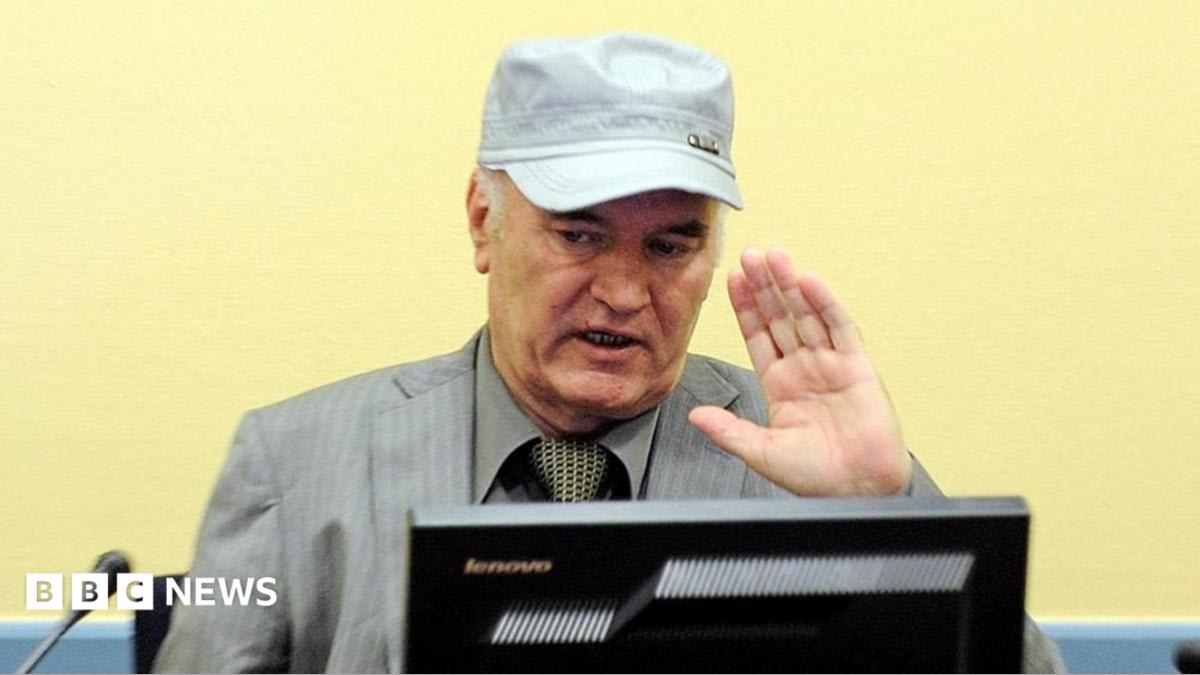
Ratko Mladić, the former Bosnian Serb commander convicted of genocide, has died in a UN prison at age 84. Known as the 'Butcher of Bosnia,' he was responsible for the Srebrenica massacre and ethnic cleansing during the 1990s Yugoslav wars.
The Death of a War Criminal: Ratko Mladić
Ratko Mladić, the former Bosnian Serb military commander widely known as the "Butcher of Bosnia," has died at the age of 84 while serving a life sentence in a UN prison facility at The Hague. His death marks the end of a long legal and historical chapter concerning the brutal conflicts that defined the dissolution of the former Yugoslavia in the 1990s. Mladić had been receiving palliative care in the UN jail hospital prior to his passing, following a life sentence handed down in 2017 for genocide, war crimes, and crimes against humanity.
A Legacy of Ethnic Cleansing
As the commander of the Bosnian Serb army, Mladić was the architect of a systematic campaign of "ethnic cleansing" that sought to establish a "Greater Serbia" through the forced removal and mass murder of non-Serb populations. His tactics were characterized by studied brutality, most notably the 1995 Srebrenica massacre, where at least 8,000 Muslim men and boys were slaughtered in a UN-designated "safe area." This atrocity remains the bloodiest event in Europe since the end of the Second World War.
Evasion and Accountability
Following the conclusion of the Bosnian war, Mladić managed to evade international justice for 16 years, living as a fugitive until his eventual capture in rural Serbia in 2011. His trial at The Hague was a landmark moment for international criminal law, reinforcing the principle that those who orchestrate mass atrocities cannot escape accountability indefinitely. Despite attempts by his defense team to secure his release earlier this year due to his failing health, the UN court maintained that his incarceration remained necessary, citing the gravity of his crimes.
Historical Impact and Remembrance
For many, Mladić’s death brings little solace. Emir Suljagić, head of the Srebrenica Memorial, noted that the passing of the man responsible for such widespread suffering does not undo the damage, clear mass graves, or bring back the victims. Instead, the focus has shifted toward the preservation of historical truth. The challenge moving forward is ensuring that the memory of his victims is not diminished by the death of their perpetrator, and that the judicial record of his genocide remains intact.
Broader Implications for Justice
The case of Mladić serves as a somber reminder of the fragility of peace and the devastating power of nationalist fanaticism. By justifying his actions through the dehumanization of his Muslim neighbors—framing them as existential threats—Mladić mobilized a campaign of violence that tore the social fabric of the Balkans apart. His conviction and subsequent life sentence stand as a cornerstone of the post-war international order, signaling that there is no statute of limitations on genocide.
Conclusion: The Weight of History
As the world processes the news of Mladić's death, the legacy of the 1992-1995 conflict remains a sensitive and often contested subject in the region. While his death closes the legal proceedings against him, the historical narrative remains a battleground. The responsibility now lies with future generations to uphold the findings of the international courts and ensure that the "Butcher of Bosnia" is remembered not as a hero, but as a man whose actions left an indelible, tragic mark on human history.
Multiple Citing Sources