‘CJP silent on Punjab, Congress-ruled states’: Ravi Shankar Prasad
Source Entity
Santosh Singh
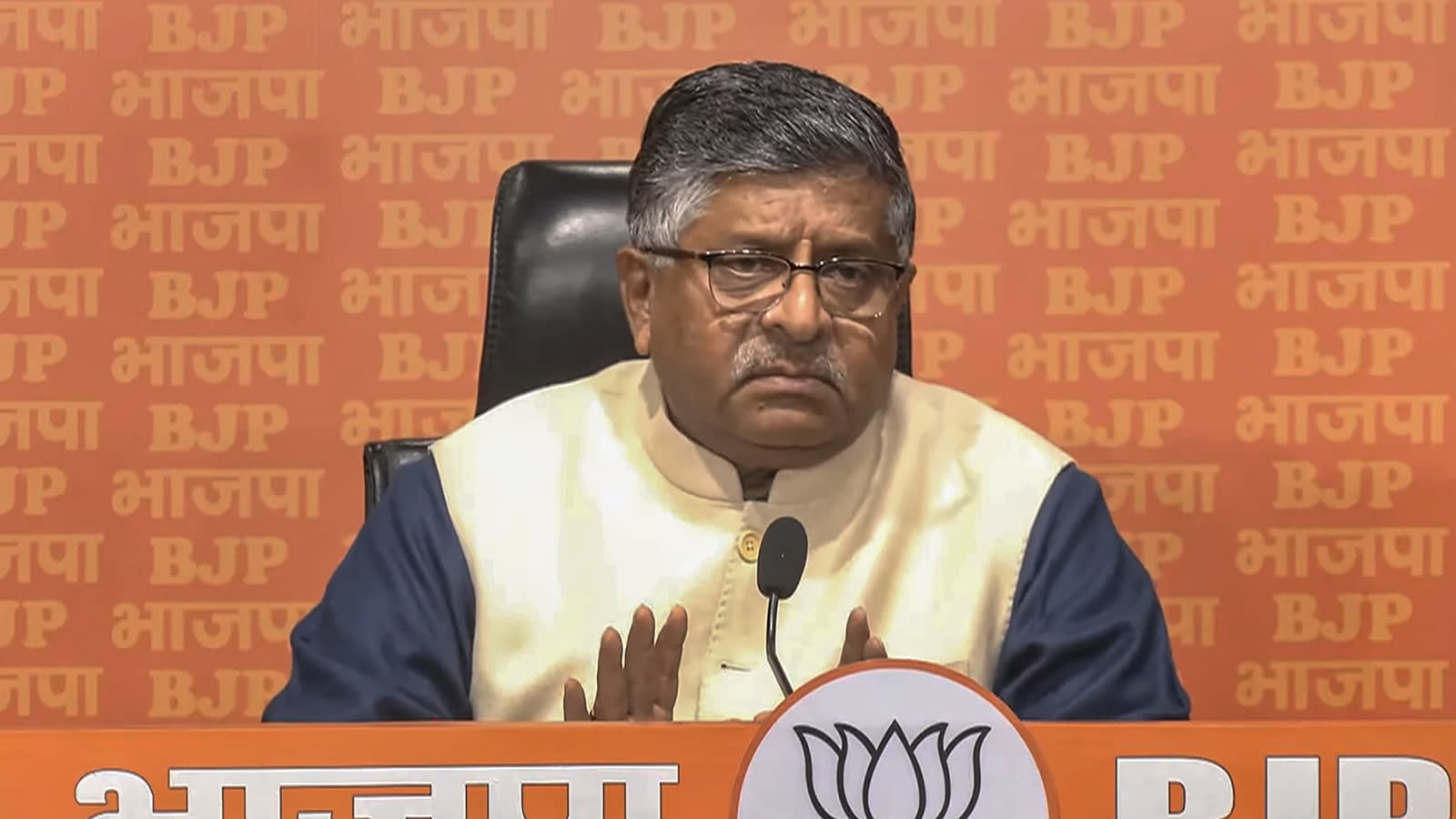
BJP leader Ravi Shankar Prasad has criticized Rahul Gandhi's political approach, referencing the Haldwani 'purification' controversy and Congress's governance style. The discourse highlights ongoing tensions between the BJP and the Congress leadership.
The Political Discourse: Ravi Shankar Prasad’s Critique of Congress Leadership
Analyzing the Partisan Tension
Former Union Minister and senior BJP leader Ravi Shankar Prasad recently offered a sharp critique of the Congress party's political strategy, specifically focusing on the conduct of Leader of Opposition Rahul Gandhi. This commentary, delivered in an interview with The Indian Express, touches upon several flashpoints in contemporary Indian politics, including the controversial 'purification' incident in Haldwani, Uttarakhand. Prasad’s remarks underscore the persistent ideological divide between the BJP and the Congress, framing the latter's actions as a lack of political depth.
The Haldwani 'Purification' Controversy
At the heart of the recent friction is the incident in Haldwani, where a venue previously used by Congress president Mallikarjun Kharge for a rally was later subjected to a 'purification' ritual. The Congress party vehemently targeted the BJP over this event, viewing it as a symbolic rejection of their leadership. This led to a legal escalation, with an FIR being registered against Rahul Gandhi. This event serves as a microcosm of the broader cultural and political polarization, where local incidents are rapidly nationalized to fit larger narratives of political legitimacy and social values.
Critiquing Rahul Gandhi’s Political Methodology
Prasad’s critique of Rahul Gandhi is twofold: a perceived entitlement regarding governance and a lack of rigorous preparation. According to the senior BJP leader, Gandhi’s political moves are often dictated by a singular focus on the assumption that he is destined to govern. Prasad argues that this mindset leads to impulsive political maneuvers that fail to account for ground realities. By suggesting that Gandhi relies on external briefings—characterized as a 'chit of paper'—rather than independent, in-depth policy research, Prasad aims to undermine the credibility of the Congress leader's parliamentary and public interventions.
Historical Context and Political Strategy
This critique must be viewed through the lens of long-standing electoral rivalries. Ravi Shankar Prasad, a veteran of the BJP, often highlights these points to contrast the perceived 'dynastic' or 'entitled' nature of Congress politics against the BJP’s emphasis on organizational discipline and ideological consistency. The mention of the 'Cockroach Janta Party' (CJP) and the broader scrutiny of Congress-ruled states indicates a concerted effort by the BJP to frame the Congress as administratively incompetent and politically reactive rather than proactive.
Future Implications for Indian Politics
As the political landscape continues to evolve, the rhetoric used by figures like Prasad suggests that the BJP intends to keep the pressure on the Congress leadership regarding their parliamentary conduct and regional governance. The reliance on FIRs and public debates over symbolic acts like the Haldwani incident suggests that the coming electoral cycles will be marked by intense scrutiny of both policy and rhetoric. Moving forward, the effectiveness of the Congress party’s opposition will likely depend on whether they can move beyond these reactive controversies and present a robust, homework-driven alternative that can withstand such high-level political critiques.