Rebalancing India’s Rice economy: exports, virtual water, emissions and the groundwater challenge
Source Entity
India Latest News: Top National Headlines Today & Breaking News | The Hindu
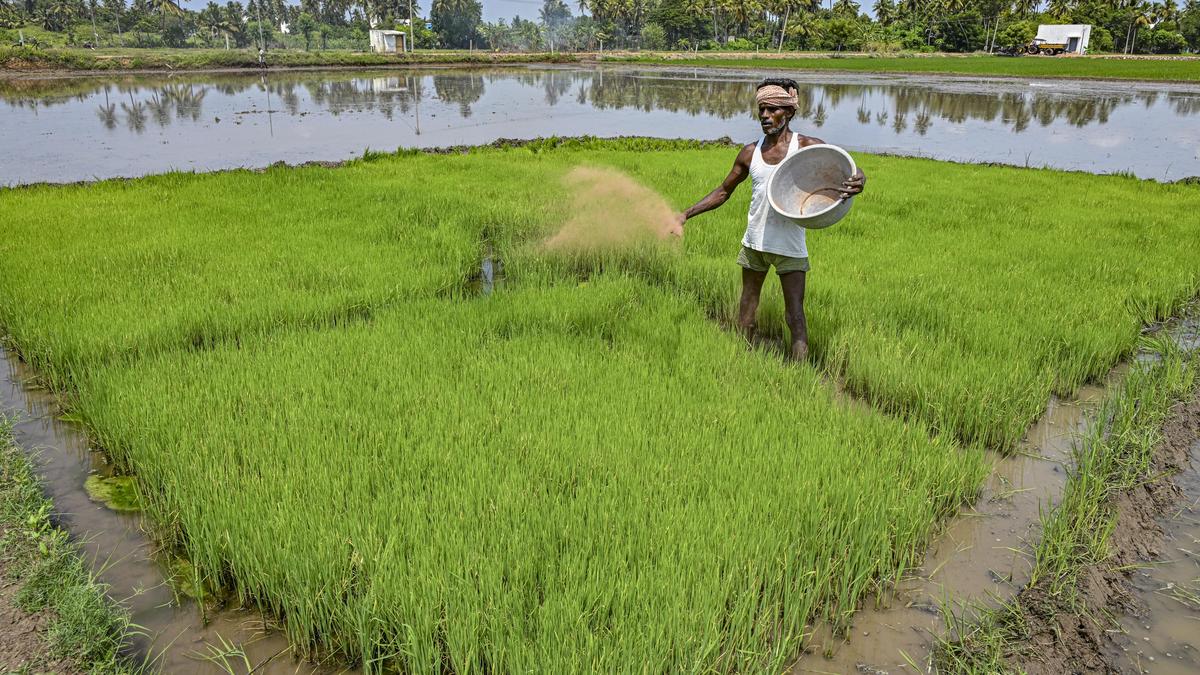
India faces a critical challenge to transition its rice economy from volume-based production to sustainable value-driven models. Balancing global export leadership with severe groundwater and environmental constraints requires urgent policy reforms focused on water efficiency and resource management.
The Paradox of India's Rice Hegemony
India currently holds the position of the world’s largest rice exporter, a status that reflects its immense agricultural capacity and competitiveness in global food markets. With an estimated production of 154.02 million tonnes in the 2025-26 cycle, the country serves as a vital pillar of global food security. However, this achievement masks a growing policy paradox: the very regions driving this production—including Punjab, Telangana, and Uttar Pradesh—are grappling with the environmental cost of agricultural intensity, particularly concerning groundwater depletion and high energy consumption for irrigation.
The Sustainability Challenge: Beyond Export Volumes
The traditional metric of success for India’s rice economy has been the sheer volume of exports and the resulting foreign exchange earnings. This perspective is increasingly seen as insufficient. When India exports rice, it is effectively exporting 'virtual water'—the massive quantity of water required to grow the crop in water-stressed regions. As policymakers look toward the future, the sustainability of the rice sector must be measured by the ecological footprint of these exports. The reliance on intensive irrigation in states like Punjab and Andhra Pradesh creates a long-term vulnerability that could jeopardize future production capacity if left unaddressed.
Shifting from Volume to Value
A critical pivot is required to move India’s rice economy toward a 'more crop per drop' model. This strategy emphasizes value over volume, prioritizing higher income per tonne rather than merely maximizing output. By optimizing water and energy use per unit of export, India can maintain its global competitive edge while mitigating the strain on its natural resources. This shift requires a differentiated production strategy that accounts for the unique agro-climatic conditions of leading states like Odisha, West Bengal, and Chhattisgarh, ensuring that each region contributes in a way that is ecologically viable.
Environmental and Resource Implications
The environmental impact of current rice cultivation practices extends beyond water scarcity to include significant energy consumption for groundwater extraction. Because rice is a water-intensive crop, the energy subsidies provided to farmers for irrigation have unintentionally incentivized excessive water use. To achieve a sustainable equilibrium, the government must incentivize the adoption of water-saving technologies and shifts in crop patterns. This is not merely an environmental concern but an economic imperative to ensure that the rice sector remains resilient against climate-induced volatility.
Future Trends and Policy Outlook
Moving forward, India’s agricultural policy will likely focus on regional specialization and technological integration. States like Tamil Nadu, Madhya Pradesh, and Bihar are central to this transformation, offering diverse ecological settings that can be better leveraged to reduce the national reliance on water-heavy regions. The integration of modern agricultural practices that prioritize resource efficiency will be key to ensuring that India remains a global leader in the rice trade while simultaneously protecting the natural capital upon which its agricultural economy depends. In conclusion, the maturation of India’s rice economy will be defined by its ability to balance global trade obligations with internal environmental preservation.
Verification Required?