How Red Bull's F1 team is using AI to make split-second decisions for Max Verstappen
Source Entity
US Top News and Analysis
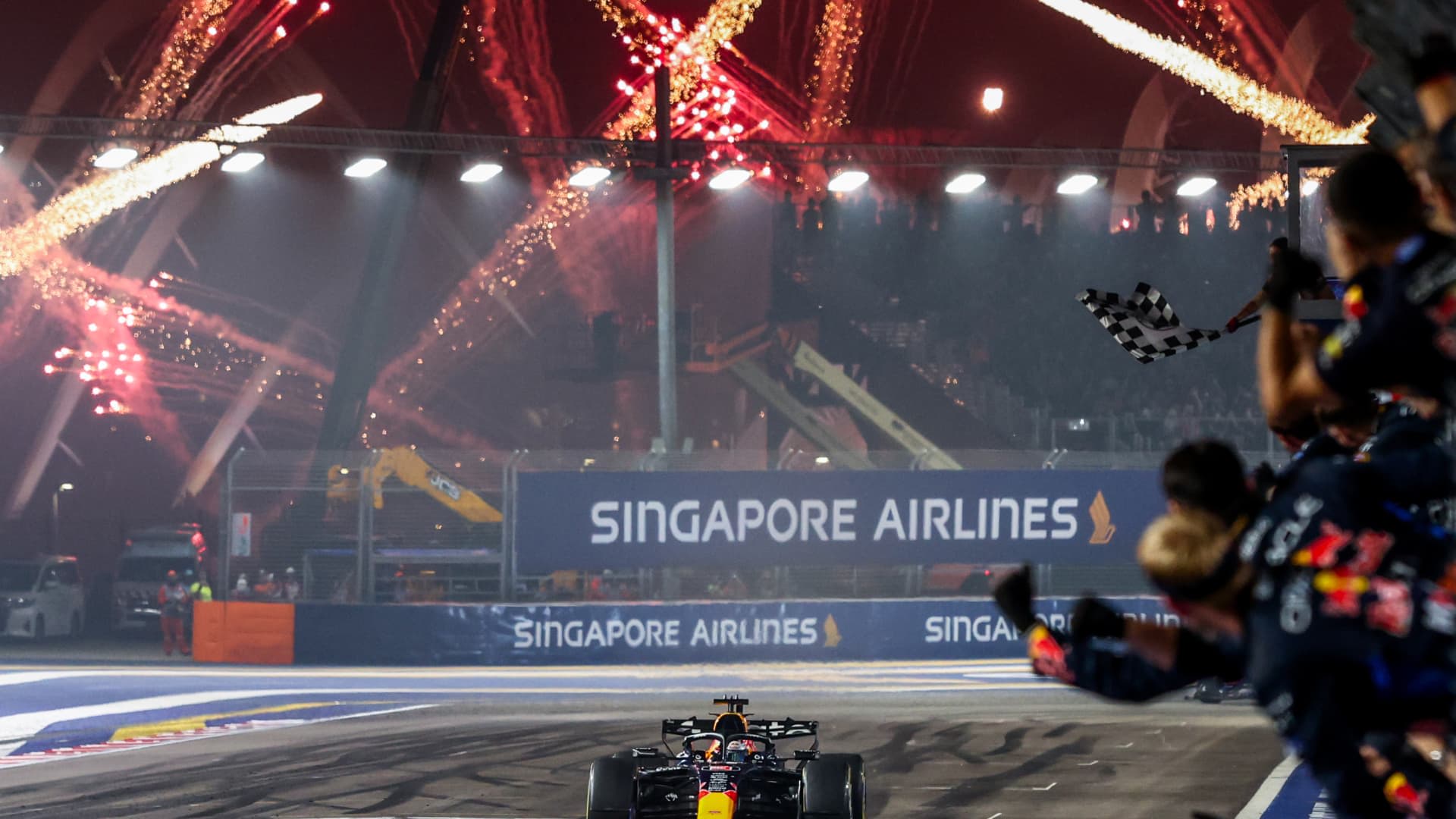
Red Bull Racing is leveraging AI to optimize real-time race strategy for Max Verstappen. While these tools provide critical data insights, the team maintains that human intuition remains the final decision-making authority.
The Integration of Artificial Intelligence in Formula 1 Racing
Formula 1 has long been viewed as the pinnacle of automotive engineering, but in recent years, it has quietly transitioned into a massive data-driven laboratory. The recent report highlighting Red Bull Racing's adoption of artificial intelligence to support Max Verstappen’s race strategy underscores a seismic shift in how elite racing teams operate. By processing millions of data points in milliseconds, AI systems can now simulate race outcomes, tire degradation, and fuel consumption with unprecedented accuracy, providing the pit wall with a significant tactical edge during the intense pressure of a Grand Prix.
The Human-Machine Partnership
Despite the rapid advancement of algorithmic processing, Red Bull Racing has emphasized that human judgment remains the cornerstone of their success. In the high-stakes environment of a race, where track conditions can change in an instant due to weather or accidents, AI acts as a sophisticated decision-support tool rather than a replacement for human intellect. This hybrid approach ensures that while the team benefits from predictive analytics, the nuanced, intuitive decisions made by race engineers are still what ultimately guide a driver like Verstappen to the chequered flag.
Competitive Landscape and Tech Partnerships
Red Bull’s adoption of AI is part of a broader industry trend where technology giants are embedding themselves into the sport’s fabric. As seen with McLaren’s integration of Google’s Gemini AI and the Mercedes-AMG Petronas partnership with Microsoft, the grid is effectively becoming a battleground for software supremacy. These partnerships allow teams to refine performance analysis and improve fan engagement, turning racing teams into high-tech data firms that happen to build cars.
The Evolution of Strategy and Performance
Historically, race strategy was largely dictated by experience and basic telemetry. Today, the scale of data processed during a race—from tire surface temperature to aerodynamic drag—requires machine learning models to identify patterns invisible to the human eye. By utilizing these tools, Red Bull Racing can optimize pit stop windows and overtake maneuvers, effectively turning raw data into championship-winning momentum.
Future Trends in Motorsport
Looking ahead, the role of AI in F1 will likely expand beyond real-time race adjustments. We can expect future developments in autonomous simulator testing, where AI agents drive virtual cars to perfect setups before the team even arrives at the circuit. As these tools become more robust, the gap between the fastest and slowest cars may tighten, placing even greater emphasis on the synergy between the driver, the human engineer, and the predictive power of the AI system.
Conclusion
The synthesis of human experience and machine learning is the new frontier for Formula 1. As Red Bull Racing continues to refine its use of AI, the focus remains on enhancing the decision-making process for Max Verstappen. By balancing technological prowess with the irreplaceable intuition of their staff, the team continues to set a high standard for how data can be leveraged to achieve excellence on the global stage.