The first sunlight reflecting space mirror has been cleared for launch
Source Entity
Jess Weatherbed
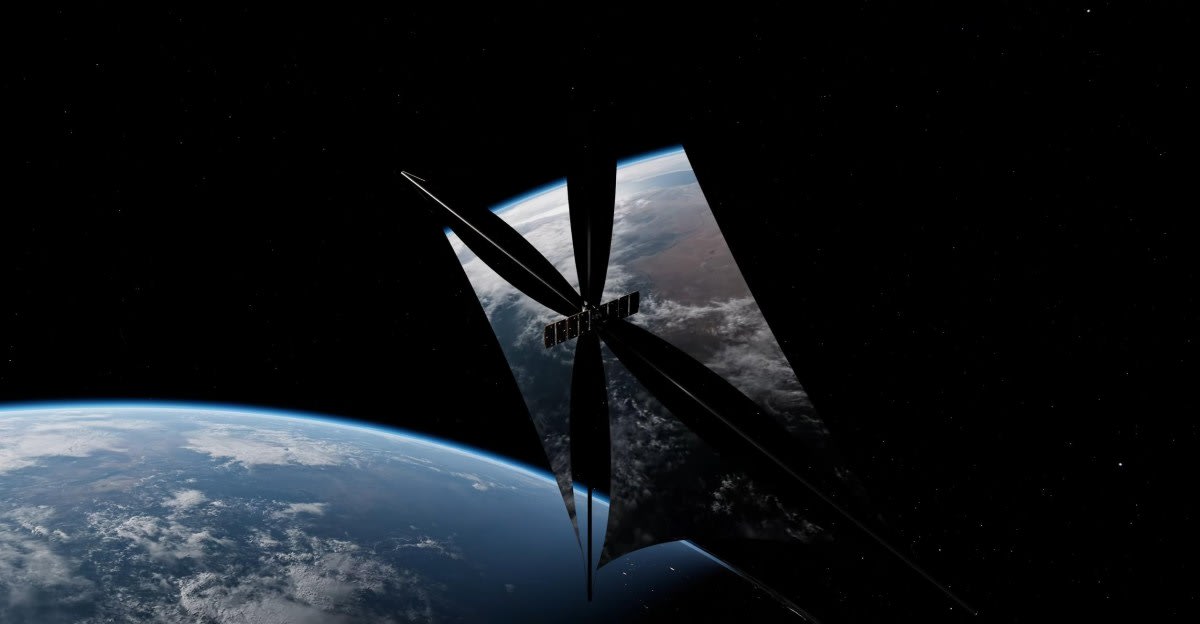
Reflect Orbital has been given the green light to launch its first space mirror that aims to redirect sunlight down to Earth at night. The US Federal Communications Commission (FCC) has authorized the California-based startup to build and operate a single prototype satellite in low-Earth orbit later this year, despite concerns over how the technology […]
A New Era of Artificial Illumination: Reflect Orbital's Space Mirror
In a move that blends cutting-edge aerospace engineering with ambitious urban planning, California-based startup Reflect Orbital has officially received the green light from the US Federal Communications Commission (FCC) to launch its first prototype space mirror. The primary objective of this venture is to deploy a satellite in low-Earth orbit (LEO) capable of redirecting sunlight toward specific locations on Earth during the night. This technology effectively seeks to create a controllable source of 'artificial moonlight,' potentially transforming how humans interact with the darkness of the nocturnal cycle.
The Technical Ambition of Reflect Orbital
At its core, the project involves the deployment of a high-precision reflecting surface in LEO. Unlike traditional communication satellites that transmit data via radio waves, Reflect Orbital's prototype is designed to manipulate photons. By precisely angling a mirror in space, the company aims to capture sunlight from the day-side of the Earth and bounce it toward the night-side. This requires an extraordinary level of orbital stabilization and precision pointing to ensure that the light beam reaches its intended target without drifting or causing unintended glare. The FCC's authorization is a critical milestone, as it grants the company the necessary legal and regulatory framework to operate in the increasingly crowded LEO environment.
Regulatory Hurdles and the Role of the FCC
The involvement of the FCC highlights the complex regulatory landscape of modern space ventures. While the FCC is primarily known for managing communication spectrums, its role in authorizing satellite operations is paramount to prevent orbital interference and ensure the safety of other space assets. The approval process for Reflect Orbital likely involved rigorous assessments of the satellite's trajectory and its potential to interfere with existing satellite constellations. This clearance signals a growing openness from US regulators to permit non-traditional satellite functions, moving beyond telecommunications and Earth observation into active environmental manipulation.
Environmental and Astronomical Concerns
Despite the technological breakthrough, the concept of reflecting sunlight at night is not without significant controversy. Astronomers and environmentalists have raised alarms regarding light pollution. The introduction of artificial sunlight could disrupt the observations of ground-based telescopes, potentially blinding sensitive equipment used to study the distant universe. Beyond science, there are profound biological implications; many nocturnal species rely on darkness for hunting, mating, and migration. The introduction of an artificial light source from orbit could disrupt these circadian rhythms, leading to ecological imbalances that are not yet fully understood.
Broader Implications and Future Trends
If the prototype is successful, the implications extend far beyond a simple technical demonstration. Such technology could theoretically be scaled to provide lighting for remote regions without electrical grids, assist in disaster relief operations where ground lighting is unavailable, or even support agricultural yields by extending the photoperiod for certain crops. However, this also opens a geopolitical can of worms. The ability to direct light—or potentially block it—from space introduces a new dimension of 'orbital power,' where the control of light becomes a strategic asset. We may see a future where 'lighting rights' become a subject of international treaty, similar to how radio frequencies are managed today.
Conclusion: Balancing Innovation and Ecology
Reflect Orbital's authorized launch represents a bold step toward the industrialization of the night sky. While the ability to redirect sunlight offers tantalizing possibilities for human utility and infrastructure, it forces a critical conversation about the sanctity of the natural dark. As the prototype moves toward its launch date later this year, the global community will be watching closely to see if the benefits of this artificial illumination outweigh the risks to our environment and our view of the stars.