'AI-generated': Rijiju's dig at Congress over Ramlila rally crowd photo
Source Entity
ABHISHEK MISHRA
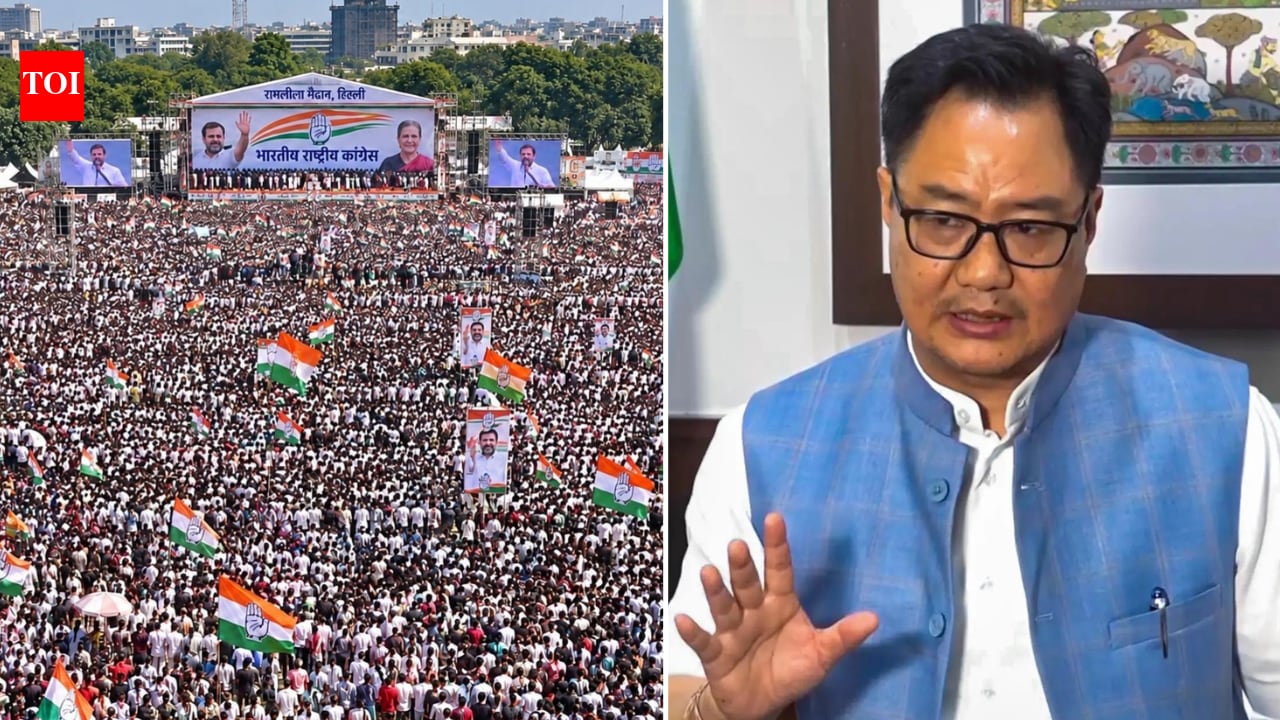
Union Minister Kiren Rijiju has accused the Congress party of using AI-generated imagery to inflate crowd estimates for their recent Ramlila rally. This incident highlights the growing political tensions surrounding the use of digital tools in campaigning.
The Intersection of AI and Political Discourse
Recent developments in Indian political discourse have taken a technological turn, as Union Minister Kiren Rijiju publicly criticized the Congress party regarding a photograph from their recent Ramlila rally. Rijiju’s assertion that the image was 'AI-generated' marks a significant escalation in how political rivals scrutinize digital content shared by their opponents. By suggesting that the party 'should have prepared it properly,' the minister highlighted a growing skepticism toward visual evidence in the age of generative artificial intelligence.
The Rise of Synthetic Media in Campaigning
The incident underscores the broader trend of political entities experimenting with advanced digital tools to bolster their visual presence. In an era where perception is often shaped by social media optics, the temptation to utilize AI to enhance crowd sizes or event aesthetics is rising. However, as Rijiju’s critique demonstrates, the scrutiny of these digital assets has become just as sophisticated, with political opponents deploying expert analysis to challenge the authenticity of opposition media.
Implications for Political Credibility
When a major political party is accused of using synthetic imagery, the implications for public trust are profound. In the context of large-scale public demonstrations like the Ramlila rally, the 'optics' serve as a proxy for grassroots support. If such imagery is proven to be manipulated, it risks undermining the party's narrative of popular appeal. This creates a high-stakes environment where every digital post becomes a potential battleground for claims of misinformation or fabrication.
Historical Context of Political Optics
Historically, political parties have always sought to maximize the visual impact of their rallies, often through strategic camera angles or crowd management. The shift from physical manipulation of perspectives to digital generation represents a qualitative change in political communication. While traditional 'angle-crafting' was seen as standard practice, the use of AI introduces concerns regarding the deliberate dissemination of false information, which is increasingly regulated by public discourse and platform policies.
Future Trends in Digital Accountability
As we look toward the future of campaigning, it is clear that digital forensics will play an essential role in political discourse. The ability to identify AI-generated content will become a standard skill for media houses and political communication teams alike. We can expect a future where every viral image shared by a political entity will face immediate verification, leading to a 'verification arms race' where the speed of debunking matches the speed of content creation.
Conclusion: Navigating the Digital Frontier
Ultimately, the exchange between Kiren Rijiju and the Congress party reflects a critical moment in the evolution of Indian digital democracy. As AI tools become more accessible, the necessity for transparency in digital media is paramount. The incident serves as a cautionary tale for all political stakeholders: in an age of instant verification, the pursuit of enhanced digital optics carries the significant risk of backfiring, potentially damaging the very credibility that parties seek to project.