Robot snakes searched for Venezuela earthquake survivors in collapsed buildings
Source Entity
Jeremy Hsu
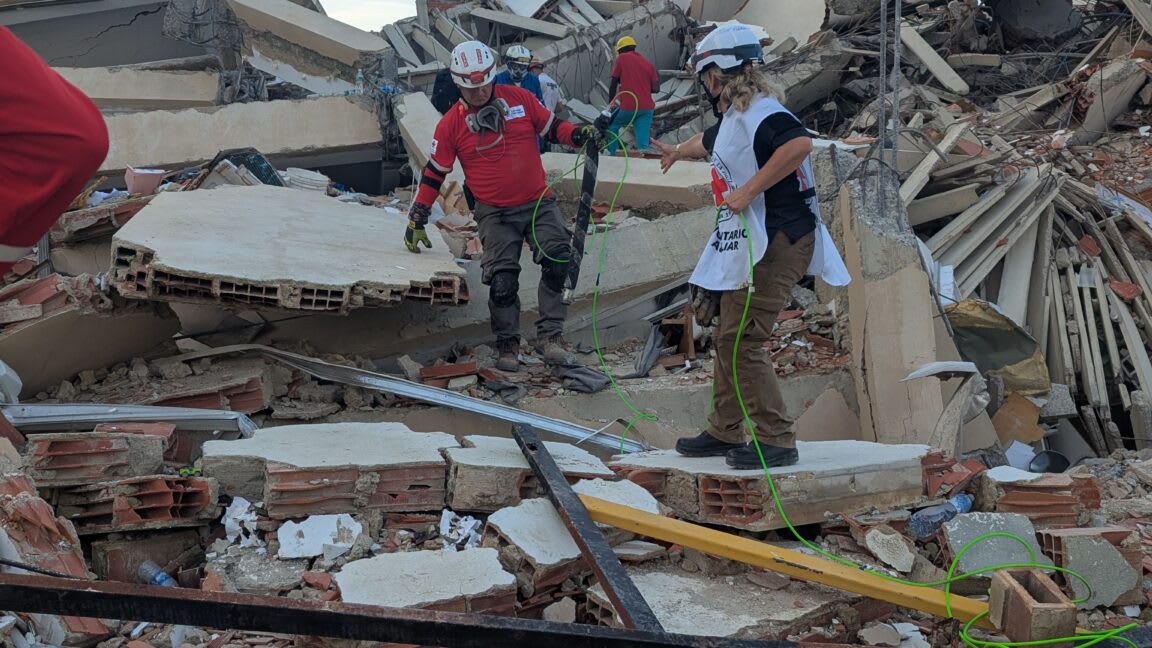
US researchers deployed specialized snake-like robots to assist in search and rescue efforts following a devastating double earthquake in Venezuela. These robots provided a critical advantage by navigating tight debris gaps inaccessible to traditional equipment or rescue teams.
Technological Innovation in Disaster Response
In the wake of the catastrophic double earthquake that struck Venezuela on June 24, resulting in over 5,000 fatalities and 16,740 injuries, the integration of advanced robotics into search and rescue (SAR) operations marked a significant shift in disaster response strategy. While traditional methods—such as the use of canine units, seismic listening devices, and thermal imaging—remained central to the relief efforts, the deployment of specialized 'snakebots' by US researchers provided a unique technological edge. These robots, designed to mimic biological slithering motions, were specifically engineered to penetrate the complex, tightly packed ruins of collapsed buildings where human rescuers and heavy machinery simply cannot reach.
The Mechanics of Snakebot Utility
The primary utility of the snake-like robot lies in its form factor. Unlike traditional remote-operated vehicles (ROVs) that require open space to maneuver, these robots are designed to navigate the claustrophobic, high-friction environments typical of pancake-collapsed structures. By slithering through debris, these machines can extend the reach of human rescuers deep into the heart of rubble piles. Equipped with integrated video cameras, the robots act as a remote ocular extension for search teams, providing real-time visual intelligence from areas that were previously considered 'blind spots' in disaster zones.
Challenges of Urban Search and Rescue (USAR)
Urban Search and Rescue (USAR) is notoriously difficult due to the instability of rubble and the high risk of secondary collapses. Before the introduction of snakebots, rescuers relied heavily on poles with cameras or acoustic sensors. While effective, these tools are often limited by line-of-sight requirements or the inability to maneuver around sharp, jagged obstacles. The snakebot technology addresses these limitations by offering a dynamic, flexible alternative that can navigate around structural hazards, thereby increasing the probability of locating trapped survivors in the critical 'golden hour' window following a seismic event.
Broader Implications for Global Disaster Management
The deployment of these robots in Venezuela underscores a growing trend toward the militarization and industrialization of humanitarian aid. As climate change and urbanization increase the risk of mass-casualty events in dense city centers, the demand for modular, agile robotic assistants is expected to rise. The success of this deployment suggests that future international disaster response protocols will likely prioritize the rapid air-lifting of specialized robotic teams alongside traditional medical and engineering personnel.
Future Trends and Limitations
While the technology is transformative, it is not without limitations. Future iterations of snakebot technology will likely focus on improving battery life, autonomous navigation through rubble, and the addition of sensory payloads such as multi-gas detectors to identify trapped individuals. As these machines become more sophisticated, the challenge will remain in balancing high-cost, high-tech solutions with the immediate, large-scale needs of regions experiencing massive infrastructure failure. Ultimately, the Venezuela earthquake response serves as a foundational case study for the integration of bio-inspired robotics into the global emergency response toolkit.