Déjà vu: How BCCI selectors’ handling of Rohit Sharma’s future mirrors the infamous Dhoni-Laxman-Srikkanth episode
Source Entity
Latest News: Today's Latest News Headlines from India & World | Hindustan Times | Hindustan Times
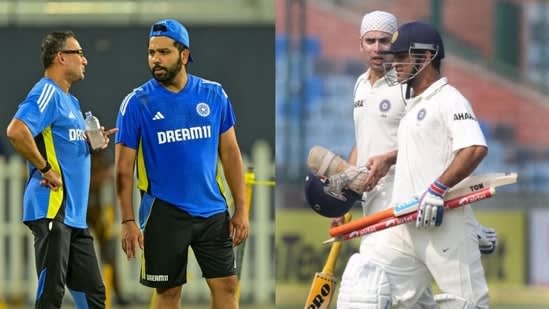
The Indian cricket team management, led by Gautam Gambhir and Ajit Agarkar, is reportedly moving on from Rohit Sharma in ODIs while maintaining faith in Virat Kohli. The transition strategy aims to prioritize younger talent like Yashasvi Jaiswal, mirroring past selection controversies in Indian cricket history.
The Strategic Shift: Evaluating the Future of Indian ODI Cricket
The landscape of Indian cricket is undergoing a significant transition as the Ajit Agarkar-led selection committee and head coach Gautam Gambhir begin to reshape the squad with an eye toward the next 50-over World Cup. Recent reports indicate a clear divergence in how the team management views the two stalwarts of the modern era, Rohit Sharma and Virat Kohli. While Kohli remains an automatic selection for the selectors, the management is reportedly looking beyond Rohit, signaling a definitive end to the 'RoKo' era that has defined the team for over a decade.
The Performance Metric and Selection Philosophy
This decision is heavily influenced by recent performance metrics, with Rohit Sharma struggling in the ongoing England series, recording scores of 11 and 26. The management’s focus has shifted toward long-term sustainability, explicitly prioritizing an extended run for younger players like Yashasvi Jaiswal. By aiming to integrate youth into the setup across the nearly 20 ODIs remaining before the marquee tournament, the committee is attempting to mitigate the risks of relying on aging stars, a strategy that often sparks intense debate among fans and former players.
Backlash and the 'Superstar' Dilemma
Former cricketer Sadagoppan Ramesh has publicly criticized the management's approach, highlighting the psychological pressure placed on senior players when their positions are scrutinized on a per-match basis. Ramesh’s comments underscore a growing concern that the current environment lacks the stability required for legends to perform at their peak. The argument remains that constant speculation regarding an individual's future can undermine their focus, creating an atmosphere of uncertainty that may be detrimental to team morale.
Historical Parallels: The Cycle of Transition
This situation bears a striking resemblance to the 2012 saga involving VVS Laxman and the then-selection committee headed by Kris Srikkanth. In that instance, the tension between legendary players and selectors over the timing of retirement culminated in a quiet but defiant exit by the player. The current narrative surrounding Rohit Sharma reflects a similar historical pattern in Indian cricket, where the inevitability of change often clashes with the legacy of the sport's greatest contributors.
Broader Implications for Team Structure
As the team moves away from Rohit, the elevation of younger leaders like Shubman Gill—who replaced Rohit as ODI captain—highlights a structural shift. The management is clearly attempting to avoid the stagnation that can occur when a team relies too heavily on past successes. By signaling these changes early, the selectors hope to build a side capable of adapting to modern ODI requirements, even if it means moving on from icons who have defined the last decade of the sport.
Conclusion: The Path Forward
Ultimately, the decision to look beyond Rohit Sharma while retaining Virat Kohli represents a calculated risk. The committee is betting that a blend of Kohli’s consistency and the aggressive potential of younger prospects like Jaiswal will provide the best chance for success in the upcoming World Cup cycle. Whether this transition proves to be a masterstroke or a source of lasting friction remains to be seen, but it is clear that the era of the 'automatic' senior player is being replaced by a more rigid, performance-based selection culture.
Multiple Citing Sources
Verification Required?