Despite what Watson said, Rosalind Franklin understood structure of DNA first
Source Entity
Hacker News
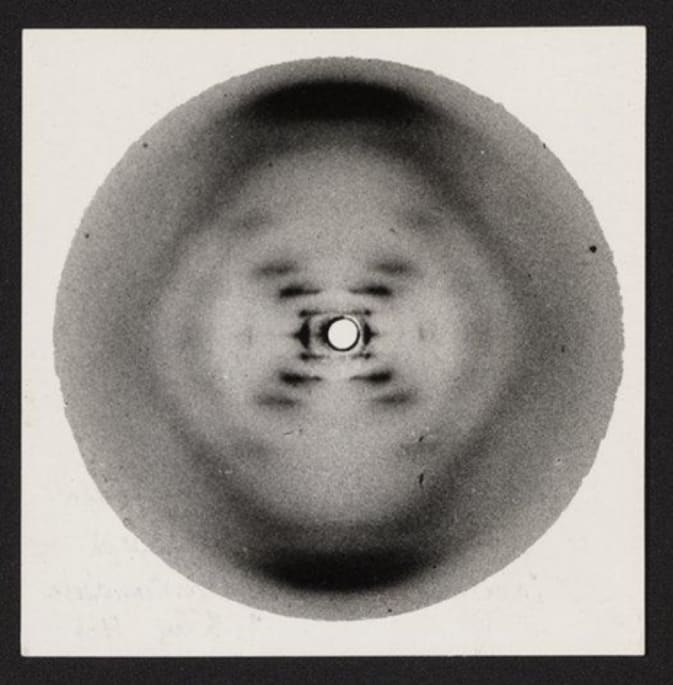
New evidence clarifies that Rosalind Franklin intentionally manipulated DNA samples to capture high-quality diffraction images, proving she understood the structure long before others. Her meticulous documentation confirms she was not missing the helical structure but was systematically analyzing the A and B forms of DNA.
The Scientific Legacy of Rosalind Franklin: Correcting the Narrative
For decades, the popular historical narrative surrounding the discovery of the DNA double helix has often minimized the role of Rosalind Franklin, frequently portraying her as a brilliant but detached scientist who failed to grasp the significance of her own data. However, recent scrutiny of her laboratory notes and technical procedures reveals a much different reality. Far from being a passive observer who stumbled upon an iconic image, Franklin was a methodical researcher who possessed a sophisticated understanding of the structural complexities of DNA.
Systematic Methodology and Technical Precision
The evidence lies in the meticulous documentation of her work at King’s College London between 1951 and 1952. Alongside her graduate student Raymond Gosling, Franklin utilized a Philips micro-camera to capture a series of seventy-eight diffraction images. The focus on 'Photograph 51' has often overshadowed the broader experimental rigor applied to the preceding images. By the time Photograph 49 was captured, Franklin and Gosling had already established the existence of two distinct structural forms of DNA: the crystalline A form and the hydrated B form.
Intentional Manipulation of DNA Samples
A critical aspect of Franklin’s work was her ability to manipulate samples to isolate these distinct structural forms. By adjusting relative humidity, she could transition DNA between the A and B forms, allowing for a comparative analysis that provided immense structural data. This was not a process of trial and error; it was a highly controlled scientific endeavor. Her notes reveal that she was actively calculating Patterson maps to interpret the spots generated by the crystalline A form, demonstrating a deep engagement with the theoretical underpinnings of molecular structure.
Challenging the 'Missed Helix' Myth
The persistent claim that Franklin 'missed' the helical structure is largely a product of historical bias rather than scientific failure. The data confirms that she was systematically working through the complexities of the A form while simultaneously documenting the B form. Her approach was to build a comprehensive model based on empirical evidence rather than rushing to a conclusion. This deliberate pace, while often interpreted by her contemporaries as hesitation, was actually the mark of a rigorous crystallographer who refused to speculate without sufficient proof.
Historical Context and Future Implications
Understanding Franklin’s true role requires us to re-examine the collaborative environment of 1950s science. The distribution of her findings, often without her full consent or knowledge, created a narrative of discovery that favored those who were quickest to publish models rather than those who provided the foundational data. By recognizing the intentionality behind her work, we gain a clearer picture of how modern molecular biology was actually built. This correction of the record serves as a reminder of the importance of primary source documentation in maintaining the integrity of scientific history.
Conclusion
Ultimately, the evidence confirms that Rosalind Franklin was not merely a contributor to the discovery of the DNA structure but an intellectual leader who understood the nuances of the molecule’s architecture. Her notes and the systematic nature of her diffraction series prove that she had successfully identified the key structural forms of DNA through careful experimentation. Moving forward, the acknowledgement of her work as an active, informed, and precise scientific inquiry is essential for a complete and accurate understanding of one of the most significant breakthroughs in human history.