Rashtriya Swayamsevak Sangh: A look at its origins, ideology and rise (1925-1966)
Source Entity
India Latest News: Top National Headlines Today & Breaking News | The Hindu
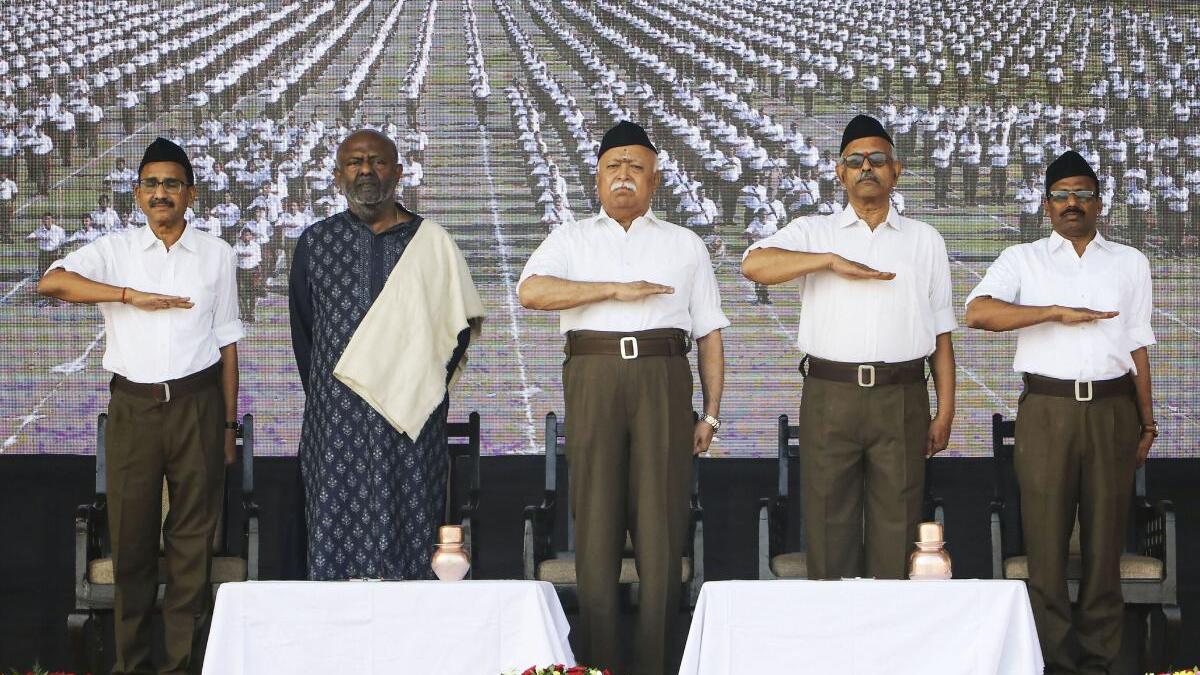
Prime Minister Narendra Modi recently visited the RSS headquarters in Nagpur to mark the organization's centenary. The RSS, founded in 1925 by Keshav Baliram Hedgewar, remains the ideological foundation of the BJP and seeks to promote a Hindu Rashtra.
The Centennial Legacy of the Rashtriya Swayamsevak Sangh
On March 30, 2025, Prime Minister Narendra Modi made a historic visit to the Nagpur headquarters of the Rashtriya Swayamsevak Sangh (RSS). This event, occurring during the organization's centenary year, marks a significant moment in Indian political history, as Mr. Modi—himself a former full-time volunteer or pracharak—became the first sitting Prime Minister to visit the premises. His description of the RSS as a "banyan tree of immortal culture and modernisation" underscores the deep symbiotic relationship between the Sangh and the Bharatiya Janata Party (BJP).
Origins and Ideological Foundations
The RSS was established on Vijaya Dashami in 1925 by Keshav Baliram Hedgewar, a physician based in Nagpur. Emerging during the height of the struggle against the British Raj, the organization was founded with the explicit goal of fostering a cultural and religious revival among Hindus. By focusing on collective identity, Hedgewar sought to build a movement that would eventually lead to the establishment of a Hindu Rashtra, or a Hindu nation, viewing cultural consolidation as a prerequisite for national strength.
Organizational Growth and Structure
The growth of the RSS from a modest beginning to its current scale is a testament to its disciplined structure. Central to this growth is the shakha model, which functions as a school for volunteers, known as swayamsevaks. From a single unit, the organization has expanded to encompass 1,27,367 shakhas located across 51,570 sites throughout India. This extensive network provides the ideological infrastructure that has sustained the movement through various political eras.
The RSS-BJP Symbiosis
As the ideological fount of the BJP, the RSS plays a critical role in shaping the political discourse of modern India. The organization’s influence extends beyond mere electoral politics, focusing instead on long-term societal transformation. The presence of former pracharaks in the highest echelons of government illustrates the deep integration of RSS ideology within the current governance framework of the nation.
Future Trends and Societal Impact
As the RSS enters its second century, its focus remains on balancing traditional revivalism with the demands of a modern, globalized India. The emphasis on cultural modernization, as echoed by the Prime Minister, suggests a trajectory where the organization seeks to harmonize historical Hindu values with contemporary developmental goals. The sheer scale of its current operations indicates that the RSS will continue to be a defining force in shaping India’s socio-political landscape for the foreseeable future.
Verification Required?