Congress demands regularisation of staff recruited via Haryana Kaushal Rozgar Nigam
Source Entity
India Latest News: Top National Headlines Today & Breaking News | The Hindu
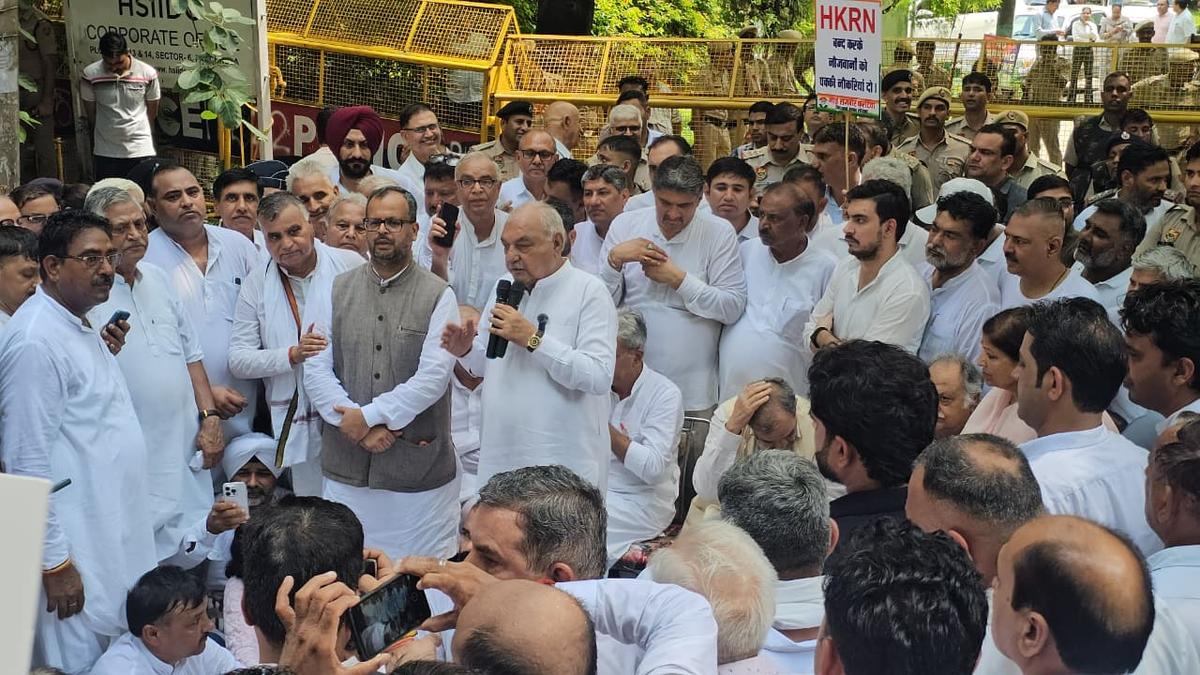
Congress leaders in Haryana, led by Bhupinder Singh Hooda, held a protest demanding the regularization of staff hired through the Haryana Kaushal Rozgar Nigam. They argue the system undermines reservation policies and exploits youth by favoring contractual labor over permanent government positions.
Congress Challenges Haryana’s Contractual Employment Model
On August 19, 2026, the political landscape in Haryana intensified as the Congress party organized a significant protest in Panchkula. Led by former Chief Minister and current Leader of the Opposition, Bhupinder Singh Hooda, the demonstration served as a direct critique of the Bharatiya Janata Party (BJP) government’s reliance on the Haryana Kaushal Rozgar Nigam (HKRN) for state recruitment. The core of the protest focused on the demand for the immediate regularization of all personnel currently employed via this contractual framework.
The Controversy Over Reservation and Equity
A primary pillar of the Congress party's opposition to the HKRN is the perceived erosion of constitutional safeguards. Mr. Hooda and other party leaders argue that by funneling recruitment through a contractual entity—even for gazetted posts—the government is effectively bypassing established reservation mandates. These provisions, which are designed to ensure representation for Dalits, Backward Classes, and economically weaker sections, are allegedly being sidelined, leading to concerns about social justice and equitable access to government employment.
Economic Implications for the Workforce
Beyond the debate on reservation, the protest highlighted the precarious nature of the contract system itself. The Congress leadership contends that the HKRN model institutionalizes job insecurity. By denying contractual workers the benefits typically afforded to permanent civil servants, such as standardized pay scales, Dearness Allowance (DA), and clear promotion pathways, the government is accused of exploiting the state's youth. The protesters argue that these workers perform essential state functions but are denied the dignity and financial stability associated with permanent government service.
Political Strategy and Governance Debates
The protest in Panchkula underscores a broader ideological divide regarding public sector management in Haryana. While the BJP government likely views the Nigam as a streamlined method to meet staffing requirements and reduce administrative overhead, the Congress party views it as a policy failure that prioritizes fiscal austerity at the cost of social welfare and labor rights. This clash is indicative of a recurring theme in Indian state politics, where the balance between efficient governance and the protection of government jobs remains a contentious issue.
Future Trends and Outlook
Looking ahead, the issue of contractual employment versus permanent recruitment is poised to remain a central talking point in upcoming political discourse. The demand for regularization is not merely a labor dispute; it is a high-stakes political issue that resonates with a large demographic of job seekers and existing contractual employees. As the Congress party continues to leverage this narrative, the government will face increasing pressure to either reform the HKRN’s operational protocols or provide more robust protections for the employees hired under its banner to mitigate growing public dissatisfaction.
Verification Required?