NASA launches $500,000 challenge to improve space weather predictions
Source Entity
TOI SCIENCE DESK
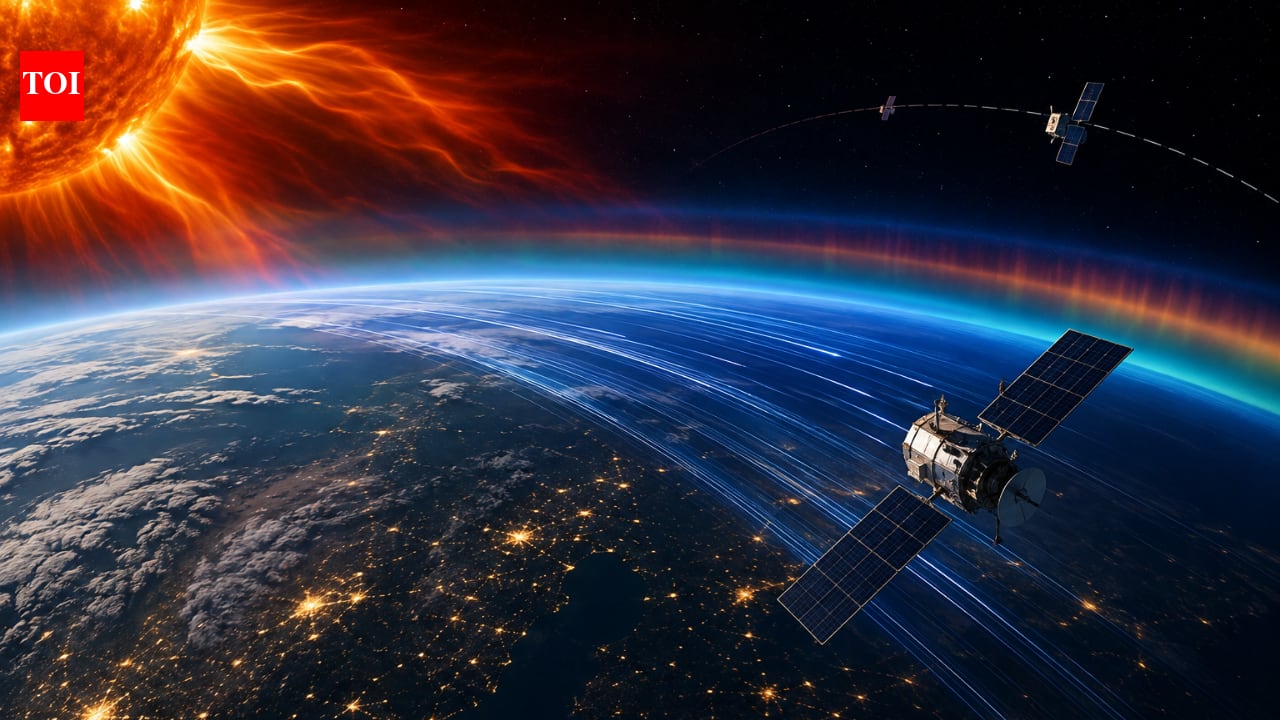
NASA has launched the $500,000 Orbital Clarity Challenge to solicit innovative technologies for measuring the upper atmosphere. The initiative aims to improve satellite orbit predictions by better understanding the effects of atmospheric drag.
Enhancing Orbital Precision: NASA’s New Frontier
NASA has officially launched the 'Orbital Clarity Challenge,' a strategic initiative offering up to $500,000 in prize money to incentivize the development of affordable technology capable of measuring Earth’s extremely thin upper atmosphere. As the commercialization of Low Earth Orbit (LEO) accelerates, the ability to accurately predict satellite behavior has transitioned from a technical luxury to an operational necessity for space agencies and private operators alike.
The Challenge of Atmospheric Drag
At the heart of this initiative is the persistent problem of atmospheric drag. Even at high altitudes, the upper reaches of Earth's atmosphere exert a subtle but constant force on orbiting objects. This force causes satellite orbits to decay or shift in unpredictable ways, particularly during periods of intense space weather. By seeking new methods to measure these conditions, NASA aims to refine the predictive models that govern satellite positioning, ensuring that collision risks are minimized and fuel efficiency is maximized.
Why Innovation is Essential
Historically, measuring the thermosphere and exosphere has required expensive, specialized instrumentation. The Orbital Clarity Challenge shifts this paradigm by inviting innovative, cost-effective solutions that can be integrated into smaller, more agile spacecraft. This move reflects a broader trend in the aerospace industry: the democratization of space data through miniaturization and the use of 'CubeSat' architectures, which lower the barriers to entry for advanced atmospheric research.
Implications for Global Space Infrastructure
The broader implications of this challenge are significant. With thousands of new satellites being deployed by constellations for global internet and Earth observation, the density of objects in orbit is reaching unprecedented levels. Improved atmospheric models will allow for more precise conjunction assessments, reducing the frequency of unnecessary avoidance maneuvers and preserving the longevity of expensive space assets. This is not just a scientific endeavor; it is a critical infrastructure project for the 21st-century space economy.
Incentivizing Progress Through Competition
By offering a $500,000 prize and the unique opportunity for a free test flight, NASA is effectively lowering the risk profile for innovators. This 'carrot-and-stick' approach—where the prize funds development and the flight opportunity provides crucial validation—is designed to accelerate the transition of technology from laboratory concepts to space-proven hardware. This mechanism is vital for fostering a competitive ecosystem that can keep pace with the rapid growth of the satellite industry.
Future Outlook and Conclusion
As we look toward the future, the success of the Orbital Clarity Challenge will likely dictate how we manage orbital traffic in the coming decade. If participants can successfully deliver reliable, low-cost sensors, the resulting data will revolutionize space situational awareness. Ultimately, NASA’s initiative underscores the necessity of continuous innovation to ensure that the space environment remains safe, sustainable, and accessible for future generations of exploration and commerce.