A faster way to calculate the day of the week
Source Entity
Hacker News
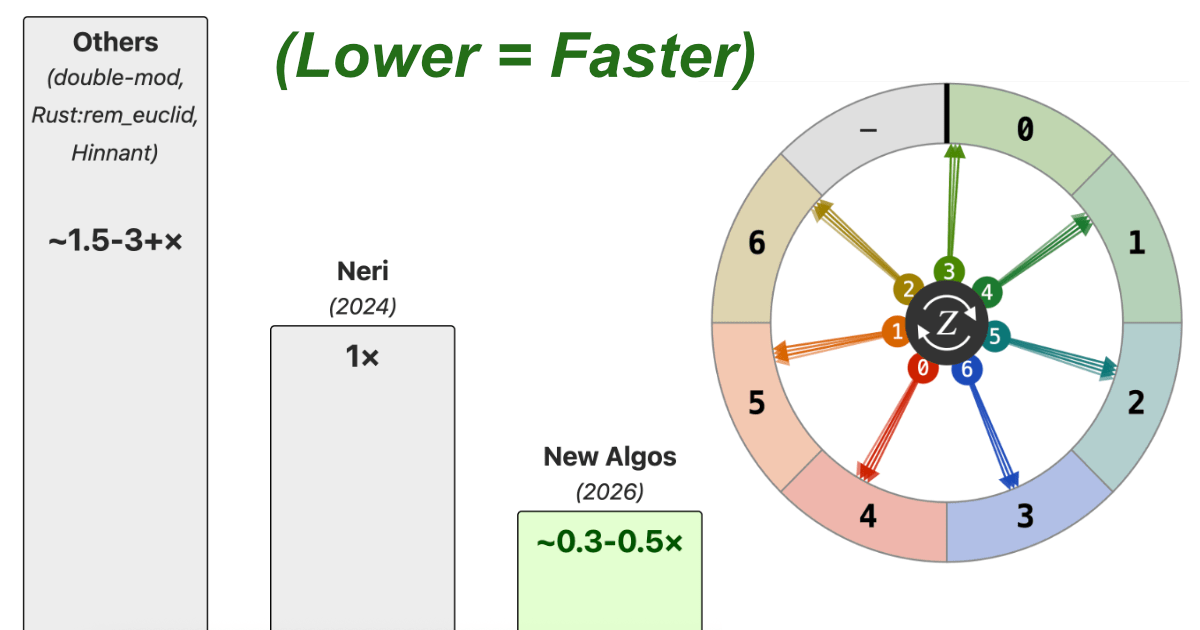
Researchers have developed a faster, more efficient mathematical method for calculating the day of the week for any given date. This advancement simplifies calendar algorithms, offering practical improvements for both computational efficiency and human mental arithmetic.
Rethinking Temporal Computation
The pursuit of an optimized method for determining the day of the week for any given date has long been a pursuit of both recreational mathematicians and computer scientists. While the Gregorian calendar follows a predictable cycle, the complexity of leap years and varying month lengths often makes manual calculation cumbersome. The recent development of a faster algorithm represents a significant refinement in how we process temporal data, moving away from more convoluted traditional formulas toward a streamlined, efficient approach.
The Mechanics of the New Algorithm
At its core, this new method reduces the number of modular arithmetic operations required to map a specific date to its corresponding weekday. By simplifying the underlying constants—often referred to as 'anchor days' or 'key values'—the algorithm minimizes the cognitive load for human users while simultaneously reducing the instruction cycles required for a machine to execute the query. This optimization is particularly relevant for systems where calendar lookups are performed at scale, such as in database indexing or scheduling software.
Historical Context of Calendar Systems
To appreciate this development, one must consider the historical complexity of the Gregorian calendar, which was introduced in 1582 to correct the drift of the Julian calendar. The irregular distribution of days—ranging from 28 to 31—has historically necessitated complex 'if-else' logic in programming. By finding a faster mathematical shortcut, researchers are essentially creating a cleaner bridge between the rigid structure of the solar year and the human-centric need for simplified timekeeping.
Broader Computational Implications
While a faster calculation method might seem like a niche mathematical exercise, it has tangible implications for software architecture. In environments where high-frequency event scheduling is required, such as in distributed computing or finance, the efficiency of date manipulation can impact overall latency. A lighter algorithm allows for faster parsing of historical records and future projections, demonstrating that even fundamental mathematical constants can be re-evaluated for modern performance standards.
Future Trends and Applications
As we look toward the future of data processing, the trend toward 'algorithmic minimalism'—the practice of finding the simplest possible solution to a computational problem—continues to gain traction. This new way of calculating weekdays is a prime example of this philosophy. In the coming years, we can expect such optimizations to be integrated into standard libraries and low-level programming languages, further abstracting the complexity of timekeeping away from the end-user.
Concluding Perspectives
In summary, the emergence of a faster day-of-the-week calculation method is a testament to the fact that even well-established systems can be improved through rigorous mathematical inquiry. By refining the process, researchers have provided a tool that is not only faster for computers but also more accessible for those interested in mental calculation. This advancement highlights the ongoing importance of efficiency in the digital age, proving that there is always room to optimize the way we track the passage of time.