Russia unleashes its biggest missile storm yet on Kyiv as mighty zircons join the attack |War, Putin
Source Entity
Latest News: Today's Latest News Headlines from India & World | Hindustan Times | Hindustan Times
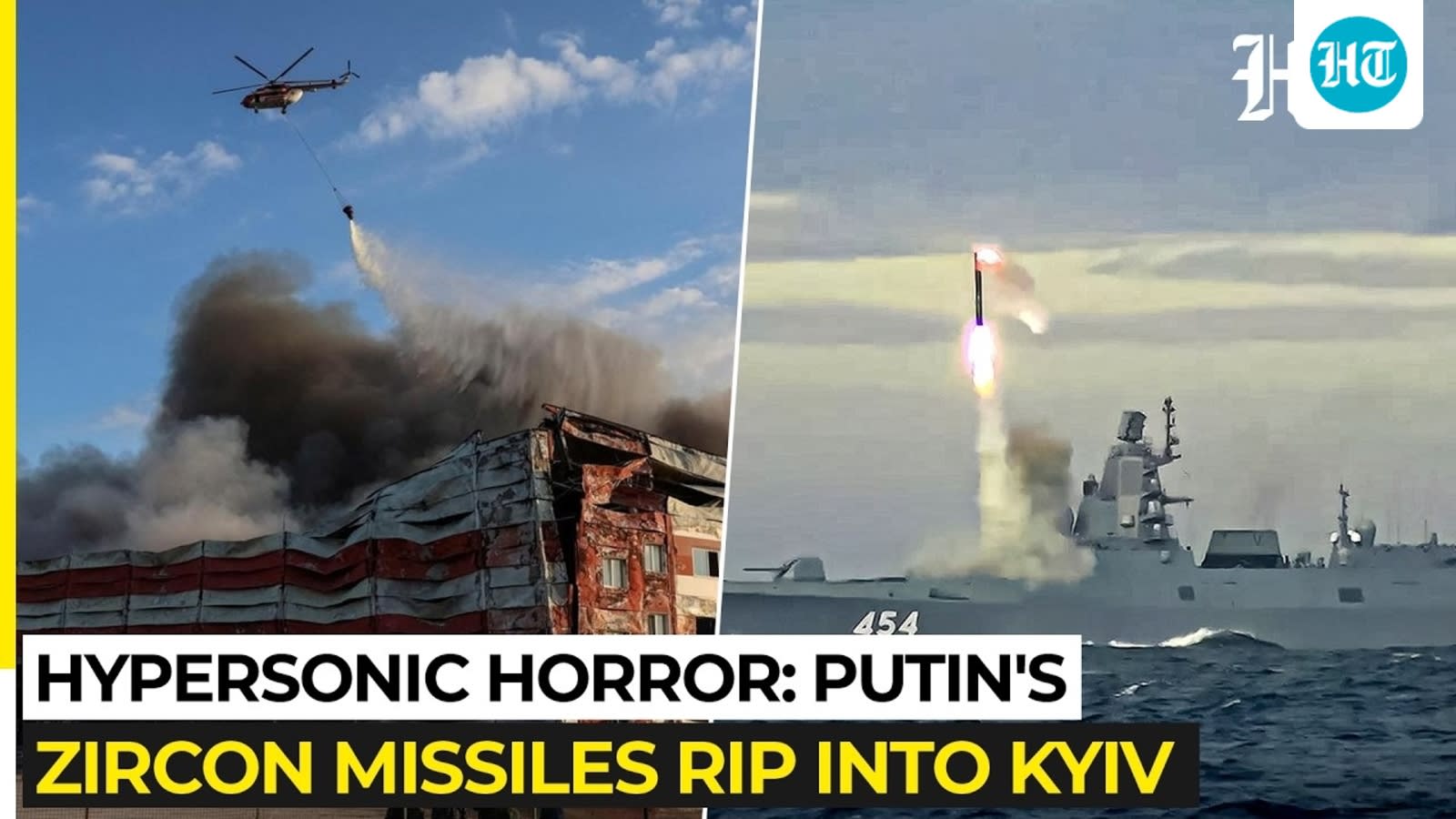
Russia has launched one of the largest combined missile and drone barrages of the war, targeting critical Ukrainian infrastructure and cities. The strike included the deployment of advanced Zircon hypersonic missiles, while Ukraine responded with reported attacks on Russian-held territory and logistics.
The Escalation of Aerial Warfare
Russia has executed one of the most significant aerial bombardments since the inception of the current conflict, utilizing a sophisticated mix of ballistic missiles, over 120 attack drones, and, notably, Zircon hypersonic missiles. This massive barrage targeted not only the capital, Kyiv, but also extended across major urban centers including Kharkiv, Zaporizhzhia, Odesa, and Kherson. The deployment of Zircon hypersonic technology represents a qualitative shift in the nature of the strikes, as these weapons are specifically designed to evade conventional air defense systems, complicating Ukraine’s efforts to protect its civilian population and critical infrastructure.
Strategic Objectives and Military Justification
From the Kremlin’s perspective, these strikes are framed as targeted operations against Ukraine’s defense industry and military logistics. By systematically striking these nodes, Russia aims to degrade Ukraine’s capacity to sustain its war effort and disrupt the supply chains necessary for frontline operations. However, the geographic spread of the destruction, impacting multiple major cities simultaneously, suggests a broader strategy of psychological warfare intended to exhaust Ukrainian air defense reserves and diminish the morale of the populace under constant threat.
The Reciprocal Nature of the Conflict
While Russia maintains its offensive posture, the conflict has seen a notable increase in Ukrainian retaliatory actions. Reports indicate that Ukrainian forces have targeted the Kerch Bridge area and Crimea, signaling a continued effort to challenge Russia's hold on the peninsula and its vital supply lines. Furthermore, the strike on an oil depot in Russia's Stavropol Krai and the reported involvement of the Black Sea grain ship 'Golden Leo' illustrate that the theater of war is not limited to Ukrainian soil, but is an increasingly interconnected web of logistics and infrastructure attacks extending deep into Russian territory.
Implications of Hypersonic Weaponry
The introduction of the Zircon hypersonic missile into the theater of war marks a dangerous evolution in military technology. These missiles travel at speeds multiple times the speed of sound, leaving very little reaction time for interception. Their use forces Ukraine to prioritize the defense of its most critical assets, potentially leaving other areas vulnerable. This development threatens to permanently alter the defensive landscape, as traditional interceptor missiles struggle to track and neutralize such high-velocity threats, forcing Western allies to reconsider the types of air defense support provided to Kyiv.
Broader Geopolitical and Humanitarian Consequences
The human cost of this escalation remains severe, with casualties reported across multiple Ukrainian cities. The targeting of grain infrastructure—symbolized by the events surrounding the 'Golden Leo'—also carries significant implications for global food security, as the Black Sea remains a volatile corridor for international trade. As Russia continues to utilize its massive missile stockpiles and drone swarms, the international community faces the challenge of addressing both the immediate humanitarian crisis and the long-term risk of further escalation that could draw in regional actors or destabilize the broader European security architecture.
Future Trends and Outlook
Looking ahead, it is likely that the conflict will remain characterized by these high-intensity aerial exchanges. As both sides seek to disrupt the other's logistics—Russia through missile strikes and Ukraine through long-range drone and sabotage operations—the war is becoming increasingly defined by the ability to sustain infrastructure. Future developments will likely hinge on the replenishment of missile stockpiles and the effectiveness of integrated air defense systems, as neither side currently shows a willingness to de-escalate the intensity of these long-range strikes.
Verification Required?