Passenger partially sucked through window after Ryanair flight suffers mid-air emergency
Source Entity
TOI WORLD DESK
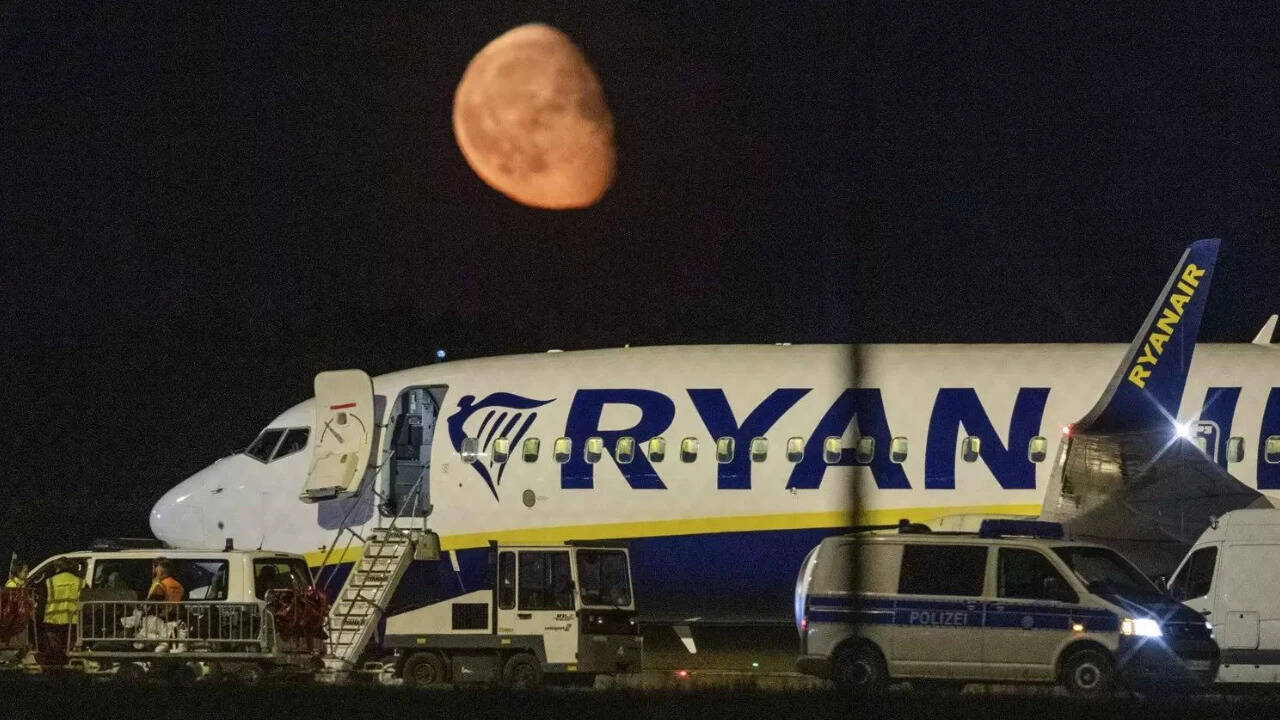
Part of an engine may have broken off and struck the window, causing cabin decompression A Ryanair Boeing 737-800 made an emergency landing in Greece on Friday after a passenger was partially sucked ...
Mid-Air Crisis: Analysis of the Ryanair Emergency Landing in Greece
In a harrowing incident that underscores the volatility of aviation emergencies, a Ryanair Boeing 737-800 was forced to make an emergency landing in Greece after a catastrophic structural failure. The event was triggered when a component of the aircraft's engine broke away, striking a cabin window and causing an immediate breach of the fuselage. This breach led to rapid cabin decompression, a terrifying scenario where the internal pressurized air of the aircraft rushes out to equalize with the thin, low-pressure atmosphere of high altitude, resulting in a passenger being partially sucked through the window opening.
The Physics of Rapid Decompression
To understand the gravity of this event, one must analyze the mechanics of cabin pressurization. Commercial aircraft like the Boeing 737-800 maintain a pressurized environment to allow passengers to breathe comfortably at cruising altitudes, where oxygen levels are insufficient for human survival. When the engine debris punctured the window, it created a pressure differential that acted like a powerful vacuum. The force exerted on the passenger seated near the breach was an immediate result of this pressure gradient, pulling them toward the opening. Such incidents are rare and typically occur only during severe structural failures or explosive decompression events, making this a critical case study in aviation safety.
Uncontained Engine Failure and Structural Impact
The report indicates that a part of the engine broke off, suggesting an "uncontained engine failure." This is one of the most feared scenarios in aviation, where internal engine components fail and penetrate the engine casing (the cowling), turning fragments into high-velocity shrapnel. In this specific instance, the debris traveled through the airframe's exterior and struck the window. This highlights a vulnerability in the aircraft's shielding; while engines are designed to contain failures, the trajectory of the debris in this case bypassed these safeguards, leading to a direct breach of the passenger cabin.
The Role of the Boeing 737-800 Fleet
The Boeing 737-800 is a cornerstone of the global low-cost carrier model, utilized extensively by Ryanair for its efficiency and reliability. However, any incident involving structural failure or engine disintegration prompts immediate scrutiny of the fleet's maintenance records. The industry will likely investigate whether this was an isolated mechanical failure or a symptom of fatigue or manufacturing defects. Historically, the 737 series has undergone various safety audits, and an incident of this nature will undoubtedly lead to intensified inspections of engine turbine blades and fuselage integrity across similar aircraft.
Emergency Response and Pilot Protocols
The successful emergency landing in Greece is a testament to the rigorous training of the flight crew. In the event of rapid decompression, pilots are trained to perform an immediate emergency descent to reach an altitude (typically 10,000 feet) where the air is breathable without supplemental oxygen. The crew had to manage the chaos of a partially ejected passenger, the psychological panic of the cabin, and the mechanical instability of a damaged engine simultaneously. The coordination between the cockpit and Greek air traffic control was essential in securing a priority landing corridor to prevent a total loss of the aircraft.
Broader Implications for Aviation Safety
This event raises significant questions regarding the balance between high-frequency flight schedules and rigorous maintenance cycles. For low-cost carriers like Ryanair, which operate aircraft at high utilization rates, the margin for mechanical error is slim. This incident will likely trigger a review of "uncontained failure" mitigation strategies, potentially leading to new requirements for reinforced window shielding or enhanced engine monitoring systems that can detect imminent component failure before it becomes catastrophic.
Conclusion and Future Outlook
Ultimately, the Ryanair emergency landing serves as a stark reminder of the inherent risks of flight and the critical importance of redundant safety systems. While the aircraft landed safely, the image of a passenger being sucked through a window is a visceral reminder of the fragility of the pressurized cabin. Moving forward, aviation authorities will likely focus on the forensic analysis of the failed engine part to determine if there was a systemic flaw. For passengers, this event reinforces the necessity of keeping seatbelts fastened throughout the flight, as the belt was likely the only thing preventing the passenger from being completely ejected from the aircraft.