Iranian plane stopped by mystery bombs: Saudi’s secret move exposed? Shocking video to stun Mojtaba
Source Entity
Latest News: Today's Latest News Headlines from India & World | Hindustan Times | Hindustan Times
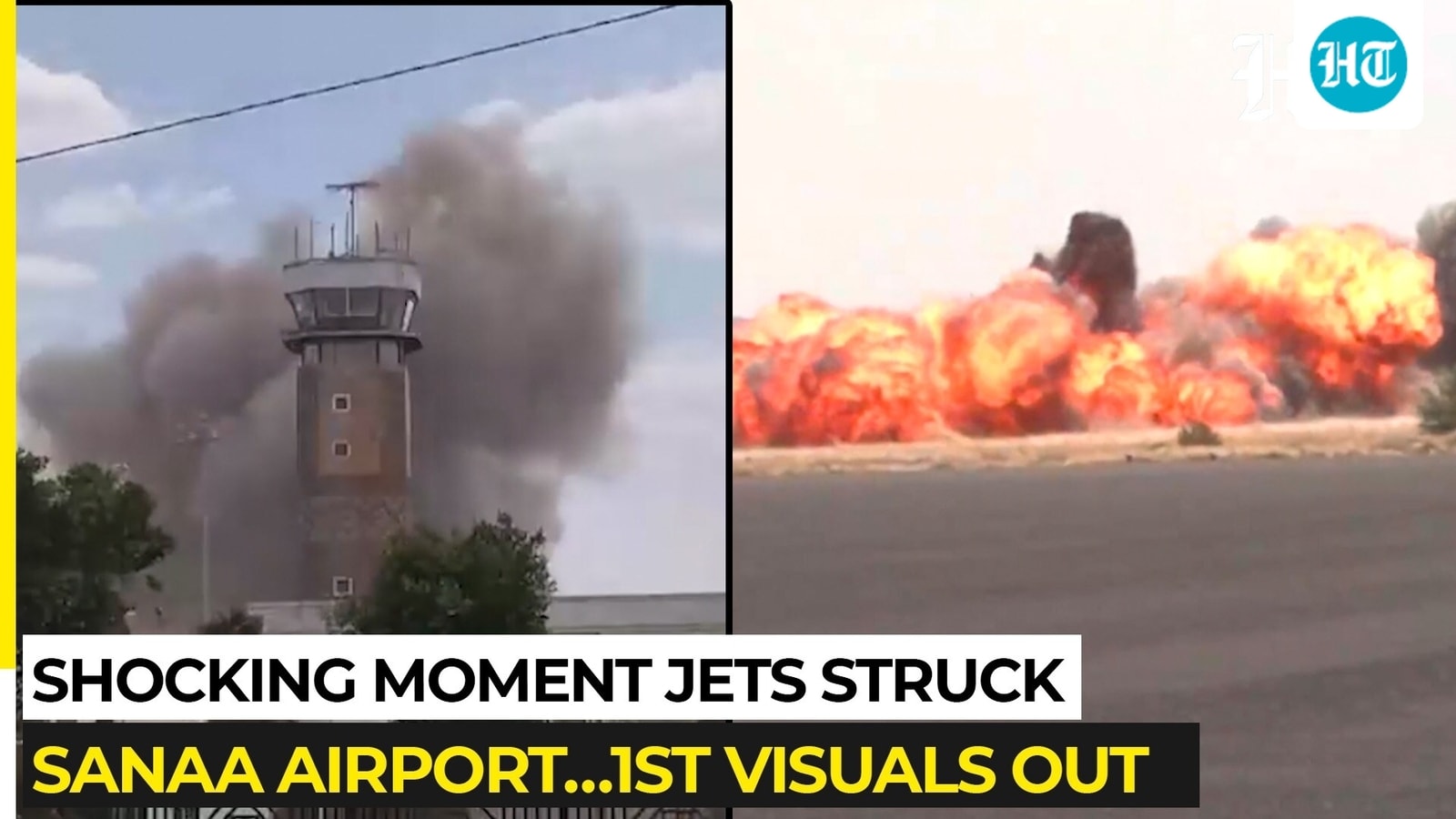
Conflicting claims have emerged after explosions were reported at Yemen's Sanaa International Airport. Houthi authorities accused Saudi Arabia of striking the airport runway, while Yemen's internationally recognized government said the runway was targeted to prevent a suspicious aircraft from landing. Social media footage showing damage has fueled speculation, but Saudi Arabia had not publicly commented at the time of reporting. The incident comes amid renewed tensions involving Iran, the Houthis and regional powers, raising fresh questions over aviation security and the risk of wider escalation.
Analysis of the Sanaa International Airport Explosions
Recent reports of explosions at Sanaa International Airport have ignited a volatile diplomatic and military dispute, characterized by sharply conflicting narratives. The incident centers on damage to the airport runway, with Houthi authorities immediately accusing Saudi Arabia of conducting an airstrike. In contrast, the internationally recognized government of Yemen asserts that the runway was targeted specifically to intercept and prevent a 'suspicious aircraft' from landing. This clash of accounts reflects the deep fragmentation of Yemeni sovereignty and the high stakes of regional air security.
The Geopolitical Tug-of-War
The accusation that a 'suspicious aircraft'—implied to be Iranian—was the target points to the broader proxy conflict between Saudi Arabia and Iran. For years, the Saudi-led coalition has sought to sever the logistics pipeline between Tehran and the Houthi rebels, who are widely viewed as Iranian proxies. By targeting the runway, the acting forces aimed to neutralize a potential delivery of advanced weaponry, military advisors, or strategic intelligence. This specific incident underscores the 'shadow war' played out on Yemeni soil, where aviation infrastructure becomes a primary battlefield for regional hegemony.
Historical Context of Infrastructure Targeting
Historically, Sanaa International Airport has been a recurring flashpoint in the Yemeni Civil War. The Saudi-led coalition has frequently targeted the airport to isolate the Houthi-controlled capital and restrict the movement of personnel and materiel. This pattern of targeting civilian infrastructure for military objectives has often led to humanitarian crises, limiting the flow of aid and medical evacuations. The current incident is a continuation of this strategy, emphasizing the use of 'deniable' or 'mystery' strikes to maintain strategic pressure without necessarily triggering a full-scale diplomatic rupture.
Implications for Aviation Security
The use of explosions to disable a runway highlights a critical vulnerability in aviation security within conflict zones. When an airport is transformed from a transport hub into a military target, the risk of collateral damage increases exponentially. The mention of social media footage showing the damage suggests that in the modern era, the 'information war' happens simultaneously with the kinetic strike. The rapid dissemination of imagery allows both sides to frame the event to their respective audiences before official government statements can be issued, further complicating the verification of facts.
Predicting Future Escalation
Looking forward, this incident is likely to trigger a cycle of retaliation. Houthi forces have historically responded to strikes on their infrastructure by launching drone or missile attacks against Saudi oil installations or urban centers. If the Houthi leadership perceives this as a direct provocation or a violation of fragile ceasefires, the region could see a renewed spike in asymmetric warfare. Conversely, if this was a surgical strike to prevent a specific shipment, it may signal a shift toward more targeted, intelligence-led operations rather than broad aerial campaigns.
Conclusion
In summary, the explosions at Sanaa International Airport are more than a localized military event; they are a manifestation of the enduring tension between the Houthi administration, the recognized Yemeni government, and the overarching rivalry between Saudi Arabia and Iran. The ambiguity surrounding the 'mystery bombs' and the lack of a formal Saudi response create a vacuum of information that fuels regional instability. As long as the airport remains a tool for strategic leverage, it will continue to be a site of volatility and a barometer for the broader conflict in the Arabian Peninsula.
Verification Required?